What Is Your Nakshatra — A Complete Guide to the 27 Moon Constellations
You’re standing in front of your mirror, staring at your reflection, and something deep inside you whispers: Who am I, really? You’ve read your sun sign horoscope a thousand times, but it never quite captures the fullness of your soul. That’s because there’s another layer to your cosmic blueprint — one that ancient sages mapped across the night sky long before newspapers printed generic zodiac blurbs. Welcome to the world of nakshatras, the 27 Moon constellations that reveal the hidden architecture of your personality, your relationships, and your life’s purpose.
In my two decades of practice, I’ve seen countless clients have breakthrough moments when they discover their nakshatra. One woman, a practical Capricorn sun with a no-nonsense attitude, burst into tears when I explained her Moon was in the nakshatra of Rohini — the celestial gardener, the eternal nurturer. Suddenly, her lifelong pull toward creating beauty and tending to others made perfect sense. That’s the power of this ancient wisdom: it doesn’t just describe who you are; it explains why you are the way you are.
This nakshatra guide will walk you through everything you need to know about these sacred lunar mansions. You’ll learn how to find your own nakshatra using your birth details, understand the mythology and symbolism behind each of the 27 constellations, and discover how your nakshatra influences everything from your emotional patterns to your career path and relationships. By the end of this article, you’ll have a practical framework for working with your nakshatra energy — not just as an abstract concept, but as a living, breathing part of your daily life.
The Moon travels through these constellations every 27 days, spending roughly one day in each nakshatra. Think of it as the universe’s way of reminding us that we’re all part of a grand cosmic dance, each of us moving to our own rhythm while staying connected to the whole. Ready to discover which lunar mansion holds the key to your soul’s expression? Let’s begin with the basics of what makes nakshatras so unique in the world of Vedic astrology.
The Moon’s Secret Language: What Nakshatras Really Are
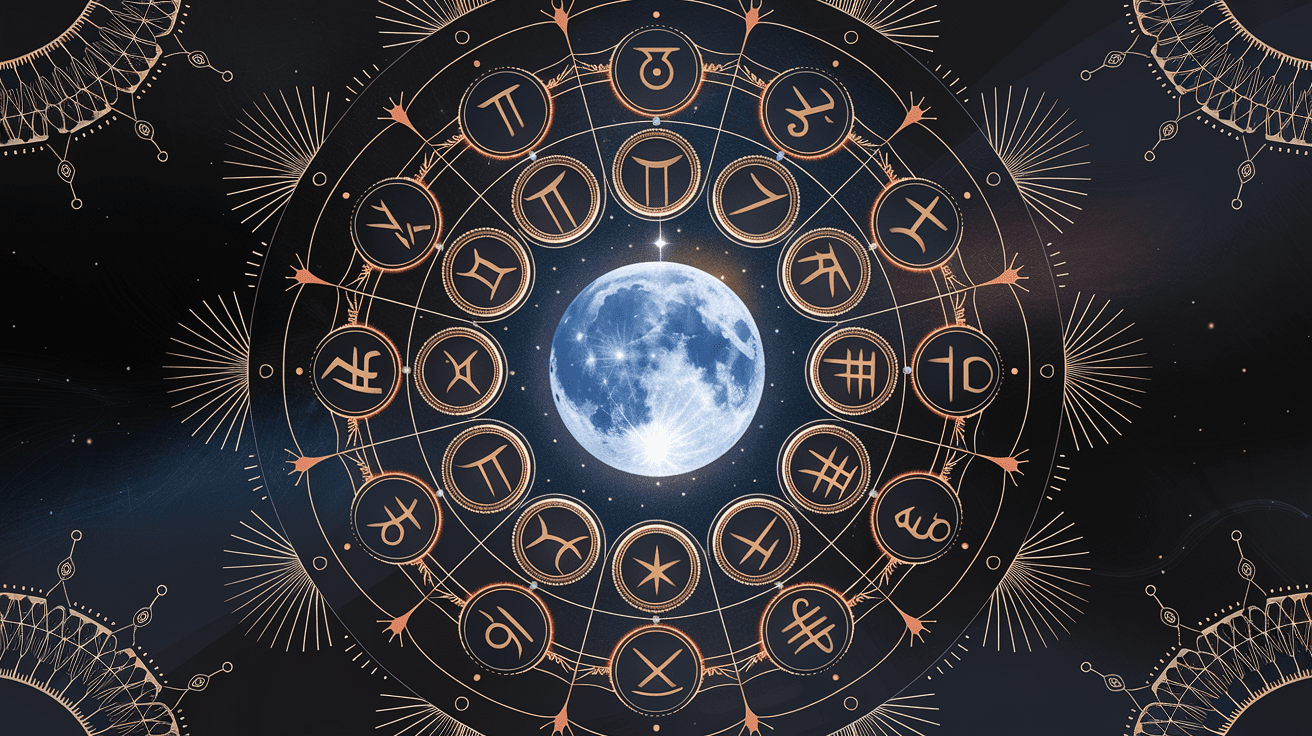
The Moon’s nightly journey across the sky isn’t random—it’s a sacred dance through 27 distinct lunar mansions, each holding its own energetic signature. While Western astrology divides the zodiac into 12 signs, nakshatras slice the celestial wheel into 27 precise segments of 13°20′ each. This ancient system tracks the Moon’s actual nightly position, creating a more nuanced map of your inner landscape than you might realize.
Think of it this way: your Sun sign might describe your public persona, but your nakshatra reveals the secret language your soul speaks when no one’s watching. It’s the difference between knowing someone’s profession and understanding their deepest motivations, fears, and gifts.
Why the Moon’s nightly journey matters more than you think
The Moon moves approximately 13°20′ each day, spending about one day in each nakshatra. This means your Moon’s position at birth pinpoints exactly which lunar mansion was active when you entered the world. Unlike the Western zodiac’s monthly sign changes, nakshatras capture the Moon’s intimate relationship with the stars—a relationship that Vedic seers believed shaped our emotional patterns, instincts, and karmic patterns.
Here’s where it gets fascinating: each nakshatra has three key components that work together like a cosmic trinity:
- Ruling Deity: The divine energy governing the nakshatra’s expression
- Symbol: A visual representation of the nakshatra’s essence (ranging from animals to objects to abstract concepts)
- Planetary Ruler: The celestial body that channels the nakshatra’s energy
For example, if your Moon sits at 10° Aries, you’re born under Ashwini nakshatra, ruled by the twin horsemen deities and symbolized by a horse’s head. This combination creates an energetic signature of swift action, healing abilities, and pioneering spirit.
The ancient wisdom behind lunar mansions
✨ Try Our Free Life Path Calculator ✨
Explore your numerological blueprint alongside your Vedic chart.
The nakshatra system dates back over 3,000 years to the Rig Veda, where sages meticulously tracked the Moon’s nightly position against fixed stars. They discovered that certain star clusters seemed to influence human behavior and natural phenomena in predictable ways. This wasn’t superstition—it was careful observation of celestial patterns.
What makes nakshatras particularly powerful is their integration with other Vedic systems. Your nakshatra connects directly to:
- Your dasha (planetary period) system, which determines life timing
- Your guna (energetic quality) of sattva, rajas, or tamas
- Your varna (social role) and yoni (primal nature)
- Your compatibility in relationships and marriage
The system recognizes that we’re not just influenced by where the Sun was when we were born, but by the Moon’s subtle, constant presence in our lives. It’s like having a celestial GPS that tracks not just your destination, but every turn, rest stop, and scenic route along the way.
Want to discover which lunar mansion your Moon occupies? You’ll need your exact birth time and location. The difference of even a few minutes can shift your nakshatra, as the Moon moves about half a degree every hour. This precision is why Vedic astrologers consider the nakshatra system one of the most accurate tools for understanding your karmic blueprint.
Nakshatra vs. Western Zodiac: A Quick Comparison
| Feature | Nakshatra System | Western Zodiac |
|---|---|---|
| Number of divisions | 27 lunar mansions | 12 solar signs |
| Segment size | 13°20′ each | 30° each |
| Tracking method | Moon’s nightly position | Sun’s monthly position |
| Ruling influences | Deity + planet + symbol | Element + modality |
| Cultural origin | Vedic/Indian | Greco-Roman |
| Primary focus | Emotional/psychological patterns | Personality/ego expression |
This comparison reveals why nakshatras offer such a different perspective on your astrological makeup. While your Western Sun sign might describe how you shine in the world, your nakshatra reveals how you process emotions, handle relationships, and fulfill your soul’s purpose.
Nakshatra vs Zodiac Sign: The Cosmic Difference That Changes Everything
You know your Sun sign, but have you ever wondered why two Leos can be so completely different? One’s a bold performer, the other’s a quiet nurturer. The answer lies in the nakshatra system—a precision tool that reveals the emotional DNA beneath your zodiac surface.
Zodiac signs span 30° each while nakshatras are only 13°20′ — twice as precise. Think of it this way: your Sun sign is like knowing someone’s hometown, while your nakshatra pinpoints their exact street address. This matters because the Moon moves through each zodiac sign in about 2.5 days, but it only spends roughly one day in each nakshatra. That extra precision captures subtle shifts in emotional expression that zodiac signs simply can’t detect.
Your Sun sign shows your core identity, but your nakshatra reveals your emotional blueprint. While your Sun illuminates your conscious purpose and how you shine in the world, your Moon nakshatra maps your inner landscape—your instinctual reactions, deepest needs, and the way you process feelings. A Leo Sun with a Purva Phalguni nakshatra will express their creativity and leadership very differently from a Leo Sun with a Magha nakshatra. The first radiates warmth and seeks partnership, while the second commands authority and honors tradition.
Western astrology tracks seasons; Vedic astrology tracks the Moon’s actual nightly position. Western tropical astrology is based on the Earth’s seasons and the Sun’s relationship to the equinoxes. Your Aries season begins every March 21st, regardless of where the Moon actually sits in the sky. Vedic sidereal astrology, however, follows the Moon’s true nightly position against the backdrop of fixed stars. This means your nakshatra is calculated from where the Moon physically appeared at your birth moment—not an averaged seasonal position.
The precision advantage of lunar mansions
✨ Try Our Free Lucky Crystal Finder ✨
Find the crystals that resonate with your planetary energies.
The nakshatra system divides the 360° zodiac into 27 equal segments of 13°20′ each. This creates a beautiful mathematical harmony: 27 nakshatras x 13°20′ = 360°. Each segment begins where the previous one ended, creating a continuous lunar journey through the heavens.
Here’s where it gets fascinating: each nakshatra is further divided into four quarters called padas, each spanning 3°20′. This means every zodiac sign contains portions of three different nakshatras, and each nakshatra touches three different signs. The result is a rich tapestry of overlapping influences that explains why people with the same Sun sign can be so distinct.
Nakshatra vs Zodiac Sign Comparison
| Feature | Zodiac Sign | Nakshatra |
|---|---|---|
| Size | 30° | 13°20′ |
| Number | 12 | 27 |
| Movement | Sun takes ~1 month | Moon takes ~1 day |
| Focus | Conscious identity | Emotional nature |
| System | Tropical (seasonal) | Sidereal (star-based) |
| Precision | Broad strokes | Fine details |
Want to experience this precision for yourself? Look up your Moon’s degree in your birth chart. If it falls between 0° and 13°20′ of any sign, you’re in the first pada of that sign’s nakshatra. Between 13°20′ and 26°40′ places you in the second pada, and 26°40′ to 30° puts you in the third pada. Each pada modifies the nakshatra’s expression slightly—like different rooms in the same house, each with its own atmosphere.
The next time someone asks “What’s your sign?” you’ll know the real magic lies not just in that 30° slice of sky, but in the precise 13°20′ lunar mansion that shaped your emotional world from the very beginning.
How to Find Your Nakshatra: The Simple Steps Anyone Can Follow
You’ve heard the whispers about nakshatras—how they reveal your emotional blueprint, your hidden talents, your karmic patterns. But how do you actually find yours? The answer is simpler than you might think, though it does require one crucial piece of information: your exact birth time.
What information you absolutely need
Unlike your Sun sign, which only requires your birth date, nakshatras shift every 24 hours because the Moon moves through the zodiac at approximately 13°20′ per day. This means your Moon could be in one nakshatra on Tuesday evening and a completely different one by Wednesday morning.
To calculate your nakshatra with precision, you’ll need:
- Your exact birth date (day, month, year)
- Your precise birth time (to the minute if possible)
- Your birth location (city and country)
Why is the birth time so critical? The Moon travels about 1° every two hours. If you were born at 2:15 PM versus 4:15 PM, your Moon could have moved from the final degree of one nakshatra into the first degree of the next. That’s the difference between being born under the penetrating intensity of Jyeshtha versus the expansive wisdom of Mula.
I once had a client who thought she was a Purva Phalguni Moon for years—until we dug up her hospital records and discovered she was actually born 47 minutes later, making her a Uttara Phalguni. The shift changed everything about how she understood her relationship patterns and career path.
Using our free nakshatra calculator
The good news? You don’t need to manually calculate planetary positions or memorize degree ranges. Modern technology has made this ancient wisdom accessible to everyone.
Our free nakshatra calculator does all the astronomical heavy lifting for you. Simply enter your birth details, and within seconds you’ll know your exact nakshatra, pada (quarter), and even which planet rules your emotional landscape.
Here’s what happens behind the scenes: The calculator references the sidereal zodiac positions, which account for the Earth’s axial precession—a crucial difference from Western calculations. It then determines where the Moon was positioned at your birth moment, down to the exact degree and minute.
For example, if you were born on July 15, 1990, at 3:22 AM in New York City, the calculator would show that your Moon was at 16°47′ in the sign of Cancer, placing you squarely in Pushya Nakshatra. Pushya, ruled by Brihaspati (Jupiter), is known as the “nourishing star”—explaining why you might naturally gravitate toward caregiving roles or teaching.
Pro tip: If you don’t know your exact birth time, start by checking your birth certificate, hospital records, or asking family members who were present. Even an approximate time (morning, afternoon, evening) can get you close, though the pada—and therefore some nuances of interpretation—may be less precise.
Once you have your nakshatra, you can explore its unique qualities: the ruling deity, the associated animal symbol, the primary motivation (called the “purushartha”), and the specific strengths and challenges that come with it. Each nakshatra is like a cosmic fingerprint—no two are exactly alike, even within the same zodiac sign.
Ready to discover yours? Grab your birth details and head to our calculator. The Moon has been waiting to tell you her secrets.
The 27 Nakshatras: Complete List with Deities, Symbols, and Ruling Planets
Now that you know how to find your nakshatra, let’s explore what makes each of these 27 lunar mansions unique. Each nakshatra spans exactly 13°20′ of the zodiac—that’s 1/27th of the 360° circle. This precise division creates four padas (quarters) of 3°20′ each, giving us 108 padas total across the zodiac. Think of padas as the “chapters” within each nakshatra’s story.
The ruling planets follow a specific sequence that repeats three times: Ketu, Venus, Sun, Moon, Mars, Rahu, Jupiter, Saturn, and Mercury. This creates a fascinating energetic rhythm as the Moon journeys through each segment. For example, Ashwini (the first nakshatra) is ruled by Ketu, while Bharani (the second) falls under Venus’s domain.
Understanding nakshatra padas and their significance
Each pada modifies the core energy of its nakshatra, creating four distinct expressions. If your Moon falls in the first pada of a nakshatra, you’ll experience its energy differently than someone with their Moon in the fourth pada. This is why two people with the same nakshatra can still have notably different emotional patterns.
The pada system also connects directly to the navamsa chart (the 9th divisional chart in Vedic astrology), making it crucial for relationship compatibility analysis. When your Moon’s pada aligns harmoniously with a partner’s, it creates a natural emotional resonance.
The Complete Nakshatra Reference Table
| Nakshatra | Range (Degrees) | Ruling Planet | Deity | Symbol |
|---|---|---|---|---|
| Ashwini | 0°00′ – 13°20′ Aries | Ketu | Ashwini Kumaras | Horse head |
| Bharani | 13°20′ – 26°40′ Aries | Venus | Yama | Vagina |
| Krittika | 26°40′ Aries – 10°00′ Taurus | Sun | Agni | Knife/Flame |
| Rohini | 10°00′ – 23°20′ Taurus | Moon | Brahma | Chariot |
| Mrigashirsha | 23°20′ Taurus – 6°40′ Gemini | Mars | Soma | Deer head |
| Ardra | 6°40′ – 20°00′ Gemini | Rahu | Rudra | Teardrop |
| Punarvasu | 20°00′ Gemini – 3°20′ Cancer | Jupiter | Aditi | Bow |
| Pushya | 3°20′ – 16°40′ Cancer | Saturn | Brihaspati | Flower |
| Ashlesha | 16°40′ – 30°00′ Cancer | Mercury | Sarpa | Coiled serpent |
| Magha | 0°00′ – 13°20′ Leo | Ketu | Pitris | Throne |
| Purva Phalguni | 13°20′ – 26°40′ Leo | Venus | Bhaga | Hammock |
| Uttara Phalguni | 26°40′ Leo – 10°00′ Virgo | Sun | Aryaman | Bed |
| Hasta | 10°00′ – 23°20′ Virgo | Moon | Savitar | Hand |
| Chitra | 23°20′ Virgo – 6°40′ Libra | Mars | Vishvakarma | Pearl |
| Swati | 6°40′ – 20°00′ Libra | Rahu | Vayu | Young plant |
| Vishakha | 20°00′ Libra – 3°20′ Scorpio | Jupiter | Indra-Agni | Triumphal arch |
| Anuradha | 3°20′ – 16°40′ Scorpio | Saturn | Mitra | Lotus |
| Jyeshtha | 16°40′ Scorpio – 30°00′ Scorpio | Mercury | Indra | Umbrella |
| Mula | 0°00′ – 13°20′ Sagittarius | Ketu | Nirriti | Roots |
| Purva Ashadha | 13°20′ – 26°40′ Sagittarius | Venus | Apah | Elephant tusk |
| Uttara Ashadha | 26°40′ Sagittarius – 10°00′ Capricorn | Sun | Vishvedevas | Elephant tusk |
| Shravana | 10°00′ – 23°20′ Capricorn | Moon | Vishnu | Ear |
| Dhanishta | 23°20′ Capricorn – 6°40′ Aquarius | Mars | Vasus | Drum |
| Shatabhisha | 6°40′ – 20°00′ Aquarius | Rahu | Varuna | Empty circle |
| Purva Bhadrapada | 20°00′ Aquarius – 3°20′ Pisces | Jupiter | Aja Ekapada | Sword |
| Uttara Bhadrapada | 3°20′ – 16°40′ Pisces | Saturn | Ahir Budhnya | Twins |
| Revati | 16°40′ – 30°00′ Pisces | Mercury | Pushan | Fish |
Notice how the deities range from Vedic gods like Agni (fire) and Soma (nectar) to universal symbols like the serpent and the elephant tusk. Each brings its own mythological wisdom to the nakshatra’s expression.
Here’s a practical tip: Check which nakshatra the current Moon occupies. You can use our Moon Phase Calculator to find this daily. The Moon’s current nakshatra influences everyone’s emotional climate for that 24-hour period. For instance, when the Moon is in Ashlesha (the serpent nakshatra), you might notice more emotional intensity and hidden motivations surfacing in your interactions.
The ruling planets create fascinating patterns too. Notice how Ketu starts and ends the cycle, creating a karmic loop from beginning to completion. Venus-ruled nakshatras often relate to creativity and relationships, while Saturn-ruled ones tend toward discipline and structure.
Understanding your nakshatra’s position within this cosmic tapestry reveals why you respond to life’s challenges the way you do. It’s like having a personalized emotional GPS that shows your natural inclinations and growth opportunities.
Next, we’ll explore how these nakshatras express themselves differently depending on which of the four padas your Moon occupies—because that final detail can completely shift how your nakshatra energy manifests in your life.
Real Stories: How Nakshatras Changed These Lives Forever
When I first started studying nakshatras twenty years ago, I thought they were just another layer of astrological detail. But then I met Sarah, a Scorpio Moon in Jyeshtha nakshatra, and everything changed. She’d been in therapy for years trying to understand why she felt such intense emotional storms. Once we discovered her Moon was in the “eldest” nakshatra—ruled by Indra, the king of gods—everything clicked. Those weren’t random mood swings; they were the natural expression of Jyeshtha’s powerful, transformative energy.
I’ve seen this pattern repeat hundreds of times. The woman with Moon in Punarvasu who thought she was “flaky” because she kept changing careers, only to realize she was following her nakshatra’s natural creative cycle. The man with Moon in Magha who struggled with authority issues until he understood his nakshatra’s royal lineage and natural leadership qualities.
The artist who discovered her creative power through Hasta nakshatra
Maya came to me at 34, frustrated that her art career wasn’t taking off despite years of formal training. Her chart showed Moon at 10° Virgo in Hasta nakshatra—the “hand” constellation ruled by Savitar, the creative Sun god.
Hasta natives have an incredible ability to craft and create with their hands, but they often struggle with perfectionism and self-doubt. Maya’s Moon was in the third pada of Hasta, which can make artists overly critical of their work.
Once she understood this, everything shifted. Instead of fighting her natural tendency to refine and perfect, she leaned into it. She started a jewelry business where her Hasta qualities became her superpower. Her pieces sold out within months because they carried that distinctive Hasta energy—meticulous craftsmanship combined with natural creativity.
The executive who finally understood his leadership style through Magha
David, a 45-year-old CEO, couldn’t understand why he kept butting heads with his board members. His chart revealed Moon at 2° Leo in Magha nakshatra—the “mighty” constellation ruled by the Pitris (ancestors).
Magha natives are natural leaders with a strong sense of tradition and authority. But when the Moon is in Magha’s first pada, there can be a tendency toward autocratic leadership styles that clash with modern corporate culture.
The breakthrough came when David realized his leadership style wasn’t a flaw—it was his nakshatra’s gift. He learned to channel that regal energy into mentoring younger executives and preserving company traditions. His board conflicts decreased dramatically once he stopped trying to be someone he wasn’t.
Career choices often align with nakshatra qualities — I’ve noticed that creative types frequently have Moon in Punarvasu, Vishakha, or Hasta. These nakshatras carry that spark of innovation and renewal. Meanwhile, those with Moon in Uttara Phalguni or Shravana often excel in teaching, counseling, or public service roles.
Relationship patterns become clear when you understand your partner’s nakshatra — I had a client whose relationship was struggling until she discovered her Moon in Ashlesha (the serpent nakshatra) was triggering her partner’s Moon in Jyeshtha. Ashlesha’s emotional intensity and tendency toward manipulation was triggering Jyeshtha’s protective, warrior energy. Once they understood this dynamic, they could work with it instead of against it.
The most beautiful part of nakshatra work is watching people stop fighting their natural tendencies and start embracing their cosmic blueprint. When Sarah finally accepted her Jyeshtha Moon’s intensity as a gift rather than a curse, she became a successful crisis counselor—helping others navigate their own emotional storms.
What’s your nakshatra story? Sometimes the answers we’ve been searching for have been written in the stars all along.
Want to understand your own nakshatra’s influence on your life? Try our Nakshatra Calculator to discover your Moon’s exact position and ruling deity.
Common Nakshatra Mistakes That Keep You Stuck in Confusion
You’ve found your nakshatra — congratulations! But wait. Before you dive into interpreting what it means for your life, let’s clear up the most common mistakes that keep people spinning in confusion for months, sometimes years.
The truth is, nakshatra astrology is precise work. One small error in calculation or interpretation can send you down the wrong path entirely. I’ve seen clients make these same mistakes over and over in my two decades of practice, and each one creates unnecessary frustration.
Using Only Your Sun Sign Instead of Moon Sign
This is the biggest mistake I see, and it’s completely understandable. Most people start astrology through Western horoscopes that focus on Sun signs. Your birthday determines your Sun sign — simple and memorable.
But nakshatras are based on the Moon’s position, not the Sun’s. The Moon moves through the entire zodiac in about 27 days, spending roughly one day in each nakshatra. Your Sun sign stays in one place for an entire month.
Here’s why this matters: A Leo Sun in Ashwini nakshatra experiences creativity and leadership very differently than a Leo Sun in Purva Phalguni. The nakshatra modifies everything.
Quick fix: Always use your Moon sign for nakshatra calculations. If you don’t know it, use our Free Moon Sign Calculator to find yours instantly.
Relying on Approximate Birth Times When Precision Matters
I cannot stress this enough: nakshatra calculation requires exact birth time. The Moon moves about 13°20′ daily, but within that day it passes through multiple nakshatras. A difference of even 10-15 minutes can shift your Moon into an entirely different nakshatra.
I had a client who thought she was a Bharani nakshatra for years. When we got her rectified birth time, her Moon was actually in Krittika — completely different qualities and life patterns emerged.
The Moon changes nakshatras at different times each month, so there’s no “safe window” where approximation works. You need the exact minute.
Confusing Nakshatra Lord with Planetary Ruler of Your Chart
This confusion trips up even experienced astrology enthusiasts. Your nakshatra has a ruling planet (called the nakshatra lord), but this is different from your chart ruler or ascendant lord.
For example, if your Moon is in Rohini nakshatra, your nakshatra lord is the Moon itself. But your chart ruler might be Mars if you have Aries rising. These are separate concepts that work together but aren’t interchangeable.
The nakshatra lord modifies how the Moon expresses itself in your chart. It’s like having a boss who influences how you do your job, but you’re still fundamentally yourself.
Why Exact Birth Time is Non-Negotiable
Let me show you why precision matters with a real example:
Moon at 3° Taurus (Rohini nakshatra):
- Emotional nature: Nurturing, artistic, pleasure-seeking
- Career alignment: Creative fields, hospitality, beauty industry
- Relationship patterns: Seeks stability and comfort
Moon at 17° Taurus (Mrigashirsha nakshatra):
- Emotional nature: Curious, research-oriented, multi-talented
- Career alignment: Writing, teaching, multiple careers
- Relationship patterns: Needs mental stimulation and variety
Same zodiac sign, completely different expression. The difference? About 12 hours of Moon movement.
If you’re unsure about your birth time, don’t guess. Birth time rectification is a specialized skill — find a qualified Vedic astrologer who can help determine your accurate birth time through life event analysis.
Your immediate action step: Check your birth certificate for the exact time. If it’s approximate (like “between 2-4 PM”), that’s not good enough for nakshatra work. The precision of this ancient system demands precision in data.
Beyond the Basics: Padas, Lords, and the Deeper Nakshatra Code
You’ve found your nakshatra — now let’s crack open the cosmic vault and discover what makes your Moon’s placement truly unique. The nakshatra system contains layers of wisdom that most people never explore, yet these subtle nuances can transform a general reading into a laser-focused map of your soul’s blueprint.
How pada placement affects your life path
Each nakshatra spans 13°20′ of the zodiac and divides into four padas (quarters), each measuring 3°20′. These padas don’t just split the nakshatra — they shift the energetic expression entirely by aligning with different zodiac signs.
Take Rohini nakshatra (4°23′ Taurus) as an example. The first pada falls in Aries, bringing initiative and pioneering spirit to Rohini’s creative nature. The second pada in Taurus emphasizes material comfort and sensual pleasure. The third pada in Gemini activates communication and versatility, while the fourth pada in Cancer deepens emotional sensitivity and nurturing qualities.
Your pada placement can explain why two people with Moon in the same nakshatra feel distinctly different. A friend of mine has Moon at 7°45′ Taurus in Rohini’s second pada — she’s a successful jewelry designer whose work embodies Taurus’s love of beauty and craftsmanship. Another client with Moon at 10°12′ Taurus (third pada) channels that same Rohini creativity into writing and teaching.
The pada system adds precision that can pinpoint your natural talents and life direction. Pada 1 often indicates leadership qualities and a pioneering approach. Pada 2 emphasizes stability and material mastery. Pada 3 activates communication and adaptability. Pada 4 deepens emotional and spiritual dimensions.
The dance between nakshatra lord and chart ruler
Your nakshatra lord — the planet ruling your specific nakshatra — acts as a modifier to your Moon’s expression. This planetary influence can enhance, challenge, or completely redirect your emotional nature.
Ashwini nakshatra (ruled by Ketu) creates a different emotional landscape than Bharani (ruled by Venus), even though both span the first 26°40′ of Aries. Ashwini’s Ketu influence brings independence, healing abilities, and a somewhat detached emotional style. Bharani’s Venus rulership softens Aries’s fire with sensuality, creativity, and relationship focus.
But here’s where it gets fascinating: the relationship between your nakshatra lord and your chart ruler (the planet ruling your ascendant sign) creates a cosmic conversation that shapes your entire life experience.
If your ascendant lord and nakshatra lord are in friendly aspect, your emotional needs and life direction flow harmoniously. When they’re in challenging aspect, you experience internal tension between what you want and what you need emotionally.
Consider this example: A Leo ascendant with Moon in Magha nakshatra (ruled by Ketu). Leo’s natural ruler is the Sun, which represents ego, authority, and creative self-expression. Ketu’s influence on the Moon creates a pull between Leo’s desire for recognition and a deeper calling toward spiritual liberation or service. This person might feel torn between building a public career and seeking solitude for inner work.
The pada placement adds another dimension. If this Moon falls in Magha’s third pada (Gemini), the tension manifests through communication and learning. In the fourth pada (Cancer), it plays out through home, family, and emotional security.
Quick exercise: Look up your nakshatra lord and note which house it occupies in your chart. This house shows where your emotional fulfillment seeks expression. If your nakshatra lord is in the 10th house, your emotional well-being connects deeply to your career and public life. In the 7th house, relationships become your emotional classroom.
Understanding these layers transforms astrology from a static description into a dynamic map of your soul’s evolution. Your nakshatra isn’t just where your Moon was — it’s the cosmic code revealing how you’re meant to grow, love, and fulfill your unique purpose in this lifetime.
[Chart: Nakshatra Pada System Breakdown]
| Nakshatra | Pada 1 (3°20′) | Pada 2 (3°20′) | Pada 3 (3°20′) | Pada 4 (3°20′) |
|---|---|---|---|---|
| Ashwini | Aries – Pioneering | Taurus – Stable | Gemini – Communicative | Cancer – Nurturing |
| Bharani | Aries – Dynamic | Taurus – Sensual | Gemini – Versatile | Cancer – Protective |
| Krittika | Aries – Assertive | Taurus – Resourceful | Gemini – Expressive | Cancer – Emotional |
| Rohini | Aries – Innovative | Taurus – Beautiful | Gemini – Articulate | Cancer – Caring |
| Mrigashirsha | Taurus – Patient | Gemini – Curious | Cancer – Intuitive | Leo – Creative |
This four-part framework reveals how the same nakshatra energy expresses differently depending on pada placement, offering remarkable precision in understanding your unique emotional blueprint.
Living Your Nakshatra: Daily Practices for Maximum Alignment
You’ve discovered your nakshatra. You understand its deity, its symbol, and how it shapes your emotional world. But here’s the real question: how do you actually live in harmony with this cosmic blueprint?
Your nakshatra isn’t just a label — it’s a living energy that responds to your daily choices. When you align your routines with its natural rhythm, everything flows more easily. When you ignore it, you feel stuck, scattered, or out of sync.
Let me show you how to turn this ancient wisdom into practical magic.
Morning rituals for your specific nakshatra
The first hour after waking sets the energetic tone for your entire day. Your nakshatra has a preferred way of starting — honor it, and you’ll feel centered from the moment your feet hit the floor.
Fire nakshatras (Krittika, Uttara Phalguni, Uttara Ashadha, Uttara Bhadrapada): Begin with movement. These nakshatras carry solar fire energy that needs expression. Try 10 minutes of sun salutations facing east, or a brisk walk while visualizing golden light filling your body. The deity Agni loves offerings of ghee lamps — even a tiny tea light candle counts.
Water nakshatras (Rohini, Hasta, Shravana, Revati): Start gentle. These nakshatras need emotional nourishment before they can function. Sip warm lemon water while setting intentions. Place your feet in cool water for 3 minutes while breathing deeply. The Moon’s energy in these nakshatras responds beautifully to moonstone or pearl jewelry worn first thing.
Air nakshatras (Ardra, Swati, Dhanishta, Satabhisha): Create mental space. These nakshatras thrive on clarity and breath. Practice alternate nostril breathing for 5 minutes. Write down three thoughts that are clouding your mind and physically release the paper. Vayu, the wind god, responds to incense of sandalwood or camphor.
Earth nakshatras (Mrigashirsha, Chitra, Anuradha, Jyeshtha): Ground through the senses. These nakshatras need tangible connection. Touch the earth — garden, walk barefoot, or hold grounding crystals like hematite. Eat something warm and nourishing within 30 minutes of waking. The earth deities appreciate offerings of rice or grains placed at the base of a tree.
Mixed nakshatras (Ashwini, Pushya, Ashlesha, Magha, Vishakha, Mula, Purva Bhadrapada): These carry dual energies and need balanced approaches. Pay attention to which half of the nakshatra your Moon occupies — the first and second padas often express different elements.
Career choices that honor your nakshatra’s natural talents
Your nakshatra reveals your innate gifts — when you work in alignment with them, success feels effortless.
Creative nakshatras (Bharani, Pushya, Purva Phalguni, Chitra, Revati): You’re here to beautify, nurture, and inspire. Teaching, design, counseling, and the arts call to you. Pushya Moon natives often excel in healing professions — I’ve seen three Pushya clients become successful therapists without formal training, simply because they couldn’t ignore the calling.
Leadership nakshatras (Magha, Uttara Phalguni, Vishakha, Jyeshtha): You’re meant to guide and transform. Executive roles, politics, and entrepreneurship suit you. Magha Moon individuals often find themselves in positions of authority by their late 30s — it’s literally in their stars to lead.
Analytical nakshatras (Hasta, Swati, Anuradha, Shravana): Your gift is precision and strategy. Research, finance, technology, and consulting are natural fits. Swati Moon natives often excel in negotiation and trading — one client with Swati Moon became a top real estate broker within two years of discovering this alignment.
Spiritual nakshatras (Ashlesha, Mula, Purva Ashadha, Uttara Ashadha): You’re here to pierce illusions and seek truth. Teaching, writing, spiritual counseling, and healing arts call to you. Mula Moon individuals often experience career shifts around their Saturn return (age 28-30) as they align with their dharma.
Service nakshatras (Ardra, Punarvasu, Purva Bhadrapada): Your path is healing through compassion. Healthcare, social work, environmental causes, and community building suit you. Ardra Moon natives often work in crisis intervention — they understand transformation through destruction.
Relationship compatibility improves when you understand nakshatra dynamics
Your nakshatra shapes how you give and receive love. Understanding this transforms your relationships from frustrating to fulfilling.
The compatibility formula: Nakshatras that share the same element or complement each other create natural harmony. Fire and Air nakshatras understand each other’s need for freedom. Water and Earth nakshatras appreciate stability and depth.
Your love language by nakshatra:
- Fire nakshatras: Need passion, adventure, and mutual growth. They thrive when partners challenge them intellectually and physically.
- Water nakshatras: Crave emotional safety and deep connection. They need partners who can hold space for their feelings without trying to fix them.
- Air nakshatras: Value communication and mental stimulation. They need partners who can discuss everything from quantum physics to their childhood dreams.
- Earth nakshatras: Appreciate reliability and practical support. They need partners who show love through consistent actions, not just words.
The nakshatra compatibility grid: Certain nakshatra pairs create powerful synergies. Rohini and Uttara Phalguni share Venusian creativity. Ashwini and Hasta combine healing and skill. Anuradha and Jyeshtha create mutual transformation. But here’s the secret — even “challenging” combinations can work beautifully when both partners understand their nakshatra gifts.
The daily alignment practice that changes everything
Here’s a simple ritual that works for every nakshatra. Do this for 21 days and watch your life transform:
Morning (5 minutes): Face the direction of your nakshatra’s ruling planet. Say your nakshatra name three times while placing your hand on your heart. Visualize its symbol surrounding you with light.
Afternoon (3 minutes): Check in with your emotional state. Ask: “Am I honoring my nakshatra’s natural rhythm right now?” Make one small adjustment if needed.
Evening (7 minutes): Journal about one way your nakshatra showed up today. What gift did it offer? What challenge did it present? This awareness alone will shift your relationship with your cosmic blueprint.
Your nakshatra isn’t a cage — it’s a compass. It doesn’t limit you; it liberates you by showing you the path of least resistance. When you work with your natural energy instead of against it, life becomes a dance instead of a struggle.
Ready to dive deeper? Use our Nakshatra Calculator to explore your exact placement, or book a personal reading to understand how your nakshatra interacts with your entire chart. The stars have been waiting to guide you home — all you need to do is listen.
Frequently Asked Questions
What is the difference between nakshatra and zodiac sign?
Zodiac signs are 12 equal 30-degree divisions of the ecliptic, while nakshatras are 27 lunar mansions, each spanning 13°20′ of the sky. Think of zodiac signs as broad personality archetypes and nakshatras as the nuanced, specific energies that color how those archetypes express themselves. While your Sun sign shows your core identity, your nakshatra reveals the subtle emotional and karmic patterns that shape your inner world.
How do I find my nakshatra?
You need your exact birth date, time, and location to calculate your nakshatra accurately. The Moon moves through one nakshatra per day, so even a few minutes’ difference in birth time can change your result. You can use our free nakshatra calculator at Astrologer Global, which factors in the precise lunar position at your birth moment. This tool will identify your birth nakshatra and explain its unique qualities.
What are the 27 nakshatras and their meanings?
The 27 nakshatras are Ashwini, Bharani, Krittika, Rohini, Mrigashirsha, Ardra, Punarvasu, Pushya, Ashlesha, Magha, Purva Phalguni, Uttara Phalguni, Hasta, Chitra, Swati, Vishakha, Anuradha, Jyeshtha, Mula, Purva Ashadha, Uttara Ashadha, Shravana, Dhanishta, Shatabhisha, Purva Bhadrapada, Uttara Bhadrapada, and Revati. Each carries distinct mythological symbolism, ruling deities, and elemental qualities that influence personality traits, life purpose, and karmic patterns. For example, Ashwini natives are often healers and pioneers, while Rohini types tend toward creativity and sensuality.
Which nakshatra is most powerful?
There’s no single “most powerful” nakshatra, as each excels in different domains. Magha is considered regal and authoritative, while Mula natives possess deep transformative power. Jyeshtha natives often wield influence through wisdom and strategy. Power manifests differently across nakshatras—some through leadership, others through spiritual insight or creative genius. The key is understanding how your specific nakshatra’s power expresses through your unique chart configuration.
Can nakshatra predict marriage compatibility?
Nakshatras play a significant role in Vedic marriage compatibility analysis, examining factors like emotional resonance, communication styles, and karmic connection between partners. Traditional systems like Ashtakoota use nakshatra positions to calculate compatibility scores. However, nakshatra compatibility is just one layer—the complete picture includes planetary aspects, dasha periods, and individual maturity levels. A challenging nakshatra match doesn’t doom a relationship, nor does a favorable one guarantee success.
How accurate is nakshatra astrology?
Nakshatra astrology’s accuracy depends on precise birth data and the skill of interpretation. When calculated correctly with exact birth time, nakshatras provide remarkably specific insights about personality patterns, life timing, and karmic themes. Many clients report that their nakshatra descriptions resonate deeply, often revealing truths their Sun sign alone doesn’t capture. Like any astrological system, it works best as a guidance tool rather than an absolute predictor, offering a symbolic language for understanding your soul’s journey.
Your Cosmic Path Forward
You now hold the map to your inner universe — a celestial blueprint written in the stars at the moment you took your first breath. Your nakshatra is more than just a point of light in the sky; it’s a living, breathing guide that speaks to your soul’s purpose, your emotional rhythms, and the unique gifts you’re here to share with the world. Whether you’re a pioneering Ashwini, a nurturing Pushya, or a transformative Jyeshtha, your lunar mansion reveals the sacred patterns that shape your life’s journey.
Remember, your nakshatra isn’t a box to be confined by — it’s a doorway to deeper self-awareness. The animal symbols, ruling deities, and elemental qualities all weave together to form a multidimensional portrait of who you are and who you’re becoming. By understanding your nakshatra, you gain access to ancient wisdom that helps you navigate relationships, career choices, and spiritual growth with greater clarity and confidence.
The stars don’t dictate your destiny — they illuminate the possibilities. Your free will is the brush, and your nakshatra is the canvas. The more you work with this knowledge, the more you’ll notice synchronicities, patterns, and opportunities aligning with your cosmic design. You might find yourself drawn to certain colors, numbers, or even professions that resonate with your lunar energy. Trust these nudges — they’re your soul remembering its path.
Ready to go deeper? Your nakshatra is just the beginning of the cosmic conversation. Discover how your nakshatra interacts with your planetary placements and current transits using our Free Nakshatra Calculator. The universe has been waiting to speak with you — all you need to do is listen.