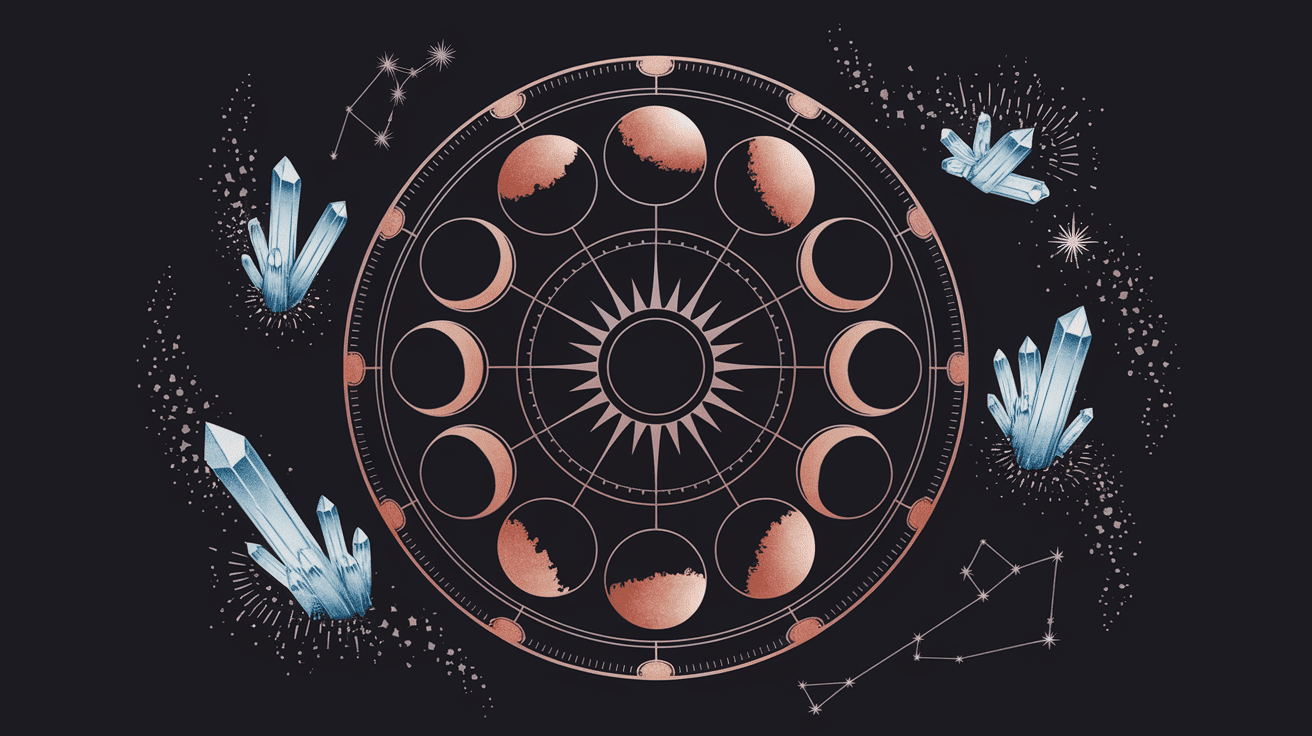
Moon Phases and Their Spiritual Meaning — A Complete Guide
You’re standing under the night sky, watching that silver crescent sliver emerge, and something inside you stirs — a quiet knowing that the moon is speaking directly to your soul. You’re not alone in feeling this connection. For millennia, cultures across the globe have tracked the moon’s journey, recognizing that each phase carries its own spiritual frequency, its own invitation to grow, release, and realign. Understanding moon phases spiritual meaning isn’t just about knowing what’s happening overhead — it’s about tuning into the cosmic rhythm that mirrors your own inner cycles.
In my two decades of practice, I’ve watched clients transform their lives simply by aligning their intentions with the moon’s natural flow. One client, a busy entrepreneur, started setting her biggest goals during the New Moon and found herself achieving them with surprising ease. Another discovered that her monthly emotional dips always coincided with the Dark Moon — once she understood this pattern, she could prepare and honor her need for rest rather than fight against it. These aren’t coincidences; they’re the moon’s ancient wisdom made personal.
By the time you finish this guide, you’ll know exactly what each moon phase means spiritually and how to harness its energy for manifestation, healing, and personal growth. You’ll understand why you feel more social during the Waxing Moon, why insights flood in during the Full Moon, and why you crave solitude during the Waning phases. More importantly, you’ll have practical rituals and reflection prompts for each phase, turning cosmic theory into everyday magic. The moon has always been our celestial companion, waxing and waning in perfect harmony with the human experience. Now it’s time to remember how to dance with her light. Let’s begin with the very first whisper of lunar energy — the New Moon — and discover what it’s calling you to create.
The Sacred Dance: Understanding the 8 Moon Phases and Their Spiritual Significance
The moon has been humanity’s celestial companion for millennia, waxing and waning in a rhythmic dance that mirrors the cycles of life itself. As it orbits Earth every 29.5 days, the moon passes through eight distinct phases, each carrying its own energetic signature and spiritual significance. This lunar cycle isn’t just astronomical poetry—it’s a living metaphor for our own spiritual journey of becoming, releasing, and renewing.
In my two decades of astrological practice, I’ve witnessed how aligning with these lunar rhythms can transform spiritual work from a scattered practice into a flowing, intuitive process. When we understand the moon’s phases, we tap into nature’s original mindfulness app—a cosmic calendar that has guided farmers, healers, and mystics since time immemorial.
The Science Behind the Magic: How Lunar Phases Actually Work
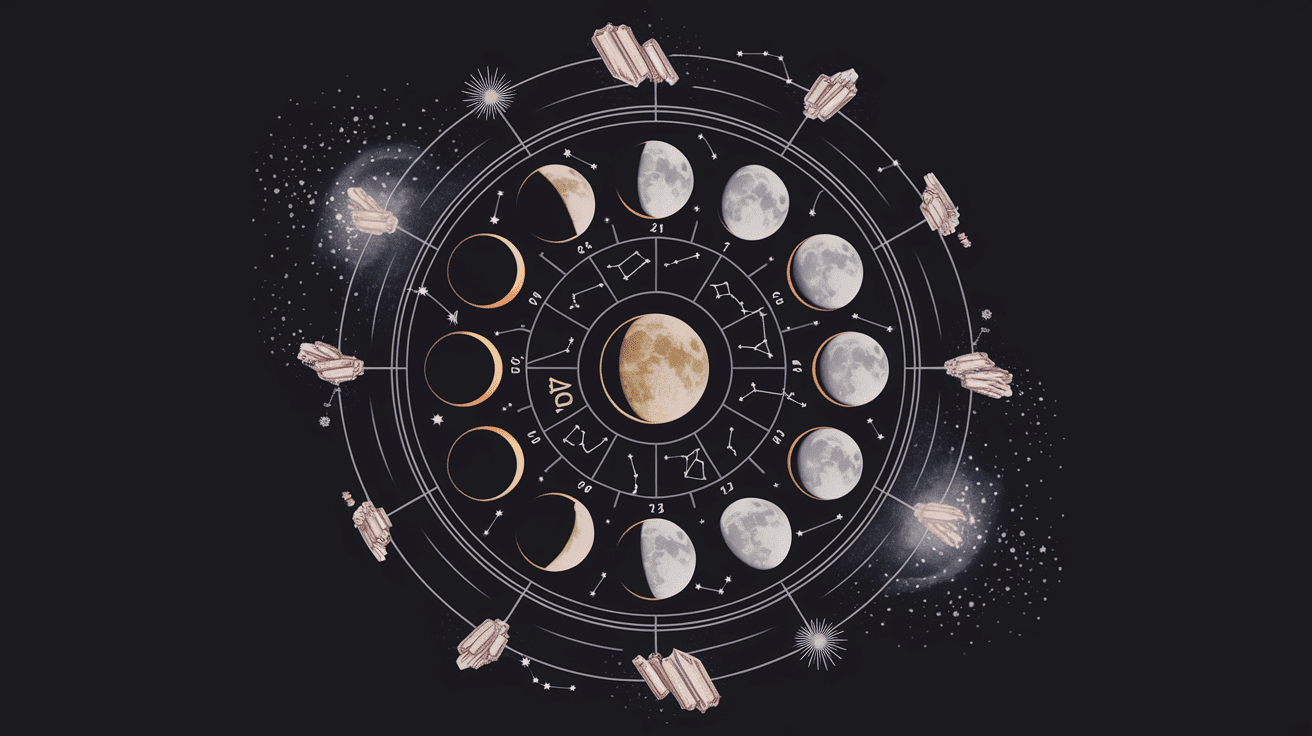
The moon doesn’t emit its own light but reflects the sun’s rays. As it orbits Earth, the angle between the sun, moon, and Earth changes, creating the illusion of the moon growing (waxing) and shrinking (waning). This celestial geometry creates eight distinct phases:
- New Moon (0-45° from sun)
- Waxing Crescent (45-90°)
- First Quarter (90-135°)
- Waxing Gibbous (135-180°)
- Full Moon (180-225°)
- Waning Gibbous (225-270°)
- Last Quarter (270-315°)
- Waning Crescent (315-360°)
Each phase lasts approximately 3.5 days, though the exact duration varies slightly depending on the moon’s elliptical orbit. The moon’s position in its cycle can be calculated to the exact degree—for instance, a Full Moon occurs when the moon is precisely 180° opposite the sun in ecliptic longitude.
Why Ancient Cultures Revered the Moon as a Spiritual Guide
✨ Try Our Free Free Tarot Reading ✨
Receive spiritual guidance through the wisdom of the tarot.
Long before smartphones and Google calendars, civilizations from the Mayans to the Celts used the moon as their primary timekeeper. The word “month” itself derives from “moon,” and many ancient calendars were lunar-based. The Egyptians aligned their pyramids with lunar cycles, while Vedic astrologers in India developed elaborate systems connecting moon phases to spiritual practices and daily activities.
What’s fascinating is how different cultures independently recognized similar energetic qualities in each phase. The Chinese lunar calendar, Islamic Hijri calendar, and indigenous North American moon names all reflect an intuitive understanding that certain times feel more conducive to planting, harvesting, celebrating, or releasing.
This universal reverence wasn’t superstition—it was sophisticated ecological wisdom. Our ancestors observed that ocean tides, women’s menstrual cycles, and even crop growth patterns seemed to synchronize with lunar rhythms. Modern research has confirmed that the moon’s gravitational pull affects not just oceans but also the water content in soil and even human bodies (which are approximately 60% water).
Quick Practice: Tonight, step outside and locate the moon. Note its phase and how it makes you feel. This simple awareness practice connects you to a rhythm that has guided spiritual seekers for thousands of years. Try our Moon Phase Calculator to track the current lunar cycle and plan your spiritual practices accordingly.
The moon’s 29.5-day cycle offers us a perfect template for personal growth: a time to seed intentions, nurture them, witness their fullness, and ultimately release what no longer serves us. Each phase carries specific energetic qualities that, when understood, can dramatically enhance your spiritual practice. Let’s explore each phase’s unique gifts and how to work with them consciously.
New Moon: Planting Seeds of Intention in the Dark
The new moon arrives like a blank canvas—a cosmic pause where the sky goes dark and everything feels possible. In my two decades of practice, I’ve watched clients transform their lives simply by aligning with this monthly reset. The new moon isn’t just about what you can’t see; it’s about what you’re finally ready to imagine.
When the moon sits between Earth and Sun (typically at 0-45 degrees of separation), we enter a sacred void. This darkness isn’t empty—it’s pregnant with potential. The ancients called this the “dark moon” for good reason: just as seeds germinate underground before breaking through soil, your intentions need this hidden incubation period.
The new moon’s energy feels different from other lunar phases. While the full moon illuminates what’s already grown, the new moon whispers: “What if?” It’s the monthly equivalent of January 1st, but with cosmic backing. The Sun and Moon conjunct in the same zodiac sign create a unified field of energy—your conscious will (Sun) and your emotional truth (Moon) finally speaking the same language.
Spiritual Practices for Setting Intentions During the Dark Moon Phase
The dark moon phase—those 2-3 days before the visible new moon—is your preparation time. Think of it as clearing the garden before planting. Here’s my tried-and-true ritual sequence:
The Sacred Release (Day Before New Moon)
- Write down what you’re ready to let go
- Burn or bury the paper during the moon’s darkest hour
- This creates literal and energetic space for new intentions
The Intention-Setting Ceremony (First 8 Hours of New Moon)
- Light a candle at sunrise or sunset (the “in-between” times carry extra magic)
- Speak your intentions aloud—yes, actually say them
- Write them using present-tense language: “I am” not “I want”
The Activation (Within 24 Hours)
- Place your written intentions under a crystal (clear quartz amplifies)
- Leave them overnight under the new moon’s invisible light
- Sleep with one written intention under your pillow
The key? Action within the first 24 hours. The lunar window stays open for about 48 hours, but that initial burst carries the strongest manifestation energy.
How the New Moon’s Energy Supports Manifestation Work and New Projects
✨ Try Our Free Life Path Calculator ✨
Understand the spiritual mission encoded in your birth date.
Here’s where most people get it wrong: they set beautiful intentions but never follow through. The new moon gives you a cosmic green light, but you still have to drive the car.
The manifestation formula during new moon energy:
- Clarity (New Moon Day 1): Get specific about what you want
- Commitment (Waxing Crescent, Days 2-5): Take one concrete action
- Consistency (First Quarter, Day 7-8): Overcome obstacles that arise
- Celebration (Full Moon, Day 14-15): Acknowledge every sign of progress
I’ve seen this work for everything from career changes to conception. One client, a writer, set the intention to finish her novel during a Virgo new moon. She broke it down: 1,000 words daily during the waxing phase. By the full moon, she had a complete draft. The moon didn’t write the words—but it gave her the courage to start.
Your immediate action step: Tonight, during this new moon, write down ONE intention. Just one. Make it specific enough that you’ll know when it’s manifested. Place it somewhere you’ll see it daily.
New Moon Spiritual Meaning in Different Zodiac Signs
The zodiac sign hosting the new moon flavors your manifestation potential. Here’s a quick-reference guide for the next year:
| Zodiac Sign | New Moon Theme | Best Intentions To Set | Crystals to Amplify |
|---|---|---|---|
| Aries | New beginnings, courage | Starting projects, asserting yourself | Carnelian, Bloodstone |
| Taurus | Stability, abundance | Financial goals, self-worth | Rose Quartz, Green Aventurine |
| Gemini | Communication, learning | Writing projects, networking | Citrine, Agate |
| Cancer | Emotional security, home | Family matters, moving | Moonstone, Pearl |
| Leo | Creativity, self-expression | Artistic projects, romance | Sunstone, Tiger’s Eye |
| Virgo | Health, organization | Routines, healing | Amazonite, Moss Agate |
| Libra | Relationships, harmony | Partnerships, legal matters | Lapis Lazuli, Opal |
| Scorpio | Transformation, intimacy | Deep healing, research | Malachite, Obsidian |
| Sagittarius | Expansion, truth | Travel, education | Turquoise, Sodalite |
| Capricorn | Career, structure | Professional goals, discipline | Garnet, Black Tourmaline |
| Aquarius | Innovation, community | Social causes, technology | Aquamarine, Amethyst |
| Pisces | Spirituality, intuition | Meditation, creative arts | Amethyst, Fluorite |
Pro tip: Check which house the new moon falls in your natal chart for personalized guidance. A Capricorn new moon in your 10th house? Career intentions will carry extra power.
The new moon asks one thing of you: be brave enough to want something. In the darkness, before anyone else can see your dreams, you get to claim them as yours. What will you plant in this fertile cosmic soil?
Waxing Crescent: Nurturing Your Dreams as They Take Root
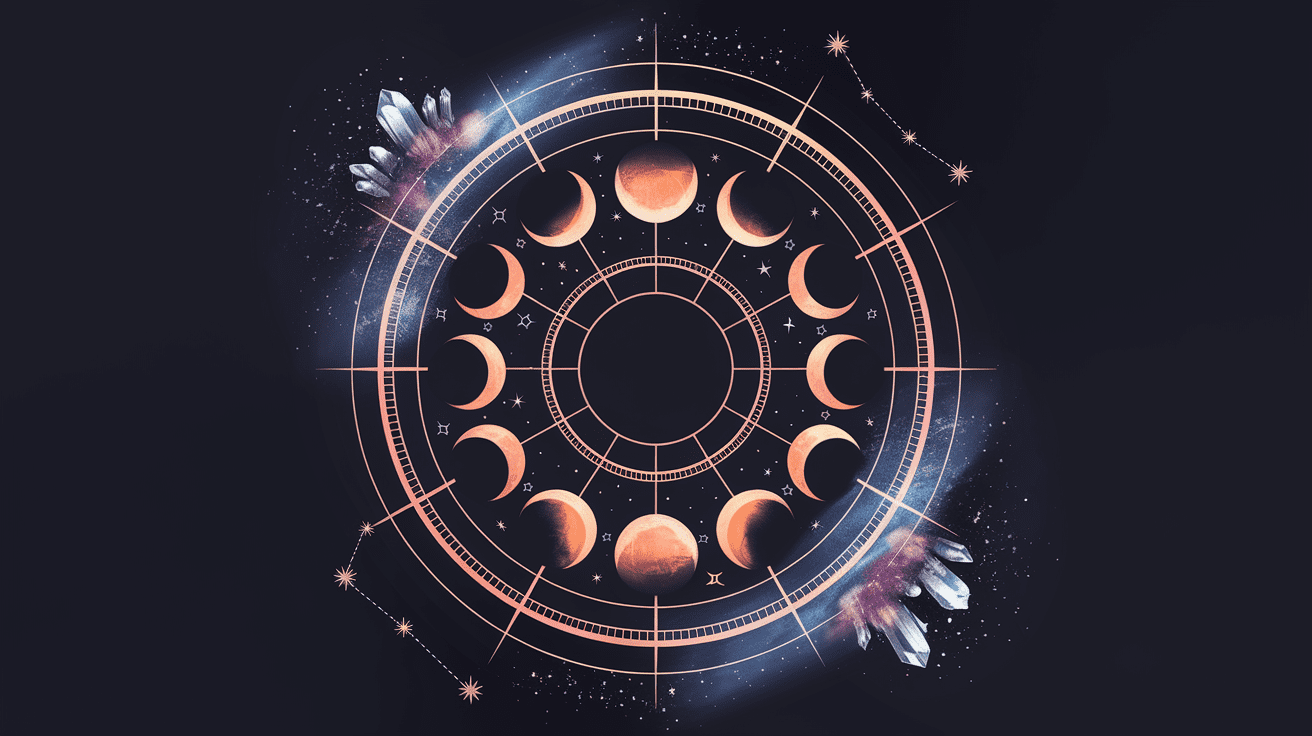
The waxing crescent moon emerges like a silver promise in the night sky—that first delicate sliver of light after the darkness of the new moon. This phase, occurring approximately 3-7 days after the new moon, carries a vibration of hope, determination, and the tender vulnerability of new beginnings taking their first steps toward manifestation.
In my two decades of practice, I’ve noticed how this phase mirrors that moment when you’ve just planted seeds in fertile soil. You can’t yet see the sprouts, but you feel the stirring beneath the surface. The moon sits at approximately 45-90 degrees ahead of the sun, and in Vedic astrology, this phase often coincides with the moon moving through the nakshatras of Krittika, Rohini, or Mrigashirsha—each bringing their own flavor of nurturing energy.
Spiritually, the waxing crescent asks you to hold faith when doubt creeps in. This is the most fragile point in the manifestation cycle. Your intentions are like newborns requiring constant care and protection. The universe is asking: Can you maintain your commitment when you can’t yet see results? This phase teaches the spiritual discipline of trust—believing in what your heart knows is growing, even when your eyes can’t yet perceive it.
The waxing crescent is where most people abandon their dreams. They plant beautiful intentions during the new moon, but when the first signs of effort appear without immediate reward, they lose faith. Don’t let that be your story. This is the phase where champions are made.
Practices for Strengthening Your Intentions
During this vulnerable growth phase, your spiritual practices need to be both gentle and consistent. Here are specific ways to nurture your intentions:
Morning visualization ritual: Each morning, spend 3-5 minutes visualizing your intention as already manifested. Feel the emotions as if it’s happening now. The waxing crescent moon’s energy is building, and your emotional investment fuels this growth.
Journal your “evidence list”: Each evening, write down three small signs that your intention is taking root. Maybe you had a conversation that aligned with your goal, or you noticed a resource becoming available. This trains your mind to recognize subtle progress.
Speak your intention aloud during moonrise: The waxing crescent energy is particularly potent during moonrise (which occurs in late morning to early afternoon during this phase). Step outside, face the moon, and speak your intention clearly. The lunar vibration amplifies your words.
Create a “faith altar”: Dedicate a small space to your intention with symbols representing what you’re manifesting. Add a fresh flower each day to honor the growing energy.
Take one concrete action daily: While spiritual work is essential, the waxing crescent also supports physical movement toward your goal. What’s one small step you can take today?
Crystals and Herbs That Amplify Waxing Crescent Energy
The right allies can strengthen your intentions during this delicate phase. Here are specific crystals and herbs that resonate with waxing crescent energy:
Crystals:
- Moonstone (especially rainbow moonstone): Enhances intuition and emotional balance during vulnerable growth periods
- Clear quartz: Amplifies your intentions and brings clarity to your vision
- Green aventurine: Supports new opportunities and growth
- Citrine: Maintains optimism when doubt arises
- Labradorite: Strengthens faith in the unseen
Herbs:
- Basil: Promotes abundance and protects new ventures
- Ginger: Adds fiery energy to get things moving
- Peppermint: Clears mental fog and maintains focus
- Lavender: Soothes anxiety about outcomes
- Cinnamon: Speeds up manifestation energy
Working with these allies: Create a small crystal grid with 3-5 of these stones arranged in a crescent shape. Place a written intention beneath the center stone. Each morning, hold a piece of moonstone or clear quartz while stating your intention aloud. You can also brew a tea with 2-3 of the listed herbs (check for contraindications) while focusing on your goal.
The waxing crescent moon reminds us that all beautiful things begin small and vulnerable. Your dreams are no different. This phase isn’t about forcing growth—it’s about nurturing with patience, protecting with wisdom, and believing with unwavering faith. What you tend with love during this phase will grow into something extraordinary.
Tonight, step outside and find that sliver of light. Place your hand over your heart and whisper: “I believe in what’s growing, even when I cannot yet see it.” That simple act of faith is the most powerful spiritual practice of all.
First Quarter: Overcoming Obstacles on Your Spiritual Path
The first quarter moon rises around noon and sets around midnight, marking the halfway point between the new moon and full moon. At this phase, the moon appears as a perfect half-circle in the sky—a visual metaphor for the tension between light and dark, between where you’ve been and where you’re going.
This is the moment when your spiritual intentions meet reality. The seeds you planted during the new moon are now pushing through the soil, encountering resistance from the earth itself. That resistance isn’t your enemy—it’s the resistance that builds strength. In my two decades of practice, I’ve noticed that clients who embrace this tension rather than avoid it often experience their most profound breakthroughs during first quarter moons.
The first quarter moon carries a cardinal square energy between the sun and moon—90 degrees of dynamic tension that demands action. This aspect occurs when the moon reaches approximately 90 degrees ahead of the sun in the zodiac. For example, if the new moon was at 15° Aries, the first quarter would occur when the moon reaches 15° Cancer. This square creates the friction necessary for growth, pushing you to make decisions and commit to your path despite uncertainty.
First Quarter Moon Rituals for Breaking Through Blocks
When obstacles arise during this phase, they’re not signs to abandon your path—they’re invitations to deepen your commitment. The first quarter moon teaches us that spiritual growth isn’t linear; it’s a spiral that sometimes requires us to circle back and face the same challenges from a higher perspective.
Try this simple ritual when you feel resistance during the first quarter moon:
- Write down the specific obstacle you’re facing on a small piece of paper
- Hold a clear quartz crystal (the “master healer”) in your left hand
- Visualize the obstacle dissolving while repeating: “This resistance is strengthening my resolve”
- Burn the paper safely, releasing the need to control the outcome
- Carry the crystal for the next seven days as a reminder of your breakthrough
The first quarter moon’s energy is particularly potent when it occurs in cardinal signs (Aries, Cancer, Libra, Capricorn). During these times, the universe seems to conspire to test your commitment. I remember working with a client whose first quarter moon always fell in Capricorn—she would experience career challenges precisely at this phase, but pushing through them always led to unexpected promotions within the following month.
This phase asks: Are you willing to stay the course when the path gets rocky? The half-moon doesn’t promise ease—it promises growth. And sometimes, growth hurts. But it’s in that beautiful, uncomfortable tension that your spiritual muscles strengthen, preparing you for the illumination that awaits at the full moon.
Waxing Gibbous: Refining and Perfecting Your Spiritual Vision
The waxing gibbous moon hangs in the sky like a nearly complete masterpiece, just waiting for those final brushstrokes. At this phase, the moon sits between 135° and 180° ahead of the sun, bathing us in 75-99% illumination. Spiritually, this is the phase of refinement—where your intentions, which you planted at the new moon, now require careful editing and adjustment before reaching their full expression.
I remember working with a client, Sarah, during her waxing gibbous phase. She’d set an intention to deepen her meditation practice at the new moon, but by this phase, she realized she was forcing herself into rigid 30-minute sessions that felt more like punishment than spiritual nourishment. Together, we refined her approach—scaling back to 10 minutes of quality practice that she could actually sustain. Within two lunar cycles, her practice had blossomed in ways it never would have through force.
This phase asks a crucial question: What needs adjusting before your vision reaches its fullest potential? The waxing gibbous energy supports discernment and fine-tuning. It’s not about pushing harder—it’s about working smarter and more precisely.
The Energy of Refinement and Adjustment
During the waxing gibbous, the moon’s light grows stronger each night, but it hasn’t yet reached its peak. This creates a unique energetic signature—one of anticipation mixed with the need for completion. In my two decades of practice, I’ve observed that clients often experience a sense of “almost there” during this phase, which can manifest as both excitement and impatience.
The spiritual work here involves stepping back and honestly assessing your progress. Are your actions aligned with your intentions? Are you forcing outcomes or allowing natural development? The waxing gibbous teaches us that refinement isn’t failure—it’s the intelligent adjustment that leads to sustainable manifestation.
Consider this: if you planted an intention to improve your relationships, the waxing gibbous might reveal patterns you hadn’t noticed before. Perhaps you’re always the one reaching out, or maybe you avoid vulnerability. This phase illuminates these patterns so you can adjust your approach before the full moon brings culmination.
How to Edit and Improve Your Spiritual Practices
The key to working with waxing gibbous energy is embracing the role of the wise editor rather than the desperate creator. Here are specific ways to refine your spiritual practices during this phase:
Review your intentions with gentle honesty. Take out the intention you set at the new moon and ask: “What’s working? What needs adjustment?” Write down three specific refinements you can make. For example, if your intention was to practice daily gratitude, you might realize you’re only listing generic items. Refine it by adding specificity: “I’m grateful for the warmth of my morning coffee and the way it grounds me before work.”
Adjust your spiritual practices to match your actual energy levels. The waxing gibbous can feel intense because we’re eager for results. But forcing practices that drain you creates resistance. Scale back to what feels sustainable and build from there. Quality always trumps quantity in spiritual work.
Seek feedback from trusted sources. This phase supports collaboration and outside perspective. Share your intentions with a spiritual mentor, trusted friend, or even your journal. Sometimes we’re too close to see what needs adjustment.
The Balance Between Patience and Active Preparation
The waxing gibbous creates a delicious tension between patience and preparation. You can feel the full moon approaching—that culmination point where your efforts will bear fruit. But rushing now can sabotage the very manifestation you’re working toward.
This is where the spiritual principle of “active waiting” becomes essential. You’re not passively waiting for things to happen, nor are you frantically pushing for immediate results. Instead, you’re actively preparing the ground for what’s to come. Think of a farmer who knows the harvest is near but continues to tend the crops with care rather than pulling them up to check their progress.
The balance lies in maintaining consistent action while releasing attachment to specific timelines. Continue your spiritual practices, but soften your grip on how and when results should appear. Trust that the seeds you’ve nurtured are growing exactly as they should.
Waxing Gibbous Moon Meditation Techniques
During the waxing gibbous, meditation takes on a quality of refinement and precision. These techniques help you work with this energy effectively:
The Refinement Meditation: Sit comfortably and bring your new moon intention to mind. As you breathe deeply, ask yourself: “What one adjustment would make this intention more aligned with my highest good?” Don’t force an answer—simply hold the question with gentle curiosity. Often, insights will arise naturally over the next few days.
The Balance Visualization: Imagine yourself standing at the edge of a calm lake during twilight. On one side stands Patience, on the other Active Preparation. Feel yourself balanced between them, neither leaning too far in either direction. This meditation helps integrate the dual energies of this phase.
The Fine-Tuning Breath Practice: Inhale for a count of four, hold for two, exhale for six, hold for two. This breathing pattern naturally calms the nervous system while maintaining alertness—perfect for the waxing gibbous energy of refined action.
The Adjustment Journal Prompt: Each evening during this phase, write: “Today I refined my approach by…” and “Tomorrow I will adjust by…” This simple practice keeps you engaged with the refinement process without becoming obsessive.
The waxing gibbous moon reminds us that spiritual growth isn’t about getting it perfect the first time—it’s about the willingness to edit, adjust, and refine until our vision aligns with divine timing. Trust this process. Your masterpiece is taking shape, one careful adjustment at a time.
Ready to understand how your personal birth chart interacts with lunar phases? Use our Natal Chart Calculator to discover your unique lunar blueprint.
Full Moon: The Peak of Spiritual Power and Illumination
The full moon is the spiritual climax of the lunar cycle — a time when the moon’s energy reaches its zenith, illuminating both our external world and our inner landscape with maximum intensity. At this phase, the moon sits directly opposite the sun, creating a perfect opposition that brings things to fruition, reveals hidden truths, and often stirs deep emotions to the surface.
In my two decades of practice, I’ve observed how full moons consistently bring culmination points — projects complete themselves, relationships reach turning points, and long-held patterns become impossible to ignore. The full moon doesn’t create these energies; it simply shines a spotlight on what’s already there, demanding our attention and offering the clarity we need to move forward.
Full Moon Spiritual Meaning Across Different Cultures
The full moon’s spiritual significance transcends cultural boundaries, though each tradition interprets its power differently:
| Culture/Tradition | Full Moon Name/Significance | Spiritual Practice |
|---|---|---|
| Native American | Harvest Moon, Hunter’s Moon | Gathering, thanksgiving ceremonies |
| Hindu | Purnima | Fasting, temple offerings, mantra chanting |
| Chinese | Mid-Autumn Festival | Family reunion, moon gazing, sharing mooncakes |
| Celtic | Bright Moon | Fire ceremonies, divination, honoring goddesses |
| Buddhist | Uposatha Days | Meditation intensives, precept observance |
| Islamic | Laylat al-Qadr potential | Night prayers, seeking divine blessings |
What fascinates me is how these diverse traditions all recognize the full moon as a threshold moment — a time when the veil between worlds grows thin and spiritual energy intensifies. Whether you’re participating in a Hindu Purnima ritual, a Native American harvest ceremony, or simply sitting in quiet meditation, you’re tapping into this universal recognition of lunar peak power.
How to Harness Full Moon Energy for Manifestation and Release
The full moon offers a unique energetic window where manifestation and release work beautifully complement each other. Here’s how to work with this potent energy:
Manifestation Practices:
- Charge your crystals and spiritual tools under the moonlight (especially effective for moonstone, selenite, and clear quartz)
- Write down your achievements and celebrate what has come to fruition
- Create a full moon altar with white candles, silver objects, and lunar symbols
- Practice gratitude meditation, focusing on abundance already present in your life
Release Practices:
- Write down what you’re ready to let go of and safely burn the paper
- Take a salt bath to cleanse your energy field
- Practice forgiveness meditation, releasing resentment toward yourself and others
- Declutter your physical space to mirror inner release
The key is balance — the full moon illuminates both what you’ve created and what needs to be released. One of my clients described her full moon ritual as “celebrating the harvest while pulling the weeds” — a perfect metaphor for this dual energy.
The Shadow Side of Full Moon Energy
While the full moon brings illumination, it can also stir up emotional turbulence. The heightened energy can manifest as:
- Sleep disturbances and vivid dreams
- Heightened emotions and reactivity
- Relationship tensions coming to a head
- Physical symptoms like headaches or fatigue
Rather than fighting these experiences, I encourage you to view them as opportunities for conscious awareness. When emotions run high, ask yourself: “What is this revealing about my inner world?” The full moon’s light shows us what needs healing, even when that healing feels uncomfortable.
One powerful practice is to journal during the three days surrounding the full moon (the day before, the day of, and the day after). Note your dreams, emotional states, and any synchronicities. You’ll often discover patterns that provide valuable insights for your spiritual growth.
The full moon reminds us that illumination requires courage — the courage to see ourselves clearly, to acknowledge both our light and our shadow, and to make conscious choices about what we want to carry forward into the next lunar cycle.
Waning Gibbous: Sharing Your Light and Integrating Wisdom
The waning gibbous phase arrives just after the full moon’s peak, when the lunar disc is still more than half illuminated but gradually decreasing. This is the phase of spiritual harvest and sharing — when the insights you’ve received during the full moon begin to ripen into wisdom you can offer others. The moon’s light is still strong enough to guide, but it’s now in the process of being distributed rather than absorbed.
Spiritually, this phase carries the energy of gratitude and integration. You’re not just receiving cosmic downloads anymore; you’re processing them, understanding their meaning, and preparing to share them. The waning gibbous asks: What have you learned that could benefit others? How can your personal revelations become universal wisdom?
Waning Gibbous Moon and the Art of Spiritual Teaching
This phase corresponds to the disseminating or sharing moon in many traditional systems. The moon is in the process of giving back the light it received, much like we’re meant to share the spiritual insights we’ve gained. This is why the waning gibbous is considered one of the most powerful times for teaching, mentoring, and community connection.
During this phase, your spiritual insights feel more grounded and applicable. You’re no longer in the realm of pure inspiration (full moon) but in the territory of practical wisdom. The revelations you received have had time to settle, and you can now articulate them in ways that help others on their paths.
Astrological Timing for Teaching Work
The waning gibbous phase typically spans from approximately 17° to 9° after the full moon position. For example, if the full moon occurs at 16° Libra, the waning gibbous would begin around 3° Scorpio and continue through about 7° Sagittarius. This roughly 3.5-day window offers optimal energy for:
- Leading workshops or classes
- Writing spiritual content or blog posts
- Having mentoring conversations
- Sharing your practices with community groups
- Creating teaching materials or courses
| Waning Gibbous Activities | Best Practices | What to Avoid |
|---|---|---|
| Teaching spiritual concepts | Use personal stories and examples | Overloading with information |
| Mentoring others | Listen more than you speak | Trying to “fix” people |
| Community sharing | Create interactive experiences | One-way communication |
| Writing insights | Focus on practical applications | Abstract theorizing |
Integration Practices for This Phase
The waning gibbous isn’t just about giving outward — it’s also about integrating what you’ve learned. This is the time to:
- Journal about your full moon revelations and identify the key lessons
- Create a simple practice you can teach others based on your insights
- Reach out to someone who might benefit from your recent spiritual growth
- Record or document your wisdom in a way that’s accessible to others
A Simple Teaching Practice
Here’s an immediate practice you can try during the waning gibbous: Choose one insight you received during the full moon. Write it down in one sentence. Then write three practical ways someone could apply this insight in their daily life. Share this with one person this week — whether through conversation, social media, or a handwritten note. You’ll be amazed at how this simple act of sharing amplifies your own understanding.
The waning gibbous reminds us that spiritual growth isn’t complete until it’s shared. Your wisdom becomes truly yours only when you’ve given it away. What light are you ready to disseminate?
Last Quarter: Releasing What No Longer Serves Your Highest Good
The Last Quarter Moon arrives as a sacred threshold—half illuminated, half in shadow, reminding us that release is as holy as creation. This waning half-moon carries the energy of surrender, asking us to examine what we’ve outgrown and what must fall away for our evolution to continue. When the Moon reaches 270° from the Sun (the exact Last Quarter occurs when the Moon is at 90° to the Sun), we’re invited into a profound spiritual reckoning.
This phase operates like the final chapter of a book—not quite the ending, but the crucial turning point where loose threads must be tied. The Last Quarter Moon typically occurs about 7 days after the Full Moon, when the Moon is in a square aspect to the Sun, creating tension that pushes us toward necessary release.
In my two decades of practice, I’ve noticed clients often resist this phase, clinging to what’s familiar even when it no longer serves. But the Last Quarter teaches us that holding on requires more energy than letting go. The waning light mirrors our own diminishing attachment to outdated versions of ourselves.
Last Quarter Moon Forgiveness Rituals
The Last Quarter calls for radical honesty and compassionate release. Here’s a step-by-step forgiveness ritual you can practice during this phase:
- Create sacred space – Light a black or white candle, representing the release of what no longer serves and the illumination of truth
- Identify what needs releasing – Write down specific beliefs, patterns, or relationships that feel heavy or stagnant. Be precise—instead of “my job,” try “the belief that my worth is tied to productivity”
- Practice Ho’oponopono – This Hawaiian forgiveness practice involves repeating four phrases: “I’m sorry. Please forgive me. Thank you. I love you.” Say these while holding the intention of release
- Burn or bury the paper – Safely burn your written intentions (in a fireproof container) or bury them in the earth, symbolizing return to the cycle of transformation
- Take cleansing action – Physically clear your space—donate three items, delete five old emails, or clear one cluttered drawer
The Last Quarter Moon often coincides with the Moon transiting specific nakshatras (lunar mansions) that amplify release energy. When the Moon passes through Mula (0-13°20′ Sagittarius) or Jyeshtha (16-29°59′ Scorpio), the energy for uprooting deep patterns intensifies.
This phase also connects to the numerological vibration of 9 (3+6=9), the number of completion and universal wisdom. The Last Quarter asks us to integrate lessons fully before moving forward.
Try this now: Look at your life through the lens of completion. What chapter is ready to close? What would it feel like to release it with gratitude rather than resistance?
The Last Quarter isn’t about failure—it’s about completion. As the Moon wanes toward darkness once more, we’re reminded that every ending makes space for a new beginning. What you release during this phase creates the fertile void that the next New Moon will fill with fresh possibility.
Waning Crescent: Rest, Reflection, and Preparation for Rebirth
The Waning Crescent Moon hangs like a delicate silver thread in the pre-dawn sky, the final whisper of the lunar cycle before darkness returns. This sacred phase—sometimes called the Balsamic Moon—represents the completion of one cycle and the threshold of another. It’s a time when the moon’s light has nearly vanished, leaving just 10-49% illumination, and the spiritual energy shifts from outward expression to inward integration.
In Vedic astrology, this phase occurs when the Moon is positioned in the final degrees of its sign, typically between 330° and 360° of the zodiac. The Moon’s journey through the final nakshatras—Uttarabhadrapada, Revati, and Ashwini—brings energies of completion, dissolution, and preparation for new beginnings. The waning crescent invites us to honor what has been, release what must end, and create sacred space for what is yet to come.
Waning Crescent Moon: The Sacred Art of Spiritual Rest
The spiritual meaning of the dark moon and the energy of completion
The Waning Crescent carries the profound spiritual energy of completion. Unlike the Full Moon’s climactic peak, this phase represents the quiet aftermath—the moment when you can finally exhale after a long journey. It’s the spiritual equivalent of the pause between breaths, where integration happens naturally without force.
During this time, the veil between worlds feels thinnest. Many sensitive souls report heightened intuition, vivid dreams, and a sense of being between realities. This isn’t coincidence—the diminishing lunar light naturally draws our awareness inward, making us more receptive to subtle spiritual messages.
The energy of completion doesn’t mean finishing everything perfectly. Rather, it’s about acknowledging the cycle’s natural conclusion and finding peace with what is. Some intentions manifested beautifully, others taught valuable lessons through their non-manifestation. Both outcomes deserve honor and gratitude.
How to honor the cycle’s end and prepare for the new beginning
Honoring the cycle’s end requires conscious acknowledgment. Create a simple ritual: write down what you’ve learned, what you’ve released, and what you’re ready to let go of completely. This isn’t about forcing completion—it’s about recognizing that certain chapters naturally close as the lunar cycle completes its 29.5-day journey.
Consider the Moon’s position during this phase. If it’s in Pisces during the final days, the energy supports spiritual surrender and dreamwork. In Aquarius, it favors releasing outdated mental patterns and embracing innovative spiritual perspectives. Understanding the Moon’s sign adds depth to your integration practices.
Practices for deep rest, meditation, and spiritual integration during this phase
The Waning Crescent calls for practices that nourish rather than deplete. This is not the time for intense manifestation work or pushing forward with new projects. Instead, embrace the sacred art of spiritual rest.
Integration Practices for the Waning Crescent:
- Dream journaling – Place a notebook beside your bed and record dreams immediately upon waking. The thin veil during this phase often brings prophetic or healing dream messages
- Silent meditation – Even 5-10 minutes of sitting in stillness can facilitate profound energetic integration
- Energy clearing – Use sage, palo santo, or sound healing to clear your space and energy field
- Gratitude practice – List three things you’re grateful for from the past cycle
- Body awareness – Gentle yoga, stretching, or simply lying on the earth helps ground the spiritual insights you’ve received
The waning crescent phase typically lasts 3-4 days before the New Moon arrives. Use this time to create a “spiritual nest”—a comfortable space where you can retreat, reflect, and simply be. This might include soft blankets, candles, crystals like moonstone or labradorite, and items that bring you comfort.
The Power of Non-Action
One of the most challenging yet transformative aspects of the Waning Crescent is learning to embrace non-action. Our culture glorifies constant productivity, but this phase teaches that rest is not laziness—it’s essential spiritual maintenance. The seeds planted during the New Moon need the darkness of this phase to germinate in their own time.
During my two decades of practice, I’ve noticed that clients who honor this rest period experience more authentic and sustainable growth in subsequent cycles. Those who push through, trying to maintain full-speed momentum, often find themselves exhausted or facing obstacles that force them to slow down anyway.
The Waning Crescent reminds us that death and rebirth are natural parts of any cycle. Just as the Moon must become dark to be reborn, we too must experience periods of emptiness to make room for new beginnings. This isn’t failure—it’s the wisdom of natural cycles.
As you move through this final lunar phase, ask yourself: What needs to die so something new can be born? What wisdom from this cycle are you ready to integrate? And how can you create sacred space for the quiet magic of becoming?
The darkness isn’t empty—it’s full of potential, waiting to emerge when the time is right. Trust the cycle. Trust the rest. Trust that you are exactly where you need to be.
Frequently Asked Questions
What are the 8 phases of the moon in order?
The 8 lunar phases in order are: New Moon, Waxing Crescent, First Quarter, Waxing Gibbous, Full Moon, Waning Gibbous, Last Quarter, and Waning Crescent. Each phase represents a different stage of the moon’s illumination cycle, moving from complete darkness to full brightness and back again over approximately 29.5 days. These phases create a natural rhythm that many spiritual traditions have used for timing rituals and intentions. The waxing phases (growing light) are associated with building energy and taking action, while the waning phases (decreasing light) support release and reflection.
How do moon phases affect your mood spiritually?
Moon phases affect your mood spiritually by creating energetic shifts that mirror the natural cycles of growth, culmination, and release. During the waxing moon, many people feel increased motivation and optimism as energy builds toward the full moon’s peak. The full moon often brings heightened emotions, clarity, and sometimes restlessness as lunar energy reaches its maximum. Waning phases typically support introspection, emotional processing, and letting go of what no longer serves you. These spiritual effects vary by individual, but tracking your feelings across moon cycles can reveal personal patterns that help you work with rather than against these natural rhythms.
What moon phase is best for manifestation?
The New Moon phase is considered the most powerful time for manifestation, as it represents fresh beginnings and planting seeds for future growth. During this dark moon period, the sky is receptive and open to new intentions, making it ideal for setting goals, creating vision boards, and performing manifestation rituals. The waxing crescent phase that follows also supports manifestation work as energy begins building toward the full moon. For best results, align your manifestation practices with the moon’s natural growth cycle—start intentions at the new moon and take consistent action through the waxing phases while the moon’s light increases.
How to do a new moon ritual?
To perform a new moon ritual, begin by creating a sacred space with candles, crystals, or meaningful objects. Write down your intentions for the coming lunar cycle, focusing on what you want to manifest or begin. Meditate on these intentions while visualizing them coming to fruition, then speak them aloud to give them power. You can enhance the ritual by charging crystals under the new moon, taking a cleansing bath, or performing a simple candle-lighting ceremony. The key is to approach the ritual with clear intention and openness to receive. Many people find that consistent new moon rituals create a powerful framework for personal growth and manifestation.
What does the full moon mean spiritually?
Spiritually, the full moon represents culmination, illumination, and the peak of lunar energy. It’s a time when emotions run high, intuition is heightened, and hidden truths often come to light. Many spiritual traditions view the full moon as a powerful portal for release, healing, and celebration of progress made since the new moon. This phase illuminates both external circumstances and internal patterns, offering clarity about what needs to change. The full moon’s energy supports completion of projects, harvesting the fruits of your efforts, and releasing anything that blocks your highest good. It’s also considered an excellent time for charging crystals, performing cleansing rituals, and connecting with divine feminine energy.
How long does each moon phase last?
Each moon phase typically lasts about 3.5 days, though the exact duration varies slightly depending on the moon’s orbit and position relative to the Earth and Sun. The complete lunar cycle from new moon to new moon takes approximately 29.5 days. While the primary phases (new, first quarter, full, last quarter) are well-defined astronomical events, the transitional phases (crescent, gibbous, waxing, waning) blend gradually into one another. For practical spiritual work, many practitioners consider a phase’s energy active for roughly 3 days before and after the exact moment of that phase. You can track the current moon phase and its exact timing using our Moon Phase Calculator to align your rituals with precise lunar energy.
Your Cosmic Path Forward
You’ve journeyed through the moon’s eight phases, uncovering how each one mirrors the rhythms of your inner world and outer life. From the spark of the New Moon to the release of the Dark Moon, you now hold a celestial map for aligning your intentions, actions, and rest with the natural flow of the cosmos. Remember, the moon phases spiritual meaning isn’t just poetic—it’s a practical guide for living with more awareness, intention, and grace.
You’ve learned that the Waxing phases invite you to plant seeds and take inspired action, while the Waning phases call you to reflect, release, and restore. You’ve seen how the Moon’s sign colors each phase with its own emotional and energetic flavor, and how your personal natal chart can deepen your connection to lunar cycles. Most importantly, you’ve discovered that lunar wisdom is not about perfection—it’s about presence. It’s about noticing where you are, honoring what you need, and trusting that each phase, like each chapter of your life, has its purpose.
Now, the next step is to bring this wisdom into your daily life. Why not start by tracking the Moon’s current phase and sign? Our free Moon Phase Calendar makes it easy to see what lunar energy is available to you right now—and how to work with it. Whether you’re setting intentions at the New Moon or releasing at the Full, this tool helps you stay connected to the cosmic tides that shape your path.
The Moon has always been a mirror for the soul, reflecting your light and your shadows, your beginnings and your endings. As you move forward, let her phases remind you that every cycle holds both magic and meaning—and that you, too, are always becoming. Trust the rhythm. Trust yourself. The stars are always speaking; now, you know how to listen.