Kundalini Awakening — What It Is Signs and Why It Happens
You’re sitting in meditation, and suddenly you feel a surge of energy rising from the base of your spine like a coiled serpent awakening after centuries of sleep. Your body tingles, your breath quickens, and you wonder: is this what people mean by kundalini awakening signs? I’ve seen this moment play out countless times in my two decades of practice — that mix of awe and anxiety when the energy finally moves. Kundalini awakening isn’t just a mystical concept from ancient texts; it’s a very real, sometimes overwhelming experience that’s showing up more frequently in our collective consciousness as people seek deeper spiritual connection.
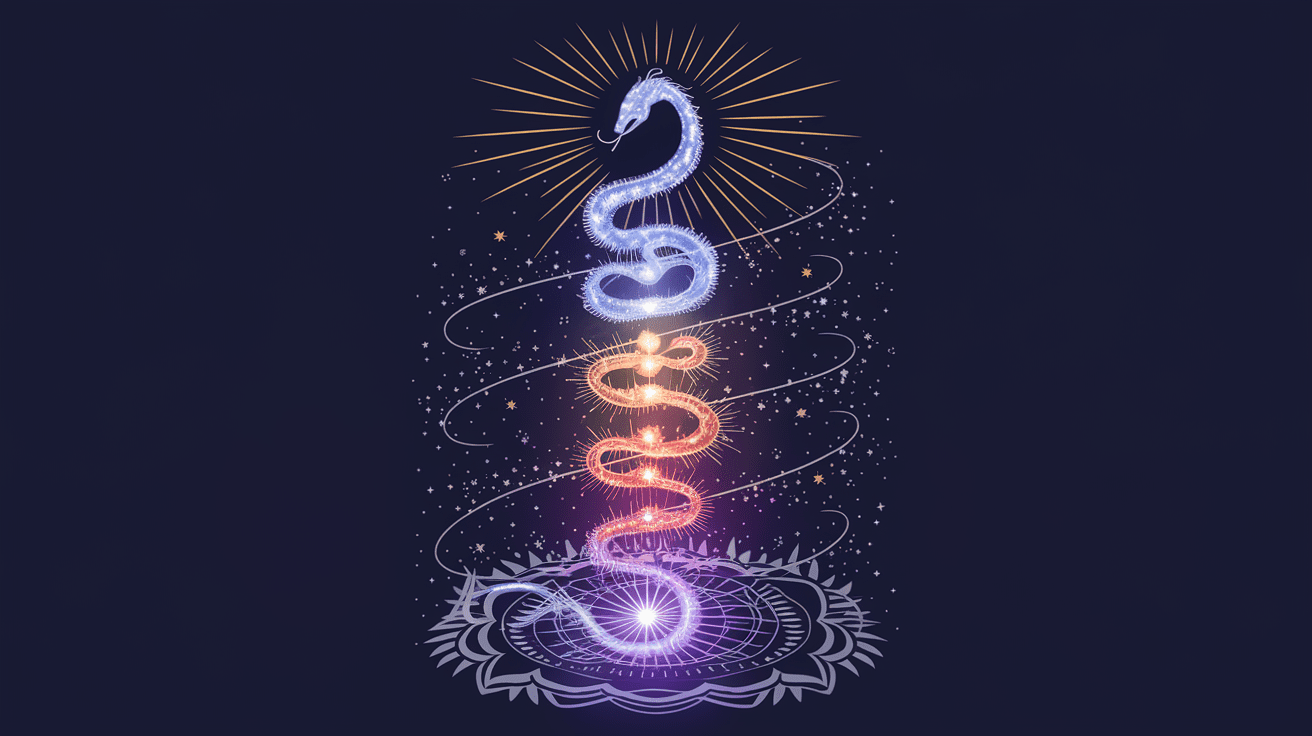
What makes this phenomenon so fascinating is that it’s both deeply personal and universally patterned. When that primal energy — often depicted as a sleeping serpent at the base of your spine — begins to rise through your chakras, it creates a cascade of physical, emotional, and spiritual shifts that are remarkably consistent across cultures and traditions. Yet each person’s journey is uniquely their own, colored by their astrological blueprint, life experiences, and readiness for transformation. I remember one client, a Pisces Sun with Scorpio rising, who described her awakening as feeling like she was being simultaneously electrocuted and bathed in divine light — a perfect reflection of her watery, intense chart.
By the end of this article, you’ll be able to recognize the telltale signs of kundalini activation, understand the astrological and energetic reasons why it happens, and know how to navigate this powerful force with grace rather than fear. Whether you’re actively pursuing spiritual awakening or suddenly finding yourself in the midst of one, understanding these signs can transform what might feel like a crisis into a conscious initiation. The kundalini awakening signs we’ll explore aren’t just abstract concepts — they’re the language your body and soul use to communicate that something profound is unfolding within you. Let’s begin by understanding what this ancient energy really is and why it’s choosing to rise now.
The Serpent Energy: What Kundalini Awakening Really Means
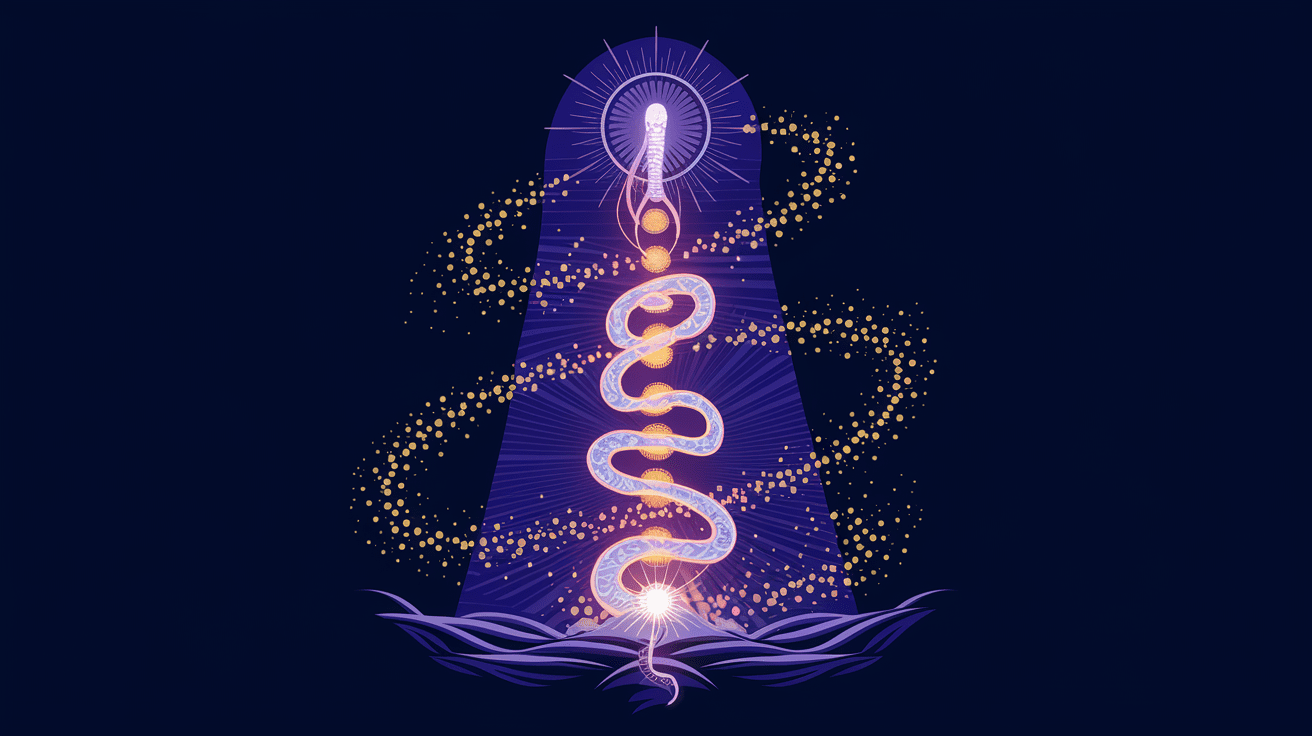
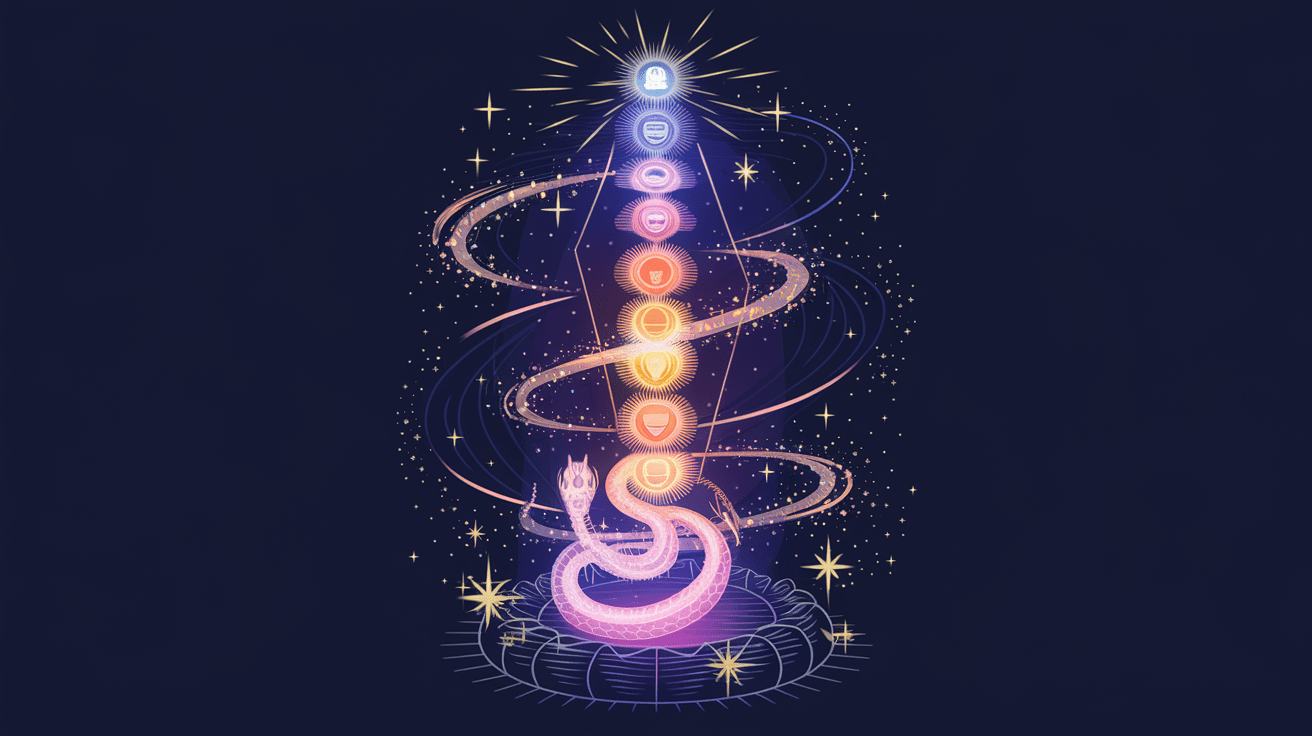
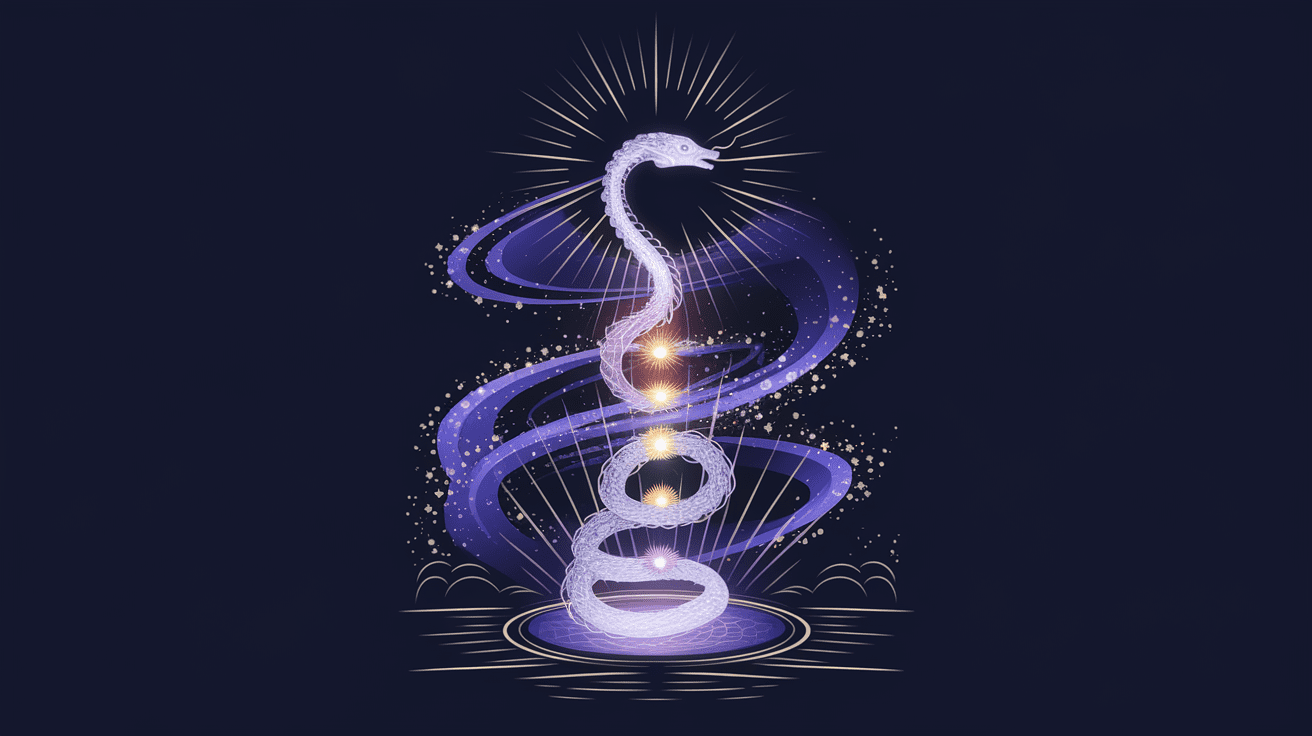
Kundalini awakening is not just a spiritual buzzword—it’s a profound activation of dormant energy that lies coiled at the base of your spine, specifically in the root chakra (Muladhara). In Sanskrit, “kundalini” literally means “coiled serpent,” and this imagery is central to understanding what this energy represents. Picture a sleeping serpent, wrapped three and a half times around the base of your spine, holding within it the potential for immense spiritual transformation. When awakened, this serpent energy rises through the chakras, activating higher states of consciousness and unlocking deep spiritual insight.
But here’s where many get confused: kundalini awakening is not the same as a general spiritual awakening. While spiritual awakening is about expanding awareness and shifting perspective, kundalini awakening is specifically about the activation and movement of this primal life force energy. It’s a powerful, often intense experience that can feel like electricity running through your body, spontaneous movements (kriyas), or waves of heat and bliss. In my two decades of practice, I’ve seen clients describe it as both exhilarating and overwhelming—like suddenly plugging into the universe’s power grid.
The Three Bodies: Physical, Subtle, and Causal in Kundalini Experience
To truly understand kundalini, we need to explore the concept of the three bodies in yogic philosophy. You have the physical body (sthula sharira), the subtle body (sukshma sharira), and the causal body (karana sharira). Kundalini awakening primarily affects the subtle body—the energetic template that includes your chakras, nadis (energy channels), and aura. But its effects ripple through all three.
When kundalini rises, it moves through the sushumna nadi (the central energy channel) and pierces each chakra, transforming not just your energy but your entire being. This is why people report physical symptoms like tingling, heat, or spontaneous yoga postures, alongside emotional releases and mystical experiences. The causal body, which holds karmic imprints, is also affected, leading to profound shifts in your life patterns and relationships.
Kundalini in Vedic vs. Western Spiritual Traditions
✨ Try Our Free Free Tarot Reading ✨
Receive spiritual guidance through the wisdom of the tarot.
The concept of kundalini is most deeply rooted in Vedic and Tantric traditions, where it’s seen as the ultimate spiritual power. In these traditions, kundalini is often associated with Shakti, the divine feminine energy, and its union with Shiva (consciousness) at the crown chakra is the goal of many yogic practices.
Western spiritual traditions, on the other hand, tend to interpret kundalini more psychologically. Carl Jung, for example, saw kundalini as a symbol of individuation—the process of becoming your true self. He associated the chakras with psychological archetypes and believed kundalini awakening was a journey of integrating the unconscious with the conscious mind.
Here’s a quick comparison to clarify the differences:
| Aspect | Vedic/Tantric View | Western Psychological View |
|---|---|---|
| Nature of Kundalini | Divine cosmic energy (Shakti) | Symbol of individuation |
| Goal | Union of Shakti and Shiva (enlightenment) | Integration of psyche (self-actualization) |
| Method | Yoga, meditation, breathwork, mantra | Dream work, active imagination, analysis |
| Experience | Physical, energetic, mystical | Psychological, symbolic, archetypal |
Whether you approach kundalini from an Eastern or Western perspective, one thing is clear: this is powerful energy that demands respect. If you’re feeling called to explore it, start gently. Practices like grounding meditations, working with protective crystals (like black tourmaline or hematite), and seeking guidance from experienced teachers can help you navigate this transformative journey safely.
And if you’re curious about how your unique energetic blueprint might influence your kundalini experience, try our Chakra Balance Calculator to see which energy centers may need extra attention.
15 Unmistakable Signs You’re Experiencing Kundalini Awakening
When kundalini energy begins its ascent through your chakras, the experience can be both exhilarating and overwhelming. Your entire being — physical, emotional, mental, and spiritual — undergoes profound transformation. These signs aren’t subtle; they’re often dramatic shifts that signal your consciousness is expanding beyond ordinary reality.
The Physical Symphony: Body Sensations During Kundalini Rising
Your body becomes the instrument through which kundalini expresses itself. Many people describe feeling electrical currents running up their spine, like a live wire connecting heaven and earth. These sensations aren’t random — they follow the path of the sushumna nadi, the central energy channel.
Heat waves are particularly common, especially around the base of the spine where kundalini resides. You might experience sudden temperature changes, feeling hot one moment and cold the next. This isn’t your regular body temperature — it’s the energy itself generating heat as it moves through blocked areas.
Spontaneous body movements, called kriyas, are perhaps the most dramatic physical sign. Your body might move in ways you’ve never experienced — twisting, shaking, or assuming yoga-like postures without conscious effort. These aren’t seizures or spasms; they’re intelligent movements that help release energy blockages. One of my clients described her kriyas as feeling like her body was being guided by an invisible yoga instructor.
Other physical manifestations include:
- Tingling sensations in hands and feet
- Pressure at the crown of the head
- Changes in appetite and sleep patterns
- Heightened sensitivity to light, sound, and touch
- Spontaneous yoga poses or mudras (hand gestures)
Emotional Tsunami: Why Your Feelings Are All Over the Place
Your emotional body becomes a clearinghouse during kundalini awakening. Old wounds, suppressed memories, and unprocessed feelings rise to the surface for healing. This emotional purging can feel chaotic, but it’s essential for your spiritual evolution.
Sudden crying without apparent triggers is incredibly common. You might find yourself weeping during meditation, while grocery shopping, or in the middle of a conversation. These tears aren’t about current circumstances — they’re releasing emotional debris from your past. One woman I worked with cried for three days straight during her initial awakening, releasing childhood trauma she didn’t even remember.
Conversely, you might experience spontaneous laughter or bursts of joy that seem to come from nowhere. This isn’t manic behavior — it’s the natural expression of energy clearing your heart chakra. The kundalini energy is literally laughing through you, celebrating its liberation.
Anger and irritability often surface too, especially if you have unresolved issues around boundaries or self-expression. This anger isn’t random — it’s your power center (solar plexus chakra) clearing decades of suppressed will. During this phase, you might find yourself speaking your truth more directly than ever before.
The emotional rollercoaster can be intense:
- Anxiety or panic attacks
- Depression followed by euphoria
- Heightened empathy and sensitivity to others’ emotions
- Sudden mood swings
- Feeling emotionally raw and vulnerable
15 Clear Signs You’re Experiencing Kundalini Awakening
- Electric sensations running up your spine
- Spontaneous body movements (kriyas) during meditation
- Heat waves emanating from your root chakra
- Pressure at the crown of your head
- Intense dreams with spiritual symbolism
- Heightened intuition and psychic abilities
- Emotional releases without logical triggers
- Changes in sleep patterns — needing less or more sleep
- Food sensitivities and dietary changes
- Synchronicities and meaningful coincidences
- Expanded consciousness during meditation
- Mystical experiences or visions
- Feeling connected to all living things
- Altered perception of time and space
- Desire for solitude and introspection
Practical Tip: Keep a kundalini journal to track your experiences. Note the date, time, and nature of each sensation or emotion. This helps you recognize patterns and provides valuable information for your spiritual guide or therapist.
During this transformative period, grounding practices become essential. Try spending time in nature, eating root vegetables, or using grounding crystals like black tourmaline or hematite. These simple practices help you stay centered while your energy undergoes profound shifts.
Remember, kundalini awakening isn’t a competition or something to rush. Each person’s journey is unique, unfolding at exactly the right pace for their soul’s evolution. Trust the process, even when it feels overwhelming. The serpent energy knows exactly what it’s doing — it’s been coiled at your root for a reason, waiting for the perfect moment to rise.
Why Kundalini Awakens: The Cosmic Timing Behind Your Transformation
You’ve been feeling those electric currents, experiencing spontaneous body movements, and having mystical visions. But why now? Why is this ancient serpent energy choosing to uncoil through your system at this particular moment in your life? The answer lies in cosmic timing—a perfect convergence of karmic ripening, planetary triggers, and life stage transitions that create the ideal conditions for kundalini awakening.
Think of kundalini as a seed that’s been dormant in your energetic field for lifetimes. It doesn’t awaken randomly or arbitrarily. Your soul has been preparing for this moment through countless spiritual practices, both in this lifetime and previous ones. The universe operates on divine timing, and when the stars align—literally and metaphorically—that coiled serpent begins its ascent.
The Vedic Dasha System and Kundalini Timing
✨ Try Our Free Life Path Calculator ✨
Understand the spiritual mission encoded in your birth date.
In Vedic astrology, the dasha system reveals the planetary periods that govern different phases of your life. Certain dashas are particularly potent for spiritual awakening. When you’re running a Jupiter dasha or experiencing Jupiter transits to your natal Moon or Ascendant, the expansive, wisdom-seeking energy of the great benefic creates fertile ground for kundalini activation.
Saturn periods, especially during your Saturn return (ages 27-30 and 57-60), often trigger kundalini awakening through their intense pressure to evolve and transform. I’ve seen countless clients experience their first spontaneous kriyas during Saturn dasha periods. The discipline and structure Saturn demands actually supports the kundalini process by providing a container for the intense energy.
Rahu periods can also catalyze awakening by breaking down illusions and creating spiritual hunger. The north node’s obsessive, boundary-dissolving energy can suddenly make you crave mystical experiences and divine connection. If you’re in a Rahu mahadasha or experiencing significant Rahu transits, pay attention to any unusual energy sensations or consciousness shifts.
Modern Life Stressors That Accidentally Trigger Kundalini
Here’s something fascinating: many people today are experiencing spontaneous kundalini awakening not through dedicated spiritual practice, but through the intense stress and overwhelm of modern life. When your nervous system is pushed to its limits—through trauma, burnout, or extreme life changes—it can accidentally trigger the kundalini mechanism as a survival response.
The constant digital stimulation, information overload, and societal pressure we face creates a state of chronic activation that mimics the conditions yogis traditionally created through meditation and breathwork. Your body, desperate for relief and expansion, may spontaneously release kundalini energy as a way to reset and heal.
This accidental awakening often happens during major life transitions: divorce, career changes, moving to a new city, or losing a loved one. The breakdown of your old identity creates space for the serpent energy to rise. I’ve worked with clients who experienced their first kundalini symptoms during a panic attack or a moment of complete overwhelm—their system essentially short-circuited into awakening.
Planetary Triggers: The Cosmic Green Light
Certain astrological transits act like cosmic green lights for kundalini awakening. Pluto aspects to your natal planets, especially conjunctions, squares, and oppositions, can trigger profound transformation and energy activation. When Pluto was conjunct my client Sarah’s natal Moon at 22° Cancer, she experienced intense emotional releases and spontaneous energy movements that lasted for months.
Uranus oppositions (ages 40-44) often coincide with midlife kundalini awakenings. The rebel planet’s energy disrupts your status quo and pushes you toward authentic self-expression. Many people report their first mystical experiences or energy sensations during this transit window.
Eclipses falling on your natal chart angles or personal planets can also catalyze awakening by creating sudden openings in your consciousness. The darkness of the eclipse reveals hidden truths and activates dormant spiritual potential.
Planetary Awakening Windows Chart
| Transit Type | Typical Age Range | Awakening Potential | Common Experiences |
|---|---|---|---|
| Saturn Return | 27-30, 57-60 | High | Karmic clearing, life purpose clarity |
| Pluto Square Pluto | 35-40 | Very High | Deep transformation, ego death |
| Uranus Opposition | 40-44 | High | Sudden awakening, rebellion against old patterns |
| Chiron Return | 49-51 | Medium-High | Healing crisis, spiritual teacher emergence |
| Nodal Return | 18, 37, 56 | Medium | Destiny activation, life direction shifts |
The timing of your kundalini awakening isn’t random—it’s divinely orchestrated. Your soul chose this particular incarnation and these specific astrological conditions to facilitate your spiritual evolution. The question isn’t “Why is this happening to me?” but rather “Why is this happening for me?”
When you understand the cosmic timing behind your awakening, you can work with the energy instead of resisting it. You can prepare for upcoming transit windows, honor the karmic ripening process, and trust that your system knows exactly what it’s doing—even when it feels overwhelming.
Action Step: Check your current dasha period using Vedic astrology software or consult with an astrologer to understand what planetary energies are currently active in your life. This awareness alone can help you navigate your kundalini awakening with more grace and understanding.
Kundalini Awakening vs. Spiritual Awakening: Understanding the Difference
You’ve been meditating for months. You’ve read all the books. You’ve had moments of profound clarity, felt connected to something greater, maybe even experienced a few mystical visions. But then something shifts—your body starts buzzing with electricity, heat rises up your spine, and you’re suddenly crying for no reason or laughing uncontrollably. Is this just another spiritual awakening? Or is this something more?
Let me tell you what I’ve learned after twenty years of working with clients and my own journey: spiritual awakening and kundalini awakening are related but fundamentally different experiences.
Spiritual awakening is consciousness expansion; kundalini is energy activation. Think of spiritual awakening as the mind’s journey toward understanding unity consciousness, interconnectedness, and your true nature. It’s philosophical, psychological, and often gradual. Kundalini awakening, on the other hand, is the physical and energetic activation of dormant spiritual potential—it’s your body becoming the temple.
One of my clients, a Pisces Sun with Neptune conjunct her Ascendant, came to me convinced she was simply having another spiritual breakthrough. “I’ve had these before,” she said. “But this time, my whole body feels like it’s plugged into a live wire.” That electric current sensation, the spontaneous kriyas (those involuntary body movements), the heat rising through the chakras—these are the hallmarks that distinguish kundalini from general spiritual experiences.
The Energy Component: What Makes Kundalini Unique
Here’s what makes kundalini unmistakable: it’s energy first, consciousness second. While spiritual awakening might bring insights about oneness or cosmic love, kundalini awakening brings the actual energetic experience of those states.
The overlapping symptoms that confuse practitioners and how to tell them apart:
Spiritual Awakening Symptoms:
- Heightened intuition and psychic awareness
- Desire for meaning and purpose
- Questioning old beliefs and patterns
- Feeling connected to nature and all beings
- Experiencing synchronicities
Kundalini Awakening Symptoms:
- Physical sensations: electric currents, heat waves, pressure in the spine
- Spontaneous body movements (kriyas) without conscious control
- Intense energy surges that can be overwhelming
- Sudden emotional releases (crying, laughter, anger) without triggers
- Altered states that feel like your nervous system is rewiring
The key difference? Kundalini awakening includes but goes beyond typical spiritual experiences. It’s not just that you’re thinking differently or feeling more connected—your entire energetic system is undergoing a radical transformation.
When Pluto was transiting my 8th house and squaring my natal Mars, I experienced what I thought was a spiritual breakthrough. But the uncontrollable shaking, the heat rising through my spine, the way my body moved on its own during meditation—that was kundalini. The consciousness expansion was a beautiful byproduct, but the primary experience was energetic activation.
Quick test: If you’re wondering whether you’re experiencing kundalini awakening, ask yourself: “Is this primarily an energetic experience affecting my body, or is it primarily a shift in consciousness and perspective?” If it’s the former, you’re likely dealing with kundalini energy rising through your system.
The confusion is understandable—many spiritual practices (yoga, meditation, breathwork) can trigger both types of awakening simultaneously. But recognizing the difference helps you navigate the experience more skillfully. Kundalini requires specific grounding practices, dietary adjustments, and sometimes professional guidance that general spiritual awakening doesn’t necessarily need.
Try this immediate practice: When you feel that electric current or heat rising, don’t try to suppress it or analyze it intellectually. Instead, ground yourself by visualizing roots extending from your feet into the earth while taking slow, deep breaths. This simple technique can help you manage the intensity while allowing the energy to complete its transformative work.
Remember, whether it’s spiritual awakening or kundalini awakening, you’re being called to evolve. The question is: are you ready to answer that call with your whole being—body, mind, and spirit?
Real Stories: Three People’s Kundalini Awakening Journeys
In my two decades of practice, I’ve witnessed countless kundalini awakenings—each as unique as the individual experiencing it. These three stories illustrate the spectrum of experiences, from spontaneous explosions of energy to gradual, guided unfoldings. What connects them all is the profound transformation that follows.
Sarah’s spontaneous awakening during meditation retreat: the bliss and the burnout
Sarah, a 34-year-old marketing executive, arrived at a silent meditation retreat in Sedona “just looking for some peace.” Three days in, during a sunrise meditation, she felt a sudden rush of heat climbing her spine. “It was like liquid lightning,” she told me. “I went from complete silence to experiencing every chakra light up like a Christmas tree.”
Her awakening was meteoric. For three weeks, Sarah experienced ecstatic bliss, spontaneous yogic postures (kriyas), and visions of geometric light patterns. But without guidance, the intensity overwhelmed her nervous system. She developed insomnia, anxiety, and what she called “energy crashes” where she’d collapse from exhaustion after feeling supercharged.
“I thought I was going crazy,” Sarah admitted during our first session. Her natal chart revealed a Sun-Jupiter conjunction in Sagittarius in the 9th house—perfect for sudden spiritual expansion, but lacking the grounding earth elements needed for integration. Her kundalini had risen too quickly through her fire-dominant system.
The turning point came when she began grounding practices: walking barefoot on earth for 20 minutes daily, eating root vegetables, and practicing specific pranayama techniques to regulate the energy flow. Within two months, the chaos transformed into sustainable spiritual connection.
Michael’s kundalini triggered by yoga practice: navigating the physical intensity
Michael, a 41-year-old software developer, had practiced yoga for years without incident. Then during a particularly intense Ashtanga session in May 2019, when Pluto was stationing retrograde at 23° Capricorn (forming a transiting square to his natal Mars in Libra), he experienced what he described as “an electric shock up my spine that didn’t stop.”
Unlike Sarah’s blissful beginning, Michael’s journey was physically intense from day one. He experienced spontaneous body movements during meetings, electric sensations that made sleep impossible, and periods of overwhelming heat that had him drinking gallons of water daily. His root chakra, associated with survival and security, was processing decades of stored tension.
What made Michael’s story different was his approach. As a Virgo rising with Mercury in Virgo in the 1st house, he researched methodically. He discovered his nakshatra was Hasta, symbolized by the hand—indicating his path required practical, hands-on healing modalities.
Michael’s integration strategy included:
- Daily grounding meditation at sunrise (when his chart showed strongest earth energy)
- Specific yoga sequences targeting his tight psoas muscles where kundalini initially felt “stuck”
- Journaling practices to track energy patterns and triggers
“The physical intensity hasn’t gone away,” he told me six months later, “but now I know how to work with it instead of fighting it. It’s like surfing a wave instead of being pummeled by it.”
Priya’s gradual awakening through Vedic practices: the wisdom of traditional guidance
Priya’s story demonstrates the power of traditional guidance. A 38-year-old teacher of Indian descent, she grew up hearing about kundalini from her grandmother but didn’t experience activation until she began dedicated Vedic practices at 35.
Her awakening unfolded over three years—beginning with Jupiter’s transit through Scorpio (activating her 8th house of transformation) and culminating during her Saturn return. Unlike the sudden awakenings of Sarah and Michael, Priya’s was gradual and deeply supported by traditional wisdom.
“My grandmother had me start with very specific practices,” Priya explained. “Daily abhyanga (oil massage), chanting particular mantras at sunrise, and eating according to my dosha. When the energy finally rose, I had tools to work with it.”
Her Vedic astrologer had identified that her Moon in Rohini nakshatra required particularly gentle awakening practices. The traditional approach included:
- Abhyanga with grounding oils (sesame and ashwagandha)
- Specific pranayama sequences taught by a qualified teacher
- Dietary adjustments to balance her fiery Pitta constitution
“The traditional knowledge made all the difference,” Priya reflected. “When intense emotions surfaced, I understood them as purification, not problems. When my body moved spontaneously, I knew it was shakti expressing itself.”
The Dark Night: When Kundalini Feels Like Too Much
All three of my clients experienced what’s often called the “dark night of the soul”—that period when kundalini awakening feels overwhelming rather than enlightening. Sarah’s manifested as anxiety and exhaustion, Michael’s as physical discomfort and sleep disruption, and Priya’s as emotional upheaval that brought up childhood wounds.
This phase isn’t a sign you’re doing something wrong—it’s a sign the energy is working through deeply held patterns. During these times, I recommend what I call the “three anchors” approach:
- Physical grounding through nature connection
- Emotional support from understanding practitioners or communities
- Spiritual context that frames the experience as transformation, not punishment
Integration Stories: How They Found Balance
The difference between a traumatic kundalini experience and a transformative one often comes down to integration. Sarah found balance through earth-based practices that countered her fiery nature. Michael developed a toolkit of physical practices that helped him channel the intensity. Priya’s traditional guidance provided a container for her awakening.
What each discovered was that kundalini isn’t something to “get through” but a relationship to cultivate. As Michael put it: “I stopped trying to make it stop and started asking what it was trying to teach me. That changed everything.”
Your journey will be uniquely yours, shaped by your astrological blueprint, your life experiences, and your approach to the process. The key is finding support that honors both the mystical nature of the experience and the very real physical and emotional components.
If you’re navigating your own awakening, remember that guidance matters. Consider exploring our Kundalini Guidance Session where we can look at your specific chart and provide personalized integration strategies based on your unique energetic makeup.
The Hidden Dangers: What Most People Get Wrong About Kundalini
I’ve seen it happen too many times: someone comes to me after weeks of sleepless nights, convinced they’re losing their mind. The electric currents up their spine, the spontaneous movements, the emotional storms—they match every kundalini awakening sign I’ve ever described. But there’s a crucial difference. This isn’t awakening. It’s spiritual emergency.
The emergency room visits started for me about fifteen years into my practice. A woman in her mid-thirties arrived at my office after being discharged from the hospital. Her doctors had run every test imaginable—MRI, EEG, blood panels—finding nothing physically wrong. They suggested anxiety medication. She knew better. Her kundalini had been triggered during a weekend intensive with a charismatic teacher who promised “instant enlightenment.” What she got instead was months of psychological distress that nearly cost her everything.
The truth most teachers won’t tell you: kundalini awakening isn’t always blissful. It can be terrifying, destabilizing, and dangerous when it happens unprepared.
The Emergency Room Visits: When Kundalini Symptoms Mimic Medical Conditions
The overlap between kundalini symptoms and medical emergencies is so significant that emergency physicians now have protocols for “spiritual emergence.” I maintain a list of conditions that commonly get misdiagnosed:
Medical Mimics of Kundalini Awakening:
- Temporal lobe epilepsy (spontaneous kriyas, altered states)
- Multiple sclerosis flare-ups (nerve pain, electrical sensations)
- Panic disorder (rapid heart rate, breathing changes)
- Bipolar disorder (intense emotional swings)
- Dissociative disorders (depersonalization, identity shifts)
One client, a 42-year-old software engineer, spent three days in the cardiac unit before doctors realized his racing heart wasn’t a heart attack but a kundalini surge triggered during breathwork. His root chakra had opened too rapidly, sending his nervous system into overdrive.
The biggest misconception I encounter? That you can control when kundalini awakens. I’ve had students tell me they’re going to “activate their kundalini” over the weekend. As if it’s a light switch. Kundalini doesn’t respond to force or willpower. It responds to readiness. Think of it like trying to accelerate a car with the parking brake on—you’ll burn out the engine.
Forcing kundalini through extreme practices creates energetic imbalances that can take years to heal. I’ve worked with practitioners who pushed too hard in their yoga practice, ignoring the subtle signals their bodies were sending. One man developed chronic fatigue syndrome after a teacher encouraged him to “breathe through the pain” during intense pranayama. His solar plexus chakra still carries the imprint of that trauma.
The safer path? Work with kundalini, not against it. Start with grounding practices. Before any spiritual practice, spend five minutes with bare feet on earth. This simple act can prevent energetic overwhelm. And if you’re experiencing severe symptoms—sustained insomnia, inability to function, thoughts of self-harm—seek both medical and spiritual guidance. You need both.
Your kundalini awakening should feel like coming home to yourself, not like you’re being torn apart. Trust that timing. The serpent energy knows exactly when you’re ready.
The Seven Stages of Kundalini Awakening: A Roadmap Through the Journey
Kundalini awakening isn’t a single lightning bolt moment — it’s more like climbing a mountain with base camps, switchbacks, and unexpected weather. In my two decades of practice, I’ve watched countless clients navigate these stages, each one bringing its own gifts and challenges. Understanding where you are in the process can mean the difference between feeling lost in chaos and moving forward with purpose.
Stage 1: Initial stirrings and subtle energy awareness (Root to Sacral Chakra)
You might notice a persistent warmth at the base of your spine or feel subtle electric tingles during meditation. This is your kundalini beginning to wake from its coiled slumber. The energy starts moving upward through the root and sacral chakras, clearing old survival patterns and emotional blocks. Many people experience this as a sudden interest in yoga, breathwork, or energy healing — your soul is preparing the vessel.
Stage 3: Intense purification and emotional clearing (Solar Plexus to Heart Chakra)
This is where many people hit their first real wall. The kundalini energy intensifies, burning through ego structures and stored trauma. You might experience sudden waves of anger, grief, or anxiety that seem to come from nowhere. Physical symptoms like digestive issues, heart palpitations, or insomnia are common as the energy works through the solar plexus and heart centers. One client described it as “feeling like I was being emotionally sandblasted from the inside out.”
Stage 5: Expanded consciousness and mystical experiences (Throat to Third Eye Chakra)
As the energy reaches the upper chakras, your perception of reality begins to shift dramatically. You might experience spontaneous out-of-body experiences, receive downloads of cosmic information, or feel a profound connection to all living things. The throat chakra opens, enhancing your ability to express truth, while the third eye activates with vivid visions and intuitive knowing. This is often when people report experiences of oneness or divine union.
Stage 7: Integration and stabilized awakening (Crown Chakra and beyond)
The final stage isn’t about reaching some perfect state — it’s about living from your awakened consciousness in daily life. The crown chakra fully opens, creating a constant connection to universal consciousness while remaining grounded in physical reality. You’ve learned to ride the energy rather than be overwhelmed by it. The mystical experiences become integrated into your normal waking state, and you operate from a place of deep inner peace and clarity.
Navigating the In-Between: What Happens Between Stages
The spaces between these stages are where most people get lost. After the intensity of Stage 3’s purification, you might feel like you’ve failed or that nothing is happening. But this is actually a crucial integration period where your nervous system is adapting to hold more energy. Think of it like muscle recovery between workouts — the growth happens in the rest, not just the exertion.
During these in-between phases, you might experience what feels like regression or doubt. Old patterns may resurface, not because you’re backsliding, but because they’re being released from your cellular memory. The kundalini energy is intelligent — it knows exactly what needs to be cleared and when. Trust the timing, even when it feels uncomfortable.
Why People Get Stuck and How to Move Forward
The most common reason people get stuck is resistance to feeling. Stage 3’s emotional clearing can be so intense that the ego creates elaborate defense mechanisms to avoid the pain. You might distract yourself with spiritual bypassing, intellectualize everything, or unconsciously create drama in your life to avoid sitting with the discomfort.
Another major sticking point is trying to force the process. I’ve seen clients push themselves into advanced practices before their bodies and minds are ready, creating energetic imbalances that can take years to heal. The kundalini knows your capacity — honoring your natural rhythm is essential.
The key to moving forward is radical self-compassion. When you feel stuck, instead of pushing harder or giving up, try this: place one hand on your heart and one on your belly. Breathe deeply and say, “I trust the intelligence of my awakening. I am exactly where I need to be.” This simple practice helps you stay present with whatever arises, allowing the energy to continue its natural upward movement.
Chart: The Seven Stages of Kundalini Awakening
| Stage | Chakra Focus | Primary Experience | Common Challenges | Integration Practice |
|---|---|---|---|---|
| 1 | Root to Sacral | Energy stirrings, subtle tingles | Doubt, dismissing subtle signs | Grounding meditation, body awareness |
| 2 | Sacral to Solar Plexus | Emotional clearing intensifies | Resistance, fear of feeling | Emotional release techniques, journaling |
| 3 | Solar Plexus to Heart | Deep purification, ego dissolution | Spiritual crisis, overwhelm | Self-compassion practices, nature connection |
| 4 | Heart to Throat | Truth expression, communication | Speaking your truth, vulnerability | Voice activation, authentic expression |
| 5 | Throat to Third Eye | Mystical experiences, visions | Grounding excess energy, integration | Earthing practices, creative expression |
| 6 | Third Eye to Crown | Divine connection, cosmic awareness | Disconnection from physical reality | Embodiment practices, service work |
| 7 | Crown Integration | Stabilized awakening, unity consciousness | Maintaining balance in daily life | Living your truth, continued practice |
Remember, this isn’t a linear race to the top. Some people move quickly through certain stages while spending years in others. Your kundalini awakening is as unique as your fingerprint, shaped by your karma, your choices, and the cosmic timing of your soul’s evolution.
Practical Grounding: 7 Techniques to Navigate Kundalini Safely
When kundalini energy rises through your system, it can feel like plugging a 12-volt battery into a 120-volt outlet. The surge is real, and without proper grounding, you risk burning out your nervous system, not to mention your daily life. I’ve worked with dozens of clients who rushed to embrace every mystical experience without building the energetic foundation first—and trust me, the crash is real.
The good news? You can learn to work with this powerful force rather than be overwhelmed by it. Here are seven techniques that create stability while allowing the transformation to unfold naturally.
1. Earth Connection Practice
Your bare feet on the ground aren’t just a pleasant sensation—they’re an electrical circuit. When kundalini rises, excess energy needs a discharge path. Walking barefoot on grass, sand, or soil for 20 minutes daily creates that pathway. I recommend doing this at dawn when the earth’s electromagnetic field is most stable.
Try this today: Stand barefoot outside, visualize roots growing from your feet into the earth, and imagine any excess energy flowing down through those roots. Do this for 5 minutes morning and evening.
2. Root Chakra Stabilization
The root chakra (Muladhara) is your energetic foundation. When kundalini rises without root support, you’ll feel ungrounded, anxious, and spacey. Work with red jasper, garnet, or black tourmaline placed at the base of your spine during meditation. Chant “LAM” for 27 repetitions while visualizing a deep red light at your tailbone.
3. Physical Exercise Protocol
Kundalini responds to physical movement. Gentle, rhythmic exercise helps distribute the energy throughout your body rather than letting it pool in your head or heart. Walking, swimming, or yoga for 30 minutes daily prevents the “head in the clouds” syndrome that many kundalini experiencers report.
4. Energy Containment Techniques
Learn to direct rather than just experience the energy. When you feel the rush, practice the “energy ball” visualization: imagine gathering the excess energy between your hands, then consciously directing it down your central channel and into the earth. This prevents the scattered, overwhelmed feeling that often accompanies intense kundalini surges.
5. Dietary Grounding
Heavy, root vegetables, proteins, and healthy fats help anchor the energy. During intense kundalini periods, your body needs more grounding foods—think sweet potatoes, beets, grass-fed meats, and nuts. Avoid excessive caffeine, sugar, and alcohol, which destabilize your nervous system when kundalini is active.
6. Sleep and Rest Protocols
Your nervous system needs extra support during kundalini awakening. Aim for 8-9 hours of sleep, and consider a grounding evening routine: warm Epsom salt baths, gentle stretching, and no screens for 2 hours before bed. The energy is working on you whether you’re conscious of it or not.
7. Community and Support
Kundalini awakening can feel isolating because few people understand what you’re experiencing. Connect with others who’ve walked this path. Whether it’s a spiritual teacher, energy worker, or support group, having someone who recognizes the territory makes all the difference.
The Emergency Grounding Protocol: What to Do When It’s Too Intense
Sometimes kundalini activation becomes overwhelming—you can’t sleep, you’re shaking uncontrollably, or you feel like you’re losing your grip on reality. This is what’s called a spiritual emergency, and it requires immediate intervention.
Emergency Steps:
- Stop all spiritual practices immediately. No meditation, yoga, or energy work until the intensity subsides.
- Eat grounding foods immediately. Root vegetables, protein, and healthy fats. A sweet potato with butter and salt can work wonders.
- Take an Epsom salt bath. The magnesium helps calm your nervous system, and the salt draws excess energy from your field.
- Get physical contact with the earth. Lie on the ground if possible, or at minimum, place your hands on soil or a large rock.
- Call for support. Reach out to a trusted practitioner, therapist, or spiritual teacher who understands kundalini. If you’re experiencing severe distress, don’t hesitate to seek medical attention—kundalini can mimic psychiatric symptoms.
When to Seek Professional Support:
Not every kundalini experience requires professional help, but certain situations do. Seek immediate support if you experience:
- Persistent insomnia lasting more than 3 days
- Inability to function in daily life (work, relationships, self-care)
- Severe anxiety or panic that doesn’t respond to grounding techniques
- Dissociation or feeling disconnected from reality
- Physical symptoms that concern you (heart palpitations, severe headaches)
Find practitioners who specifically understand kundalini—not all therapists or energy workers do. Look for those with experience in transpersonal psychology, shamanic practices, or traditional yoga systems.
Remember, kundalini awakening is ultimately about integration, not transcendence. The goal isn’t to leave your body or escape daily life, but to bring higher consciousness into your human experience. Grounding isn’t about stopping the process—it’s about creating a stable vessel for the transformation to unfold safely.
The practices you develop now will serve you for years to come. I’ve seen clients who rushed the process crash and burn, and others who took a measured, grounded approach and emerged transformed but stable. The difference? They learned to work with the energy rather than be worked over by it.
Your kundalini awakening is a sacred process, but it doesn’t have to be a chaotic one. With proper grounding, you can navigate this powerful transformation while maintaining your stability and sanity. The earth is always there to support you—sometimes the most spiritual thing you can do is simply put your feet on the ground and remember you’re human.
Frequently Asked Questions
What triggers a kundalini awakening?
Kundalini awakening can be triggered by deep meditation, intense spiritual practices, breathwork, trauma, near-death experiences, or spontaneous energetic shifts. It often occurs when the soul is ready for profound transformation, though the exact catalyst varies for each person. In my two decades of practice, I’ve seen it arise during yoga retreats, after plant medicine ceremonies, or even during periods of extreme emotional upheaval when the ego structure begins to dissolve.
How do you know if you’re having a kundalini awakening?
You’ll recognize kundalini awakening through unmistakable physical, emotional, and spiritual signs: intense energy surges through your spine, spontaneous body movements or yoga postures, heightened sensitivity to light and sound, vivid dreams, and a deep sense of interconnectedness with all things. Many people report feeling electricity-like sensations, seeing geometric patterns with closed eyes, or experiencing sudden bursts of creative inspiration. These kundalini awakening signs often feel both exhilarating and overwhelming, marking a profound shift in consciousness.
Is kundalini awakening dangerous?
Kundalini awakening itself isn’t inherently dangerous, but unprepared individuals may experience what’s called a “kundalini crisis” — intense physical symptoms, emotional instability, or psychological disorientation. This typically happens when the energy rises too quickly without proper grounding or guidance. Working with an experienced teacher, maintaining a daily spiritual practice, and using grounding techniques can help integrate the experience safely. Think of it like electrical current — powerful and transformative when channeled properly, but potentially overwhelming without the right circuitry.
How long does kundalini awakening last?
The kundalini awakening process varies tremendously from person to person. Some experience intense symptoms for weeks or months, while others report a gradual unfolding over years or even decades. The initial surge might last days to weeks, but the integration phase — where you embody the new consciousness — can continue for years. Your astrological birth chart, particularly placements of Pluto, Uranus, and the lunar nodes, can indicate your capacity for and timeline of such transformation. One client’s process lasted three intense months, while another’s continues to unfold seven years later.
Can kundalini awakening be reversed?
Once kundalini energy has been awakened, the process cannot truly be reversed — you can’t “un-know” what you’ve experienced or return to your previous state of consciousness. However, the intensity of symptoms can be managed and the energy can be integrated more gradually through grounding practices, proper guidance, and consistent spiritual work. Some people find their awakening process naturally ebbs and flows, with periods of intense activity followed by integration phases. The transformation continues beneath the surface even during quieter periods.
What should I do if I’m experiencing kundalini awakening?
If you’re experiencing kundalini awakening, prioritize grounding practices like walking barefoot in nature, eating root vegetables, and gentle physical exercise. Seek guidance from experienced teachers who understand energetic awakening — not everyone who calls themselves a spiritual guide has the expertise to navigate this territory. Keep a journal to track your experiences, maintain regular sleep and eating schedules, and be patient with yourself during integration. You might also explore your natal chart through our Birth Chart Calculator to understand how your unique astrological blueprint influences this transformative process.
Your Cosmic Path Forward
The universe has a way of nudging us toward growth, and a kundalini awakening is one of its most profound invitations. Whether you’re experiencing subtle tingles of energy or a full-blown spiritual earthquake, remember that this process is both ancient and deeply personal. You’re not losing your mind—you’re expanding it. The signs we’ve explored, from spontaneous movements to emotional releases, are simply the body and soul recalibrating to a higher frequency. Trust that even the most disorienting moments are part of a larger design.
You now know that kundalini awakening isn’t reserved for mystics in caves—it can happen to anyone, often triggered by intense practices, life crises, or even spontaneous grace. The key is to approach it with curiosity rather than fear. Grounding techniques, mindful movement, and supportive community can help you navigate the intensity while staying anchored. And if the journey feels overwhelming, know that seeking guidance—whether from a spiritual teacher, therapist, or energy healer—is a sign of wisdom, not weakness.
As you continue this path, consider tracking your experiences with our Kundalini Awakening Journal—a free tool designed to help you document symptoms, insights, and breakthroughs. Writing down your journey can bring clarity and reveal patterns you might otherwise miss. Plus, it creates a beautiful record of your transformation.
Remember, a kundalini awakening isn’t a destination—it’s a doorway. And you, dear reader, are the one walking through it. The stars may guide you, but your courage lights the way. Keep breathing, keep trusting, and know that every tremor, every tear, every moment of awe is leading you home to yourself.