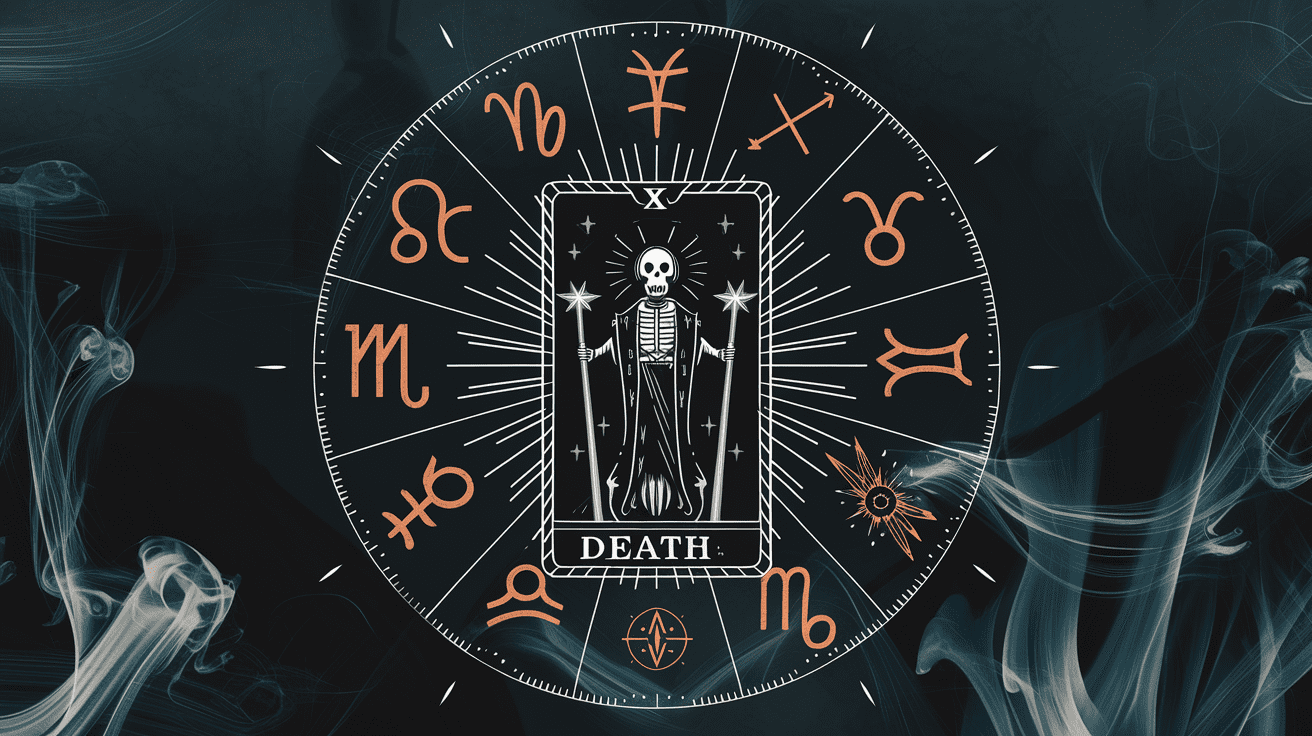
The Death Card in Tarot — Why It Does Not Mean What You Think
You’re shuffling your tarot deck, maybe for the first time, and suddenly there it is — the Death card. Your heart skips a beat. Your mind races to worst-case scenarios. Is someone going to die? Is your relationship doomed? Should you put the cards away and never look at them again?
Take a deep breath. The death tarot card meaning is one of the most misunderstood symbols in the entire tarot deck, and I’ve seen this fear play out in countless readings over my twenty years as a professional tarot reader. In fact, when I first started reading for clients, I’d watch their faces drain of color at the sight of this card — until I explained what it truly represents.
Here’s the truth: the Death card rarely, if ever, predicts literal death. Instead, it’s a powerful symbol of transformation, endings that make way for new beginnings, and the natural cycles of release and renewal that we all experience throughout our lives. Think of it like the autumn season — leaves must fall for new growth to emerge in spring.
In this article, you’ll discover exactly what the Death card means when it appears in your readings, how to interpret its message in different life areas like love, career, and personal growth, and why this card is actually one of the most positive and empowering cards in the deck. You’ll learn to recognize when it’s time to let go of what no longer serves you and how to embrace the beautiful transformations waiting on the other side of perceived endings.
By the time you finish reading, you’ll not only understand the true death tarot card meaning but you’ll also feel confident and empowered the next time it appears in your spread — because you’ll know it’s not an ending at all, but rather the beginning of something extraordinary.
Why Hollywood Got It Wrong — The Death Card’s True Message
That dramatic moment in every supernatural thriller where the protagonist draws the Death card and the room goes silent? Pure cinematic manipulation. I’ve been reading tarot professionally for over two decades, and I can tell you that Hollywood’s portrayal of the Death card as a harbinger of literal doom is about as accurate as using a horoscope to predict lottery numbers.
The truth is far more nuanced—and ultimately far more hopeful. The Death card represents transformation, not termination. When this card appears in a reading, it’s signaling the end of one chapter and the beginning of another. Think of it as nature’s recycling program: old patterns, relationships, or situations that no longer serve you are being cleared away to make room for something new to emerge.
The Rider-Waite imagery tells this story beautifully. That sunrise in the background? It’s not just decorative—it’s the key to understanding this card’s true message. Every ending contains within it the seed of a new beginning. The skeleton doesn’t represent death as we fear it, but rather the stripping away of the non-essential to reveal what truly matters.
The Skeleton’s Scythe: What It Really Cuts Away
That ominous scythe the skeleton wields isn’t harvesting souls—it’s cutting away what’s dead and decayed in your life. In my practice, I’ve seen this card appear when clients are:
- Ending toxic relationships that have been draining their energy
- Leaving careers that no longer align with their authentic selves
- Releasing outdated beliefs that limit their potential
- Moving through grief and emerging transformed on the other side
The scythe doesn’t discriminate between what’s “good” or “bad”—it simply cuts away what’s complete. One client drew this card during a particularly difficult divorce. Six months later, she had not only healed but had launched the business she’d been dreaming about for years. The “death” of her marriage created space for her true calling to flourish.
The White Rose: Purity Through Transformation
✨ Try Our Free Free Tarot Reading ✨
Draw your cards and receive instant guidance from the tarot.
That white rose the skeleton carries isn’t a symbol of mourning—it’s a symbol of purity, renewal, and the beauty that emerges from transformation. White roses have been associated with new beginnings and spiritual awakening across cultures for centuries.
The number four appears prominently in the Rider-Waite Death card—four figures representing the four fixed signs of the zodiac (Scorpio, Aquarius, Taurus, and Leo). This isn’t coincidence. These signs represent the power to endure and transform through challenge. When you’re experiencing your own “death card moment,” remember that you’re being called to embody this same transformative power.
Quick Action Step: When the Death card appears in your reading, ask yourself: “What am I being invited to release?” Write down three things that feel complete in your life right now. The simple act of acknowledging these endings begins the transformation process.
| Hollywood Version | Tarot Reality |
|---|---|
| Literal death | Symbolic transformation |
| Fear and dread | Opportunity for growth |
| Finality | New beginnings |
| Victim mentality | Active participation in change |
| External threat | Internal evolution |
The next time you see the Death card in a movie, remember: that’s entertainment, not enlightenment. In your own life, this card is actually one of the most positive cards in the deck—it’s the universe’s way of clearing the decks for your next great adventure.
The Archetypal Psychology Behind the Fear
Why does the Death card make even seasoned tarot readers pause? The answer lies deep in our collective unconscious—that shared reservoir of symbols and fears Carl Jung identified as shaping human experience across cultures and generations. When we encounter the Death card, we’re not just seeing a skeleton on horseback; we’re tapping into millennia of primal survival instincts that scream “danger!”
The card’s power comes from what Jung called the “shadow self”—those parts of our psyche we’d rather not acknowledge. In my two decades of practice, I’ve noticed something fascinating: clients who resist the Death card’s message most fiercely are often those clinging to identities that no longer serve them. It’s not about physical death at all, but about ego death—the dissolution of who we think we are.
The Collective Unconscious and Death Symbolism
Every culture has death rituals, but Western society’s relationship with mortality is particularly complicated. We’ve sanitized death, pushing it to hospitals and funeral homes, yet our entertainment industry bombards us with violent imagery. This creates a cognitive dissonance that the Death card exploits perfectly.
Consider how different generations interpret this card. Baby Boomers, who grew up with traditional tarot decks and perhaps personal experiences with mortality, often approach the Death card with a mixture of reverence and acceptance. Gen X and Millennials, saturated in horror films and video game violence, might initially react with cinematic fear before recognizing the deeper meaning. Gen Z, with their exposure to both traditional symbolism through social media and contemporary reinterpretations, often have the most nuanced understanding—seeing the card as both unsettling and ultimately hopeful.
The Rider-Waite imagery is particularly brilliant in this regard. That rising sun behind the towers isn’t just decorative—it’s positioned at approximately 15 degrees of Scorpio, the degree associated with transformation and rebirth in traditional astrology. This placement activates the fixed water energy that teaches us to flow with change rather than resist it.
What’s really happening when the Death card appears? You’re being invited to release an outdated version of yourself. Maybe it’s the identity of being a people-pleaser, the story that you’re not creative enough, or the belief that success requires sacrificing your wellbeing. The card asks: what would happen if you let this old self die?
Try this immediate practice: When you pull the Death card, ask yourself, “What am I most afraid of losing?” Then sit with that fear for three full minutes without trying to fix or change it. You’ll often discover the fear itself is what needs to die.
The Death card’s true message isn’t about endings at all—it’s about the courage to become who you’re meant to be. And that’s far more terrifying than any skeleton could ever be.
What the Death Card Actually Means in Your Reading
✨ Try Our Free Love Calculator ✨
Explore the cosmic compatibility between you and your partner.
When the Death card appears in your spread, it’s not announcing the end of your story — it’s turning the page to the next chapter. In my two decades of reading tarot, I’ve seen this card show up most often when someone is clinging to a version of themselves that no longer fits. The universe isn’t punishing you; it’s pruning you, cutting away what’s dead so new growth can emerge.
The Death card carries the number 13 in the Major Arcana, which reduces to 4 in numerology (1 + 3 = 4). In numerology, 4 represents foundation, structure, and stability. This isn’t random chaos — it’s deliberate dismantling of outdated structures so you can rebuild on firmer ground. Think of it like renovating a house: demolition is messy and uncomfortable, but necessary before the beautiful new space can take shape.
The Difference Between Endings and Conclusions
This is where most people get tripped up. An ending implies finality, but the Death card speaks of transformation — a metamorphosis that completes one phase while simultaneously birthing another. In astrology, this card resonates strongly with Scorpio energy (ruled by Pluto, the planet of death and rebirth) and the 8th house of transformation. When Pluto transits key points in your chart, you experience this same energy: not death, but profound metamorphosis.
Consider the symbolism: in the Rider-Waite deck, the skeleton rides through a field where a king has fallen, but children and a woman look up at the rising sun. This sunrise represents the dawn of awareness, the moment when you finally see what’s been hidden. The king’s death isn’t tragedy — it’s the necessary fall of ego-based power structures that no longer serve.
A Step-by-Step Guide to Working With Death Card Energy
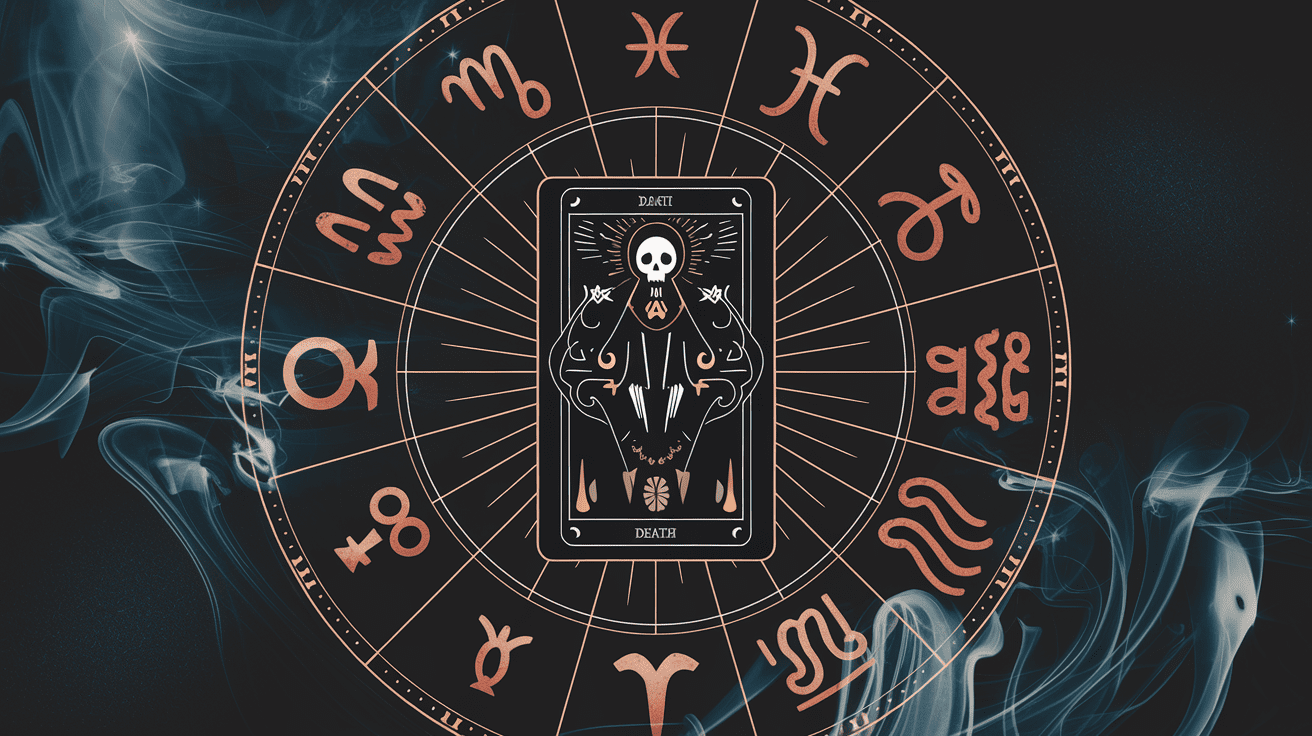
When this card appears, here’s how to work with its transformative energy:
- Acknowledge what’s dying – Identify the identity, relationship, job, or belief system that’s reaching its natural conclusion. Don’t fight it; name it.
- Feel the grief without judgment – Even positive transformations carry grief for what was. Allow yourself to mourn the loss of your former self.
- Look for the sunrise – What new awareness or opportunity is rising in the wake of this ending? The card’s sunrise appears in the background for a reason.
- Take one small action toward your new identity – Transformation happens through tiny, consistent steps. Choose one behavior that aligns with who you’re becoming.
- Track the patterns – Keep a journal noting when Death appears and what themes emerge. You’ll start seeing the cyclical nature of your own growth.
One of my clients, a Leo rising with Sun in the 8th house, kept getting the Death card during a career transition. She was terrified she’d made a terrible mistake leaving her corporate job. But through working with the card’s energy, she realized she wasn’t losing her professional identity — she was shedding the version that prioritized others’ approval over her own fulfillment. Six months later, she launched a consulting business that aligned with her true values.
The Death card is actually one of the most positive cards for personal growth because it signals you’re ready for the next level. It appears when you’ve outgrown your current form, when the universe knows you’re strong enough to handle the transformation. This isn’t about losing yourself — it’s about unbecoming everything that isn’t truly you, so you can become who you were meant to be all along.
Try our Life Path Calculator to understand the deeper cycles at work in your transformation. Sometimes seeing your numerological patterns can provide the clarity needed when the Death card’s message feels overwhelming.
The Vedic Astrology Connection — Ketu and Scorpio’s Role
When we look at the Death card through the lens of Vedic astrology, everything starts to make profound sense. The card’s association with Scorpio becomes even more meaningful when we understand that Scorpio is ruled by Ketu (the South Node of the Moon) in Jyotish tradition.
Ketu represents the tail of the celestial serpent — the part that has already been shed. In Vedic philosophy, Ketu embodies moksha (spiritual liberation), detachment from material attachments, and the wisdom that comes from releasing what no longer serves our soul’s evolution. This perfectly explains why the Death card isn’t about physical death at all, but rather the death of attachments, identities, and patterns that keep us spiritually stagnant.
The connection runs deeper than simple rulership. Ketu operates in the 0-30° range of Scorpio, particularly powerful between 15-20°, where its transformative energy is most concentrated. During Ketu transits through Scorpio (which occurs approximately every 18 months), we see themes of deep psychological transformation, facing shadow aspects of ourselves, and experiencing the kind of endings that make space for new spiritual growth.
How Ketu’s Energy Manifests in Tarot Readings
In my two decades of practice, I’ve noticed distinct patterns when the Death card appears alongside Ketu-influenced placements in a client’s chart. The card often signals a period where the individual is being called to release karmic patterns — those repetitive life situations that keep showing up until we finally learn the lesson.
Here’s how Ketu’s energy typically manifests in different contexts:
| Ketu Influence | Death Card Meaning | Practical Application |
|---|---|---|
| Ketu in 1st House | Identity transformation | Shedding old self-images |
| Ketu in 7th House | Relationship endings | Releasing codependent patterns |
| Ketu in 10th House | Career reinvention | Letting go of status-driven goals |
| Ketu in 12th House | Spiritual awakening | Detachment from material concerns |
The beauty of understanding this Vedic connection is that it transforms fear into recognition. When you see the Death card, you’re not facing an ending — you’re witnessing Ketu’s invitation to liberation. It’s the difference between fighting against change and flowing with it.
One of my clients, a Scorpio rising with Ketu in the 4th house, drew the Death card repeatedly during a period of relocating across the country. Initially terrified, she later understood it as Ketu’s call to release her attachment to her childhood home and family patterns that no longer served her adult life. The “death” was of her old emotional foundation, making way for a new, more authentic one.
The next time you encounter the Death card, try this simple practice: Ask yourself, “What would I need to release to feel more spiritually free?” This question, rooted in Ketu’s wisdom, transforms the card from a symbol of fear into a guide for liberation.
Real Client Stories — When Death Card Meant Transformation
Sometimes the most profound lessons come not from textbooks or ancient wisdom, but from the lived experiences of those who’ve sat across from me with the Death card staring back at them. I’ve witnessed this misunderstood card bring relief, clarity, and unexpected joy to people who initially thought their world was ending.
One of my most memorable readings involved Sarah, a 42-year-old marketing executive who drew the Death card during a particularly stressful career consultation. She was terrified—her father had recently passed away, and the card’s appearance felt like a cruel confirmation of her grief. But as we explored the surrounding cards and her current planetary transits (Saturn was conjunct her natal Venus, indicating major relationship and career restructuring), a different story emerged.
Sarah had been miserable in her corporate job for years but felt trapped by the salary and benefits. The Death card, positioned in her career house with the Sun rising behind it in the Rider-Waite imagery, signaled that her fear of change was the real prison. Three months later, she accepted a position at a nonprofit organization—earning 20% less but reporting unprecedented happiness and fulfillment. The “death” was her attachment to status and security; the rebirth was finding work that aligned with her values.
The Career Change That Changed Everything
Career transformations are actually one of the most common positive outcomes I’ve seen with the Death card. The card often appears when you’re clinging to a professional identity that no longer serves you—like a snake that needs to shed its skin to grow.
Consider Michael, a 35-year-old software developer who kept getting the Death card in his monthly spreads for six consecutive months. Initially dismissive (he loved his job and had just received a promotion), he finally booked a session when his health began suffering from chronic stress. His chart showed Pluto transiting his 6th house of daily work, exact to within 2 degrees—a classic indicator of workplace transformation.
The Death card was urging him to release his perfectionism and workaholic tendencies, not leave his field entirely. Within six months, Michael had negotiated a remote work arrangement, started therapy for his anxiety, and discovered a passion for mentoring junior developers. The transformation wasn’t about changing careers but transforming his relationship with work itself.
Quick Tip: When you draw the Death card in a career reading, ask yourself: “What outdated professional identity am I ready to release?” Sometimes the answer isn’t quitting your job but changing how you approach it.
Breaking Free From Toxic Relationship Patterns
Relationship readings with the Death card often terrify my clients, especially those with past trauma. But I’ve seen this card become a powerful ally in breaking generational patterns and creating healthier connections.
Take Elena, a 28-year-old who came to me convinced her five-year relationship was ending. She’d drawn the Death card alongside the Tower and the Three of Swords—a dramatic combination that had her in tears before we even began. Her Venus was retrograde in her 7th house, and she was experiencing her first Saturn return, making this a pivotal time for relationship restructuring.
As we explored her family history, a pattern emerged: Elena’s mother, grandmother, and great-grandmother had all stayed in emotionally abusive marriages “for the children.” The Death card wasn’t predicting the end of her partnership but rather the death of this inherited belief system. Over the next year, Elena and her partner entered couples therapy, established healthy boundaries, and broke the cycle of dysfunction that had haunted her family for generations.
The most beautiful part? Her partner later told me that drawing the Death card was the wake-up call he needed to confront his own childhood wounds and become the partner Elena deserved. What could have been a devastating breakup became a mutual transformation that strengthened their bond beyond what either had imagined possible.
In my two decades of practice, I’ve learned that the Death card rarely arrives to destroy what’s precious—it comes to liberate us from what’s been slowly killing our spirit while we were too afraid to notice. The sunrise in the Rider-Waite imagery isn’t just decorative; it’s a promise that every ending creates space for beginnings we couldn’t have planned or predicted.
Your Turn: Pull out your journal and reflect on an area of your life where you’re resisting necessary change. What would it feel like to let that old pattern die with gratitude for what it once taught you?
Common Mistakes When Interpreting the Death Card
When the Death card appears in a reading, even experienced readers can stumble into predictable traps. The dramatic imagery and cultural baggage create blind spots that obscure the card’s true wisdom. Let me walk you through the most common mistakes so you can avoid them in your own practice.
The Danger of Reading in Isolation
One of the biggest errors I see is treating the Death card as if it exists in a vacuum. I remember a client who drew Death in a career reading and panicked, convinced she was about to lose her job. When I asked about the surrounding cards, she realized the Chariot appeared alongside it, showing she was in complete control of this transition. The Two of Cups nearby revealed she was actually moving toward a partnership opportunity.
This isolation error happens because we’re conditioned to focus on the most dramatic card in a spread. But the Death card’s meaning shifts dramatically based on context. Here’s a quick reference table showing how surrounding cards modify Death’s message:
| Card Combination | Modified Meaning |
|---|---|
| Death + The Sun | Transformation leading to joy and success |
| Death + The Tower | Sudden, necessary upheaval |
| Death + The Star | Healing through letting go |
| Death + Ten of Cups | End of family patterns, beginning of harmony |
| Death + Eight of Swords | Breaking free from self-imposed limitations |
The key insight: Always read the Death card as part of a conversation with the other cards. What story are they telling together?
Assuming It Always Means Literal Death or Disaster
This might seem obvious, but I’ve seen even seasoned readers momentarily forget that the Death card rarely predicts actual mortality. During Mercury retrograde in Scorpio last year, I had three clients in one week who drew Death and immediately assumed someone would die. None of those predictions came true.
What actually happened? One client ended a toxic friendship, another completed a decade-long project, and the third finally quit a soul-crushing job. The “death” was metaphorical — and far more common than literal interpretations.
The disaster assumption often stems from personal fear rather than the cards themselves. When you see Death, ask yourself: “What am I afraid of losing?” rather than “What’s going to die?”
Missing the Card’s Positive Message About Necessary Change
Here’s where we fail ourselves most: we focus on the ending and miss the beginning. The Death card is actually one of the most optimistic cards in the deck, but we’re so fixated on loss that we overlook the sunrise in the background of the Rider-Waite imagery.
I once worked with a woman who kept drawing Death during a difficult divorce. She saw only pain and failure until I pointed out that every appearance coincided with her taking steps toward independence — going back to school, moving to her own place, rediscovering old passions. The Death card wasn’t highlighting her loss; it was celebrating her transformation.
Try this immediately: When Death appears, consciously look for what’s being born, not just what’s dying. Ask yourself: “What old pattern am I finally free from?” or “What new beginning is this ending making possible?”
Forgetting to Consider the Surrounding Cards in the Spread
This deserves its own emphasis because it’s so crucial. The Death card’s meaning is collaborative, not solo. During a relationship reading last month, a client drew Death and immediately assumed her partner would leave her. But when we examined the full spread, the Lovers card appeared, showing a deep soul connection, while the Six of Cups revealed they were releasing childhood patterns together. The Death card wasn’t signaling an end — it was marking their evolution into a healthier dynamic.
The surrounding cards provide the context that transforms fear into understanding. They answer the question: “What kind of death is this?” Is it the death of illusion? The death of dependency? The death of a limiting belief?
Your practice challenge: Next time Death appears, lay out three cards before it and three cards after it. Read them as a continuous story. What narrative emerges when you stop treating Death as the main character and start seeing it as part of an ensemble cast?
Advanced Techniques — Reading Death in Different Contexts
The Death card is like a chameleon — its message shifts dramatically depending on the context of your reading. Understanding these nuances transforms you from a basic reader into someone who can deliver profound, accurate insights. Let me show you how to decode Death’s message across different life areas.
Death in Love Readings: What It Really Means
When Death appears in a love reading, most people panic. But here’s what’s actually happening: the card is asking you to examine what’s dying in your relationship patterns, not the relationship itself.
In my practice, I’ve seen Death show up for clients who are:
- Holding onto outdated relationship roles (you’re still playing the caretaker when you need to be equals)
- Clinging to a fantasy version of their partner rather than accepting who they truly are
- Stuck in communication patterns that no longer serve the connection
The card often appears when a relationship is ready to evolve to its next level. I remember one client who drew Death while dating someone new. She was terrified it meant the relationship would end. Instead, it signaled the death of her pattern of rushing into intimacy. When she slowed down and allowed the connection to develop naturally, they built a solid foundation that’s still going strong three years later.
Key indicators in love readings:
- Death near Cups cards suggests emotional transformation
- Death near Swords indicates communication patterns need to die
- Death near Pentacles points to material or security-based attachments that need releasing
Career and Finance Readings: The Transformation Message
In career contexts, Death is actually one of the most positive cards you can draw. It signals that your professional life is undergoing a necessary metamorphosis.
When I see Death in career readings, I look for:
- Positions that feel stagnant but are actually incubating new opportunities
- Skills or roles you’ve outgrown but haven’t acknowledged yet
- Industries or work cultures that no longer align with your evolving values
The card often appears during Jupiter transits to the 10th house or when Saturn is completing its transit through a career house. These planetary movements create pressure for change that Death reflects in the cards.
For financial readings, Death can indicate:
- The need to release limiting beliefs about money (“I’m bad with finances”)
- Letting go of outdated income streams to make room for better opportunities
- Transforming your relationship with material security
The Numerology Connection: 13 Reduces to 4
Here’s where it gets fascinating. The Death card is numbered 13 in the Major Arcana. In numerology, 13 reduces to 4 (1 + 3 = 4). This gives us crucial insight into the card’s energy.
The 4 energy brings:
- Structure and foundation-building
- Practical manifestation
- Stability after transformation
This explains why Death, despite its dramatic appearance, ultimately leads to more grounded, stable circumstances. The destruction it represents clears space for practical rebuilding.
I’ve created a simple reference chart for interpreting Death’s numerology:
| Death Position | Core Meaning | Practical Application |
|---|---|---|
| 13 (Death) | Complete transformation | Major life overhaul |
| 4 (reduced) | Foundation building | Creating new structures |
| 1+3=4 | Unity of change and stability | Balancing release with creation |
When you see Death in a reading, ask yourself: “What stable foundation am I being called to build after this transformation?” This question alone can shift your entire interpretation from fear to empowerment.
The next time Death appears, remember it’s not just about what’s ending — it’s about what magnificent new structure you’re being invited to create. The card’s true power lies in its ability to show us that every ending contains the blueprint for something even better.
Practical Steps When You Draw the Death Card
When the Death card appears in your reading, it’s natural to feel a jolt of anxiety. But this card is actually a powerful ally — a cosmic midwife guiding you through transformation. Here’s how to work with its energy constructively.
Three Questions to Ask Yourself When Death Appears
First, pause and take a deep breath. The Death card isn’t here to scare you — it’s here to wake you up. Ask yourself:
What am I holding onto that’s ready to be released? This could be a relationship pattern, a limiting belief, or even a physical object that carries emotional weight. The Death card often shows up when we’re clutching something that’s already dead.
Where am I resisting necessary change? The card often appears when we’re fighting against transformation that’s already underway. Are you staying in a job that drains you because you’re afraid of the unknown? Are you maintaining friendships that no longer serve your growth?
What new beginning is being prepared? Just as the Rider-Waite imagery shows a sunrise behind the figure of Death, transformation always brings new life. What opportunities might be emerging from the endings you’re experiencing?
Journal Prompts to Explore What Needs to Transform
Journaling with the Death card can reveal profound insights. Try these prompts when you draw Death:
- Write a letter to your former self: What would you tell the person you were five years ago? What wisdom have you gained through your own cycles of death and rebirth?
- List what you’re ready to release: Be specific. Instead of “my job,” try “the belief that I’m not good enough to pursue my dream career.” The Death card works best when we’re precise about what we’re letting go.
- Describe your ideal rebirth: If this transformation were to create your best life, what would that look like? The Death card isn’t just about endings — it’s about becoming who you’re meant to be.
How to Work with Death’s Energy for Positive Change
The Death card carries intense transformative energy that you can harness intentionally. Here’s how:
Create a release ritual: Write down what you’re ready to let go on a piece of paper. Under the waning moon (when the moon is decreasing in light), safely burn the paper while stating your intention to release. This works particularly well when the moon is in Scorpio or when Ketu is prominent in your chart.
Work with transformative crystals: Black tourmaline helps ground you through change, while malachite specifically supports transformation and breaking old patterns. Smoky quartz can help you release what no longer serves you.
Time your actions with planetary transits: The Death card’s energy is particularly potent during Scorpio season (October 23 – November 21), when the Sun transits this transformative sign. It’s also powerful during eclipses, which often trigger endings and new beginnings.
Daily Practices for Embracing Transformation
Working with the Death card isn’t just about big rituals — it’s about daily practices that help you flow with change rather than resist it.
Morning reflection: Each morning, ask yourself, “What needs to die today?” This might be a negative thought pattern, a procrastination habit, or an emotional reaction you’re ready to release.
Evening integration: Before bed, reflect on where you saw evidence of transformation in your day. Even small changes — choosing a different route to work, speaking up when you usually stay silent — are evidence of Death’s energy at work.
Mindful breathing practice: When you feel resistance to change, try this: Inhale for a count of four, hold for four, exhale for six. As you exhale, visualize releasing whatever you’re holding onto. The longer exhale helps activate your parasympathetic nervous system, making it easier to let go.
Create a Death card altar: Place the Death card from your deck on a small table with a black candle, a piece of obsidian, and a fresh flower (symbolizing the rebirth that follows every ending). Spend five minutes each day sitting with this altar, breathing deeply and allowing whatever needs to transform to surface.
Remember, the Death card doesn’t ask you to force change — it asks you to surrender to the transformation that’s already happening. When you draw this card, you’re being invited to trust the process of your own becoming. What part of you is ready to be reborn?
Frequently Asked Questions
What does the Death card mean in a love reading?
In a love reading, the Death card signals the end of a relationship cycle and the beginning of something new. This could mean releasing old patterns, letting go of a relationship that no longer serves you, or experiencing a profound transformation within your current partnership. Rather than literal loss, it often points to emotional rebirth—perhaps moving from casual dating to commitment, or from codependency to healthy boundaries. If you’re unsure about timing or compatibility in your love life, you might find clarity with our Relationship Compatibility Calculator.
Is the Death card in tarot good or bad?
The Death card is neither inherently good nor bad—it’s a neutral force of transformation. Like the changing seasons, it marks necessary endings that make way for new growth. While the imagery can feel frightening at first glance, this card actually represents liberation from what’s outgrown. In my two decades of practice, I’ve seen it appear when clients are ready to release limiting beliefs, toxic relationships, or stagnant career paths. The “good” or “bad” comes from how we work with the change it heralds.
What zodiac sign is the Death card?
The Death card is associated with Scorpio, the zodiac sign ruled by Pluto, the planet of transformation and rebirth. This connection makes perfect sense—Scorpio energy dives deep into the shadows, confronts what’s hidden, and emerges renewed. When the Death card appears alongside Scorpio placements in a chart reading, the transformation can be particularly profound and lasting. The fixed water sign’s themes of death and rebirth, shared resources, and psychological depth mirror the card’s core message of necessary endings leading to regeneration.
Does the Death card mean physical death?
No, the Death card rarely indicates physical death in tarot readings. This is perhaps the most common misconception about this card. Instead, it symbolizes metaphorical death—the ending of chapters, beliefs, relationships, or situations in your life. The skeleton on the card reminds us that beneath our changing circumstances, our core self remains eternal. I always tell clients: if you’re genuinely concerned about health matters, please consult medical professionals rather than seeking answers in tarot. The card’s true message is about transformation and renewal, not literal mortality.
What does the Death card mean reversed?
When reversed, the Death card often indicates resistance to necessary change or transformation happening too slowly. You might be clinging to outdated situations out of fear, or the change you’re experiencing feels incomplete. Sometimes it appears when you’re avoiding a difficult ending that needs to happen, or when transformation is happening beneath the surface but hasn’t yet manifested visibly. The reversed position asks: What are you afraid to let go of? What ending are you postponing that could free you? Consider using our Personal Year Calculator to understand the transformative cycles at play in your life.
How do you interpret the Death card in a career reading?
In career readings, the Death card signals the end of a professional chapter and the beginning of a new vocational path. This might manifest as leaving a job, changing industries, or completely reinventing your role. The card asks you to release outdated career identities that no longer fit who you’re becoming. I’ve seen it appear for clients who needed to let go of safe but unfulfilling work to pursue their true calling. While the transition can feel unsettling, it ultimately clears space for work that aligns with your evolving purpose and values.
Your Cosmic Path Forward
The death tarot card meaning isn’t about endings—it’s about transformation, liberation, and the courage to release what no longer serves you. Whether you’re navigating a career shift, relationship evolution, or inner awakening, this card reminds you that every ending creates fertile ground for new beginnings. The skeleton on the card isn’t a threat—it’s a guide, showing you how to strip away the inessential and step into your authentic power.
Remember that transformation rarely arrives gently. Like the Tower’s lightning strike or the Hanged Man’s suspension, death’s energy can feel disruptive precisely because it’s clearing space for what’s meant to be. But here’s the cosmic truth: when you stop resisting change and start working with it, you align with the natural cycles of growth that the universe has always intended for you.
Your astrological chart holds clues about where you’re being called to transform. The houses ruled by Scorpio and Pluto, the placement of your natal Saturn, and the current transits activating your 8th house all reveal the specific arenas where death’s wisdom is working in your life right now. These aren’t random occurrences—they’re invitations to step into your next level of becoming.
Ready to discover where transformation is calling you most powerfully? Try our Birth Chart Calculator to see which houses and planets are currently activated by death’s transformative energy. Your chart is the map, and your willingness to release is the key that unlocks your next chapter.
The universe doesn’t ask you to fear death—it asks you to dance with it. Every release, every surrender, every brave goodbye is actually a hello to the version of you that’s been waiting in the wings. The question isn’t whether change is coming, but whether you’ll meet it as the alchemist or the casualty. Choose transformation. Choose yourself.