The 12 Houses of Astrology Explained — A Map of Your Entire Life
Have you ever looked at your birth chart and felt completely lost? You see twelve mysterious sections, each filled with symbols and numbers, and wonder what they all mean. You’re not alone. Those twelve sections are the 12 houses of astrology, and they hold the key to understanding every area of your life — from your career and relationships to your deepest fears and greatest strengths.
In my two decades of practice, I’ve watched countless clients have that “aha!” moment when they finally understand how the houses work. One client, a young woman struggling with career decisions, discovered her Midheaven (the 10th house cusp) was in Virgo. This simple insight explained why she thrived in detail-oriented work and felt unfulfilled in her previous job — it was the first piece of her cosmic puzzle falling into place.
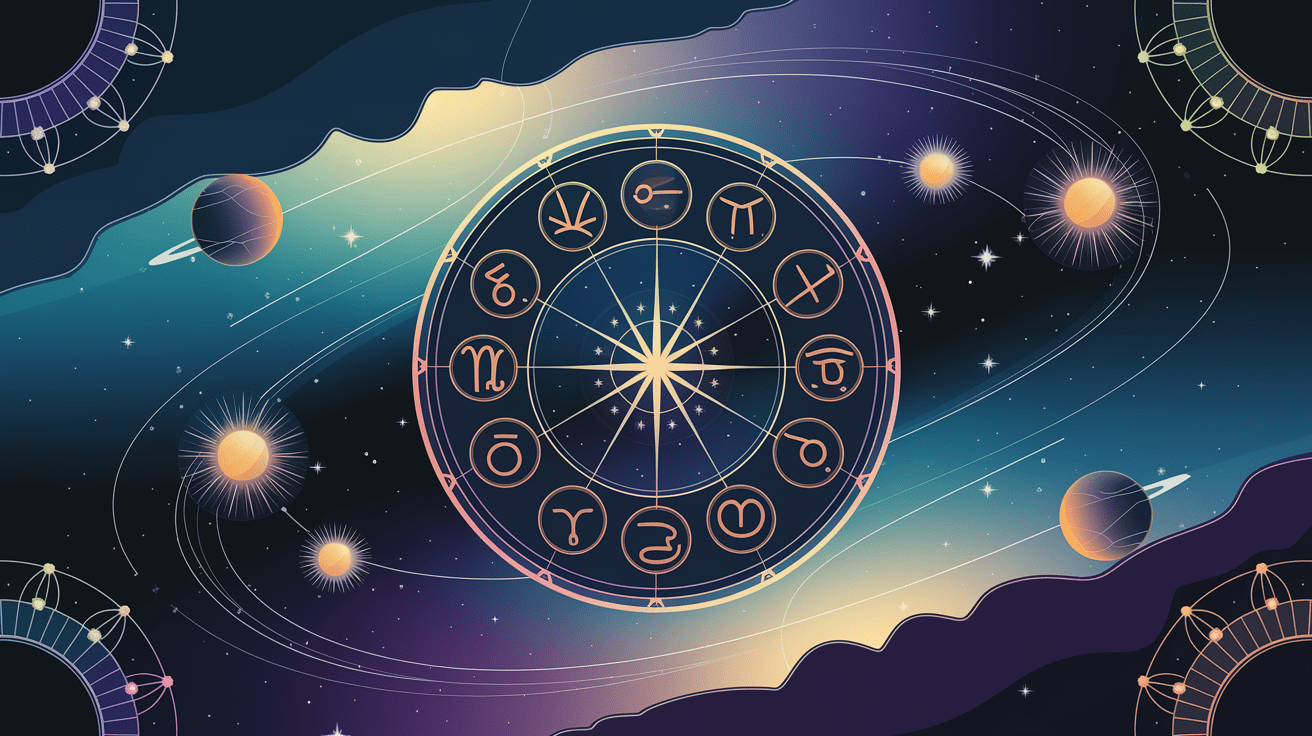
The 12 houses of astrology create a complete map of your life experience. Each house governs a specific domain: the first house represents your identity and appearance, the seventh house governs partnerships, the tenth house rules career and public reputation, and so on. Together, they form a wheel that mirrors the cycle of human experience, from birth through relationships, career, transformation, and ultimately, spiritual understanding.
By the end of this article, you’ll understand what each house represents, how to locate them in your own chart, and what it means when planets occupy different houses. You’ll gain a practical framework for interpreting not just your birth chart, but also how current planetary movements affect different areas of your life. Think of it as learning the language your soul has been speaking since the moment you were born.
Ready to decode the cosmic blueprint that’s been waiting for you all along? Let’s begin with the very first house — the foundation of your entire astrological identity.
Why the 12 Houses Are Your Life’s Blueprint — Not Just Zodiac Signs
When people think of astrology, they usually picture their Sun sign — the zodiac sign where the Sun was positioned at their birth. But here’s the truth: your Sun sign is just one piece of a much bigger cosmic puzzle. The 12 houses of astrology are the actual framework of your life, showing exactly where and how different experiences unfold.
Think of it this way: the zodiac signs are like the style or energy of something, while the houses are the specific areas of your life where that energy plays out. If Aries is the bold, initiating force, the house it occupies tells you where in your life you’ll express that pioneering spirit. Is it in your career (10th house)? Your relationships (7th house)? Your daily routines (6th house)? That’s the difference between knowing you have a Ferrari and knowing whether you’ll drive it on the racetrack, through city streets, or across rugged terrain.
The Difference Between Signs and Houses
This distinction is crucial for understanding your full birth chart. The signs describe how you approach things — your style, temperament, and expression. The houses show where in your life those themes manifest.
Here’s a quick comparison:
| Zodiac Signs | Houses |
|---|---|
| Describe personality traits | Map life areas and experiences |
| Based on Earth’s orbit around the Sun | Based on Earth’s 24-hour rotation |
| Same for everyone born in the same month | Unique to your exact birth time |
| Show “how” you do things | Show “where” things happen |
For example, if you have Venus in Gemini, that describes your love style as communicative and curious. But if that Venus is in your 4th house, you’ll express those qualities at home, with family, or in your private life. If it’s in your 10th house instead, you’ll bring that same energy into your career and public reputation. Same Venus, completely different life expression.
How Your Birth Time Creates Your Unique House System
✨ Try Our Free Free Tarot Reading ✨
Receive spiritual guidance through the wisdom of the tarot.
This is where things get fascinating — and personal. Unlike zodiac signs, which are determined by your birth date, the houses shift every few minutes. The Earth rotates 360 degrees in 24 hours, meaning each house covers approximately 2 hours of time. That’s why your exact birth time is essential for an accurate birth chart.
Without your birth time, astrologers can only calculate your “solar chart” — a general chart where the Sun is placed at the ascendant. While useful, it’s like looking at a map of your city without your current location marked. You know the streets exist, but you don’t know where you are in relation to them.
Your birth time determines your Ascendant (Rising Sign), which becomes the cusp of your 1st house. From there, the other houses fall into place like slices of a cosmic pie. Two people born on the same day in the same city but just two hours apart could have entirely different house placements — and therefore completely different life focuses.
Here’s an actionable tip: if you don’t know your birth time, check your birth certificate, ask family members, or contact the hospital where you were born. Even a 15-minute window can make a significant difference in your house placements. If you can’t find it, some astrologers offer “chart rectification” services to work backward from major life events to determine your likely birth time.
The houses are your life’s blueprint because they show where you’ll experience growth, challenges, relationships, career developments, and spiritual evolution. They’re not just abstract concepts — they’re the actual stages where your life’s drama unfolds. Understanding them transforms astrology from a personality test into a practical roadmap for navigating your unique journey.
The Complete 12 Houses Cheat Sheet — What Each House Actually Governs
Now that you understand how the 12 houses form the skeleton of your chart, let’s dive into what each one actually governs. Think of this as your cosmic cheat sheet — a quick reference for understanding where different life themes play out in your world.
House 1: Your Identity and Physical Appearance
This is the house of self — your first impression, physical body, and how you naturally present yourself to the world. The sign on your Ascendant (the cusp of House 1) determines your rising sign, which colors your entire chart. If you have Aries rising, for example, you might have a quick, energetic demeanor and a direct communication style. Planets here become highly visible in your personality — Venus in House 1 might give you natural charm and beauty, while Mars here could make you appear more assertive or athletic.
Quick Tip: Look at your Ascendant sign to understand your default “vibe” when meeting new people.
House 2: Money, Values, and Self-Worth
✨ Try Our Free Life Path Calculator ✨
Understand the spiritual mission encoded in your birth date.
This house governs your relationship with resources — both material (income, possessions) and intangible (values, self-esteem). A Taurus-ruled 2nd house might make you particularly security-conscious with money, while Gemini here could indicate multiple income streams or fluctuating finances. The 2nd house also reveals what you value beyond money — your sense of self-worth often ties directly to what’s happening here.
House 3: Communication, Siblings, and Short Trips
The 3rd house rules everyday communication, learning, and your immediate environment. It governs siblings, neighbors, short journeys (think day trips, not international travel), and how you process and share information. Mercury’s placement here is especially powerful — Mercury in the 3rd might make you a natural writer or teacher. This is also the house of early education and your relationship with your local community.
House 4: Home, Family, and Emotional Foundations
This is your foundation — literally and emotionally. The 4th house rules your home environment, family dynamics (especially the parent who provided primary nurturing), and your sense of security. It’s also connected to your ancestry and where you come from. The IC (Imum Coeli), the lowest point in your chart, sits at the cusp of this house. A Cancer-ruled 4th might make you deeply attached to family traditions, while Aquarius here could indicate an unconventional home life.
House 5: Creativity, Romance, and Children
The 5th house is where you express yourself for the joy of it — through art, romance, or play. It governs creativity, hobbies, gambling, and your approach to dating and romance (distinct from committed partnership, which is 7th house territory). This house also rules children — both your relationship with them and your own inner child. Leo’s natural connection to this house makes sense — it’s all about creative self-expression and being seen.
House 6: Work, Health, and Daily Routines
The 6th house governs your daily grind — your work habits, health routines, and how you serve others. Unlike the 10th house (career and public reputation), the 6th is about the day-to-day work that keeps your life running smoothly. It rules your relationship with coworkers, your physical health, and even your pets. Virgo’s analytical nature fits perfectly here — this is where you refine and perfect your systems.
House 7: Partnerships and Marriage
This is the house of one-on-one relationships — marriage, business partnerships, and close friendships. The sign on your 7th house cusp reveals what you seek in partners and how you behave in relationships. If your Sun is in the 7th, you might define yourself strongly through your partnerships. This house also shows what you project onto others — often what you most need to integrate within yourself.
House 8: Transformation, Shared Resources, and Intimacy
The 8th house is where we face life’s deeper mysteries — death, rebirth, shared finances, and emotional intimacy. It governs inheritances, taxes, loans, and anything you share with others (including your body in intimate relationships). This is also the house of transformation — Scorpio’s intense energy fits naturally here. Planets in the 8th often indicate where you’ll experience profound personal evolution.
House 9: Higher Education, Travel, and Philosophy
The 9th house expands your horizons beyond the familiar — through higher education, long-distance travel, philosophy, and spiritual seeking. It governs your search for meaning and your relationship with different cultures and belief systems. Jupiter’s connection to this house makes sense — it’s about growth through exploration. A Sagittarius-ruled 9th might make you a lifelong learner with a passion for adventure.
House 10: Career, Reputation, and Public Life
This is your highest point — literally the top of your chart. The 10th house governs your career, public reputation, and how you’re seen by society. The MC (Medium Coeli) sits at its cusp, representing your life’s direction and aspirations. Unlike the 6th house (daily work), the 10th is about your legacy and long-term achievements. Capricorn’s ambitious energy fits perfectly here — it’s about climbing toward your goals.
House 11: Friendships, Groups, and Long-Term Goals
The 11th house governs your social circle, group affiliations, and hopes for the future. It’s where you connect with like-minded people and work toward collective goals. This house also rules your relationship with technology and innovation. Aquarius’s forward-thinking energy aligns with this house — it’s about envisioning and creating the future you want to see.
House 12: Spirituality, Solitude, and the Unconscious
The final house represents what lies beyond the material world — your spiritual life, subconscious mind, and need for solitude. It governs endings, hidden strengths and weaknesses, and your connection to the collective unconscious. Pisces’s mystical energy fits naturally here. Planets in the 12th often operate beneath the surface — they might represent talents you haven’t fully acknowledged or challenges you need to work through privately.
Quick Reference Table for All 12 Houses
| House | Life Area | Natural Sign | Key Themes |
|---|---|---|---|
| 1st | Identity & Appearance | Aries | Self, body, first impressions |
| 2nd | Money & Values | Taurus | Resources, self-worth, possessions |
| 3rd | Communication & Siblings | Gemini | Learning, local travel, neighbors |
| 4th | Home & Family | Cancer | Roots, emotional security, ancestry |
| 5th | Creativity & Romance | Leo | Self-expression, children, fun |
| 6th | Work & Health | Virgo | Daily routines, service, wellness |
| 7th | Partnerships | Libra | Marriage, business partners, contracts |
| 8th | Transformation & Intimacy | Scorpio | Shared resources, psychology, rebirth |
| 9th | Higher Learning & Travel | Sagittarius | Philosophy, long journeys, beliefs |
| 10th | Career & Reputation | Capricorn | Public life, achievements, legacy |
| 11th | Friendships & Groups | Aquarius | Social networks, future goals |
| 12th | Spirituality & Solitude | Pisces | Subconscious, endings, transcendence |
Want to see which planets fall in which houses of your chart? Use our Free Birth Chart Calculator to generate your complete natal chart and discover where these life themes are most activated for you. You might be surprised to find that your Sun isn’t in the house you’d expect — that’s the magic of houses revealing the full complexity of your cosmic blueprint.
Finding Your Houses — How to Calculate Your Birth Chart for Free
You’ve got the theory down — now let’s get practical. To unlock the secrets of your 12 houses, you need one crucial piece of information: your exact birth time, date, and location. Without these three details, your chart is just a guess. Think of it like trying to read a map without knowing your starting point — you might recognize some landmarks, but you’ll never find your true path.
The houses shift every few minutes as the Earth rotates, so even a 10-minute difference can change which sign rules your 1st house (your Ascendant). For example, someone born at 3:15 PM might have Leo rising, while a birth just 15 minutes later could have Virgo rising — completely altering the energy of their entire chart.
Step-by-Step Guide to Using a Birth Chart Calculator
Ready to generate your chart? Here’s how to do it in under five minutes:
- Gather your birth information — You’ll need your exact birth date, precise birth time (from your birth certificate if possible), and city of birth. If you don’t know your birth time, some calculators can still generate a partial chart, but the houses won’t be accurate.
- Choose a reputable calculator — I recommend Astrodienst (astro.com) or Astro-Seek, both of which are free and trusted by professional astrologers. Avoid any site that asks for payment upfront or seems overly complicated.
- Enter your details — Most calculators have you select your birth date, then input the exact time (including AM/PM), and finally type your birth city. The system will automatically adjust for time zone and daylight saving changes.
- Generate your chart — Click “Calculate” or “Create Chart.” Within seconds, you’ll see a circular chart divided into 12 slices — these are your houses.
- Locate your Ascendant — The Ascendant (or Rising Sign) is always the sign on the 9 o’clock position of your chart. This sign rules your 1st house and sets the tone for your entire chart. For instance, if you see Sagittarius at that position, you have a Sagittarius Ascendant, and Sagittarius rules your 1st house.
- Read your house cusps — Each house begins at a specific degree of a zodiac sign. The cusp is the starting point. If your 2nd house cusp is at 15° Taurus, then Taurus rules your 2nd house of finances and values.
- Interpret the planets — Notice which planets fall in which houses. A Venus in your 7th house suggests harmony in partnerships, while Mars in your 10th house indicates a drive for career success.
Here’s a quick reference table showing how house cusps work:
| House Number | Cusp Sign | What It Rules |
|---|---|---|
| 1st | Your Ascendant | Identity, appearance, first impressions |
| 2nd | Second cusp | Money, possessions, self-worth |
| 3rd | Third cusp | Communication, siblings, short trips |
| 4th | IC (Imum Coeli) | Home, family, roots |
| 5th | Fifth cusp | Creativity, romance, children |
| 6th | Sixth cusp | Work, health, daily routines |
| 7th | Descendant | Partnerships, marriage, contracts |
| 8th | Eighth cusp | Transformation, shared resources, intimacy |
| 9th | Ninth cusp | Travel, higher learning, philosophy |
| 10th | MC (Medium Coeli) | Career, public image, authority |
| 11th | Eleventh cusp | Friendships, groups, aspirations |
| 12th | Twelfth cusp | Subconscious, solitude, karma |
Pro tip: Once you have your chart, take a screenshot and keep it handy. You’ll want to reference it as you explore each house in depth. And if you’re curious about how current planetary movements affect your houses, try our Transit Calculator to see real-time influences.
Understanding your houses is like finally seeing the full blueprint of your life’s potential. Now that you know how to find them, you’re ready to explore what each one means for you personally. Up next, we’ll dive into the first house — your identity and how the world sees you.
Vedic vs. Western Houses — Why They Tell Different Stories
You’ve got your birth chart in front of you, and suddenly you’re staring at two different maps of your life — one from Vedic astrology, one from Western. Same planets, same birth data, but the houses don’t match up. What gives?
The core difference comes down to house systems. Western astrology uses the Placidus system, which divides the chart based on the varying sizes of the houses depending on your latitude. Vedic astrology uses the Whole Sign system, where each house spans exactly 30 degrees and starts with the sign that contains your Ascendant. That single shift can move planets into different houses, changing the entire narrative.
For example, let’s say your Ascendant is at 15° Leo. In Western Placidus, your 4th house cusp might fall at 22° Scorpio, placing Mars at 25° Scorpio in your 4th house of home and family. In Vedic Whole Sign, your 4th house is entirely Scorpio, so Mars sits right in its own house — a very different energy than having it on the cusp.
Western astrology emphasizes psychological and developmental themes. The 4th house becomes your inner world, childhood roots, and emotional foundation. The 10th house is your public identity, career ambitions, and relationship with authority. It’s introspective, focusing on how you experience these life areas.
Vedic astrology organizes the 12 houses around four life goals: dharma (purpose), artha (resources), kama (desires), and moksha (liberation). Houses 1, 5, and 9 are dharma houses — your soul’s mission. Houses 2, 6, and 10 are artha — how you earn and manage resources. Houses 3, 7, and 11 are kama — relationships and fulfillment of desires. Houses 4, 8, and 12 are moksha — spiritual liberation and release.
When to Use Each System for Your Readings
Here’s a practical approach: use Western houses for psychological self-understanding and relationship dynamics. It’s excellent for exploring your inner patterns, communication style, and emotional needs. Use Vedic houses when you want to understand life purpose, timing of events, and karmic patterns. Vedic’s whole sign approach often feels more “accurate” for major life themes because it’s less distorted by latitude.
Many professional astrologers use both systems — Western for the “how you experience it” layer, Vedic for the “what’s actually happening” layer. You might discover that Venus in the 7th house Western style speaks to your relationship patterns, while Vedic places it in the 6th house, revealing work-related relationship themes you hadn’t considered.
Want to see this difference in action? Run your chart through both systems using our free chart calculator at Astrologer Global. Look at where your Sun, Moon, and Ascendant ruler fall in each system. You might be surprised which story resonates more deeply with your lived experience.
The houses are your life’s stage — whether you’re reading from the Western or Vedic script, the planets are still the actors playing out your unique cosmic drama.
Real-Life Examples — How Houses Show Up in Your Daily Experience
You know your Sun sign, but do you know which house it’s in? That’s where the real magic happens. The 12 houses of astrology aren’t just abstract concepts—they’re the actual stages where your life plays out. Let me show you how these houses show up in real, tangible ways through some common life patterns.
6th House: Why You Keep Getting the Same Health Issues
Ever notice how certain health problems keep recurring? That’s your 6th house talking. This house governs daily routines, work habits, and—crucially—health vulnerabilities. If you have Mars in the 6th house, for example, you might experience inflammation-related issues or accidents during high-energy activities. Someone with Saturn here often deals with chronic conditions that require discipline to manage.
I had a client with Virgo on her 6th house cusp who couldn’t understand why she kept getting digestive issues despite eating “healthy.” When we looked at her chart, we saw Neptune conjunct her 6th house ruler Mercury. The issue wasn’t just what she ate—it was her anxiety around food choices and her tendency to overthink every meal. Once she understood this pattern, she could address the emotional root instead of just the physical symptoms.
7th House: Patterns in Your Romantic Relationships
Your 7th house reveals why you attract certain partners and what relationship dynamics keep repeating. This house governs committed partnerships, marriage, and “the other.” Someone with Venus in the 7th house often attracts beautiful, artistic partners but may struggle with codependency. A 7th house Mars person tends to choose passionate but volatile relationships.
The sign on your 7th house cusp sets the tone for what you seek in partnerships. Aries on the 7th? You’re drawn to independent, assertive partners who keep you on your toes. Libra there? You crave harmony and may struggle with indecision about relationships. The 7th house also shows your relationship with “open enemies”—those conflicts that feel personal and charged.
10th House: Career Opportunities and Public Recognition
Your 10th house is your career launchpad and public reputation. This Midheaven point shows where you’re meant to shine in the world. A client of mine had Jupiter in the 10th house and consistently found that career opportunities came through teaching, travel, or expanding her skills—classic Jupiter themes. Another with Saturn there built her reputation slowly but became known for reliability and expertise.
The 10th house also governs your relationship with authority figures and your approach to ambition. Someone with the Sun here needs their career to be an expression of their identity. Moon in the 10th? Your public image fluctuates with your emotional state, and you might choose careers connected to nurturing or caring for others.
4th House: Family Dynamics and Your Sense of Home
Your 4th house is your emotional foundation—the home you come from and the home you create. This Imum Coeli point governs family of origin, your relationship with parents (especially the mother or primary caregiver), and your sense of security. A client with Pluto in the 4th experienced intense family power struggles growing up, which later motivated her to create a completely different home environment for her own children.
The sign on your 4th house cusp reveals your ideal home atmosphere. Cancer there? You need a nurturing, cozy space that feels like a sanctuary. Aquarius? You might prefer an unconventional living situation or a home that doubles as a community hub. This house also shows where you retreat when life gets overwhelming.
11th House: Why Certain Friendships Feel Destined
Your 11th house governs friendships, groups, and your hopes and wishes for the future. This is where you find your tribe and discover what you’re working toward collectively. Someone with Jupiter in the 11th often has a large, diverse friend group and finds opportunities through networking. Saturn here might mean a smaller circle of deeply loyal friends who share your long-term goals.
I’ve noticed that people with the same planet in their 11th house often feel an instant connection when they meet—it’s like recognizing a fellow traveler on the same path. The 11th house also shows your relationship with technology, social causes, and the communities that help you achieve your dreams.
Case Study: Sarah’s 7th House Stellium and Relationship Patterns
Sarah came to me confused about why she kept attracting unavailable partners. Her chart revealed a stellium (three or more planets) in her 7th house: Sun, Mercury, and Venus all in Libra. This concentration of energy in the partnership house meant relationships were her primary growth arena.
The stellium was squared by Pluto in her 4th house, creating intense power dynamics in her closest relationships. Her Venus in Libra wanted harmony, but Pluto’s square kept bringing transformation through conflict. Once Sarah understood this pattern, she could recognize the difference between healthy compromise and losing herself in relationships.
She also had Saturn in her 1st house, which made her naturally cautious about commitment—creating the very unavailability she complained about in partners. Understanding these house connections helped Sarah break the cycle and choose relationships that supported her growth rather than repeating old patterns.
Want to discover your own house patterns? Understanding your chart’s house placements can reveal why certain life themes keep showing up. Try our Birth Chart Calculator to see which houses your planets occupy and start recognizing the patterns already at play in your life.
The Biggest House Misconceptions That Keep You Stuck
You’ve probably heard someone say, “Oh, I have an empty 7th house, so I’ll never find love,” or “My 10th house has Saturn, so I’m doomed in my career.” These common myths about the 12 houses of astrology can actually keep you from understanding your true potential. Let me clear up the biggest misconceptions that trip people up.
Houses aren’t inherently “good” or “bad” — they’re simply different areas of life experience. The 6th house isn’t evil just because it deals with challenges; it’s also where you develop discipline, overcome obstacles, and serve others. The 8th house isn’t cursed; it’s the realm of transformation, shared resources, and deep intimacy. Every house contains both shadow and light, struggle and growth.
Here’s a reality check: empty houses don’t mean nothing happens there. I can’t tell you how many clients panic when they see a chart with several vacant houses. But an empty house simply means you don’t have any major planets residing there at birth. The house still operates through its ruling planet and the transits that move through it. For example, someone with an empty 2nd house might not have dramatic money stories written in their natal chart, but Jupiter could still bring financial abundance when it transits through, or their 2nd house ruler in the 11th could indicate earning through groups and networks.
Retrograde planets in houses don’t doom that life area either. A retrograde Venus in your 7th house doesn’t mean you’re destined for relationship failure — it might mean you need to learn relationship lessons more deeply, or that you attract partners who help you heal past patterns. Retrograde energy often turns inward first, creating mastery through reflection before outward expression.
Debunking the ‘Empty House’ Myth
Let me break down what really happens in empty houses:
What People Think:
- Nothing significant will ever happen in that life area
- You’re “missing” that part of life experience
- The house is dormant or unimportant
What Actually Happens:
- The house ruler becomes extra important
- Transiting planets activate the house regularly
- The area develops through other chart connections
- Empty houses often represent areas where you have less resistance
For instance, if your 4th house (home and family) is empty but your Moon is in the 10th house, your career might be deeply tied to your sense of emotional security. Or if your 11th house is empty but your Sun rules it from the 5th, your friendships might form through creative communities or children’s activities.
The most overlooked factor? House rulers matter more than you think. Each house has a planetary ruler based on the sign on its cusp. That ruler’s position, aspects, and condition tell you volumes about how that house will actually function. A well-placed house ruler can make an empty house flourish, while a challenged ruler can complicate even a house packed with planets.
Want to understand your empty houses better? Look up your house rulers using our Chart Ruler Calculator — you might be surprised at what you discover about the areas of life you thought were “missing.”
Planetary Rulers and House Cusps — The Secret Language of Your Chart
Have you ever wondered why certain life areas feel more intense than others? Why your career might be thriving while your relationships feel stuck? The answer lies in understanding planetary rulers and house cusps — the hidden architecture that gives each house its unique flavor.
Each house has a planetary ruler based on its cusp sign. The sign on the cusp of each house determines which planet rules that life area. For example, if your 7th house cusp is in Gemini, Mercury becomes the ruler of your partnerships. This means Mercury’s placement, aspects, and condition in your chart reveal the quality of your relationships.
Ruler placement shows where that life area’s energy is focused. When Mercury sits in your 10th house of career, your partnerships (7th house) are likely influenced by professional matters. You might meet partners through work, or your communication style is shaped by career ambitions. One of my clients had Venus ruling her 4th house (home) placed in her 1st house (identity). She literally became her home — an interior designer whose personal style defined her living spaces.
Understanding House Rulers with Visual Chart Examples
Let me show you how this works with a sample chart:
Chart Example: Sarah’s Birth Chart Analysis
- Ascendant: 15° Leo (Sun rules 1st house)
- 7th house cusp: 15° Aquarius (Uranus rules 7th house)
- Uranus in 10th house (career)
- Mercury in 7th house (communication in partnerships)
- Venus in 4th house (home values)
In Sarah’s chart, her partnerships are ruled by Uranus, which sits in her career house. This suggests her relationships are unconventional, perhaps meeting partners through professional networks or having relationships that challenge her public image. The fact that Mercury (communication) is also in the 7th house amplifies this — she needs intellectual connection and open dialogue in partnerships.
Interceptions create unique karmic lessons. When a sign is completely contained within a house without appearing on any cusp, that sign is intercepted. This creates a “hidden” area of life that requires special attention. A client with intercepted Pisces in her 2nd house of money had unusual financial patterns — she was either extremely generous or extremely stingy, with little middle ground. The intercepted sign represents energies we must integrate consciously.
House overlays explain why certain signs feel ‘at home’ in specific areas. When you understand which planets rule which signs, you can see why some house placements feel more natural than others. Mars in Aries in the 1st house feels powerful because Mars rules Aries. But Mars in Cancer in the 4th house is in its fall — the warrior planet in the nurturing sign creates tension between action and emotion.
Quick Tip: Look at your chart and identify the ruler of your 10th house (career). Where is that planet placed? This shows where your professional energy is actually directed. If your 10th house ruler is in the 12th house, you might have a spiritual or behind-the-scenes career rather than a public one.
The beauty of understanding house rulers is that it transforms your chart from a static map into a living, breathing story. Each planet becomes a character with motivations, and the houses become the stages where their dramas unfold. Your Venus in the 6th house tells a very different story than Venus in the 11th house — not just about love, but about how you serve, heal, and connect with others.
Want to dive deeper into your personal house rulers? Use our Chart Calculator to generate your complete natal chart and see exactly which planets rule each area of your life. The insights you’ll gain might just change how you understand your entire journey.
From Knowledge to Practice — Using Houses for Daily Decision Making
You’ve learned what each house represents and how to find them in your chart. Now let’s talk about using this wisdom for real-life decisions. The houses aren’t just cosmic categories—they’re timing tools that can guide when to act and when to wait.
Right now, Saturn is transiting through your 6th house? That’s your cue to establish rock-solid daily routines and address health habits you’ve been avoiding. I had a client with this exact transit who finally committed to that morning walk routine she’d been putting off for years—and her chronic back pain improved within weeks.
The 10th house becomes your career compass when you’re considering job changes or public appearances. If you have Jupiter moving through your 10th house, it’s often a golden period for professional growth. One of my clients launched her business during Jupiter’s 10th house transit and within six months had tripled her client base.
When to Learn, Travel, and Expand
Your 9th house governs higher learning, philosophy, and long-distance travel. When planets activate this house, your mind craves expansion. I’m currently experiencing a 9th house transit myself and just enrolled in a certification course I’d been contemplating for two years. The timing feels effortless—exactly what you want during 9th house activations.
The 11th house is your networking sweet spot. When planets transit here, joining groups, attending conferences, or reaching out to your wider community yields disproportionate rewards. A friend with Venus in her 11th house met her business partner at a networking event that felt almost destined.
Practical Exercise: Reading Your Current Transits by House
Let’s make this concrete with a simple exercise you can do right now:
- Identify current planetary positions using a transit calculator or app
- Note which houses these planets occupy in your natal chart
- Check the aspects these transiting planets make to your natal planets
- Match the house themes to your current life circumstances
For example, if Mars is transiting your 4th house (home and family), you might feel unusually energized about home projects or experience tension with family members. Understanding this helps you respond consciously rather than reactively.
Try our Transit Calculator to see exactly which houses are activated in your chart right now. You might be surprised how accurately the house themes match what you’re experiencing!
Here’s a quick reference for daily decision-making:
- 6th house active: Perfect for starting new health routines or organizing your workspace
- 10th house active: Ideal for career moves, asking for promotions, or public speaking
- 9th house active: Excellent for enrolling in courses, planning trips, or exploring new philosophies
- 11th house active: Prime time for networking, joining groups, or crowdfunding projects
The beauty of house-based timing is that it works with your natural energy flow rather than forcing action. When you align your decisions with your chart’s current house activations, you’ll notice opportunities flowing more smoothly and challenges feeling more manageable.
What house is most active in your chart right now? That’s where your energy is best directed for the next few weeks. Pay attention to the themes emerging in that life area—they’re your cosmic roadmap for this season of your journey.
Frequently Asked Questions
What do the 12 houses represent in astrology?
The 12 houses of astrology represent the 12 major life areas, from your identity and finances to relationships and spiritual growth. Each house governs a specific domain — the 1st house rules your self-image, the 2nd house covers money and values, the 7th house governs partnerships, and so on. Think of them as the “where” of your chart: planets placed in a house show where in your life their energy will manifest most strongly. The houses create a complete map of your inner and outer world, showing where you’ll experience growth, challenges, and transformation throughout your life.
How do I find my houses in astrology?
To find your houses in astrology, you need your exact birth time, date, and location to create your natal chart. The houses are calculated based on the Earth’s rotation at your moment of birth, so even a few minutes’ difference can shift the house cusps and change which signs rule each house. You can generate your free birth chart using our Natal Chart Calculator at Astrologer Global, which will show you exactly which zodiac signs occupy each of your 12 houses. Once you have your chart, you can see where your planets fall and which life areas they influence most.
What is the most important house in astrology?
While all houses are significant, the 1st house (the Ascendant or Rising Sign) is often considered the most important because it represents your core identity, physical body, and how you present yourself to the world. It’s the foundation of your entire chart and sets the stage for how you approach all other life areas. However, importance is relative — the most impactful house in your chart depends on your personal goals and current life phase. For example, if you’re focused on career growth, the 10th house becomes crucial, while relationship-focused periods highlight the 7th house.
How do the houses relate to the planets?
The houses and planets work together like actors on a stage — the planets are the actors (representing energies and drives) and the houses are the stage settings (showing where those energies play out). When a planet occupies a house, it activates and colors that life area with its specific energy. For example, Venus in the 4th house brings love and harmony to home life, while Mars in the 10th house drives ambitious career pursuits. The relationship between planets and houses reveals where you’ll experience the most activity, growth, and potential challenges in your life journey.
What is the difference between Vedic and Western houses?
Vedic and Western astrology use the same 12 houses, but they calculate them differently due to their distinct zodiac systems. Western astrology uses the tropical zodiac, which is based on the seasons and doesn’t account for the Earth’s axial precession. Vedic astrology uses the sidereal zodiac, which is star-based and adjusts for this precession, resulting in different house cusps and planetary positions. This means your Vedic chart may show different signs on the house cusps compared to your Western chart. Many practitioners find value in both systems, as they offer complementary perspectives on your life’s blueprint.
Which house is for career in astrology?
The 10th house is the primary house of career, reputation, and public life in astrology. It represents your professional ambitions, achievements, and how you’re seen by society. Planets in the 10th house strongly influence your career path and public image. However, career success also involves other houses — the 2nd house (income), 6th house (daily work and service), and even the 3rd house (skills and communication) all play supporting roles. For a complete career analysis, you’d examine your 10th house ruler, any planets there, and how they connect to other career-related houses in your chart.
Your Cosmic Path Forward
The 12 houses of astrology are more than just a chart — they’re a living map of your potential, your challenges, and your sacred purpose. From the first house of self to the twelfth house of transcendence, each sphere of life offers a doorway to deeper understanding. Whether it’s the way your 7th house shapes your closest bonds, or how your 10th house points toward your highest calling, these celestial energies are always at work, inviting you to grow.
Remember: the houses aren’t fixed in stone. They’re dynamic, shifting with every planetary transit and personal evolution. A Jupiter return through your 2nd house could spark unexpected abundance, while Saturn’s passage through your 4th house might call you to rebuild your foundations. The beauty is that once you know your chart, you can align with these cosmic currents rather than resist them.
You don’t need to be an expert to start using this wisdom. Even knowing your rising sign and the house placements of your Sun and Moon can unlock powerful insights. If you’re curious to explore further, try our Free Birth Chart Calculator — it’s the perfect next step to see your unique 12 houses of astrology in action.
The stars have always been speaking. Now, with this map in hand, you can finally hear what they’re saying — and choose your path with clarity, courage, and cosmic support. Your chart isn’t just a reflection of who you are; it’s an invitation to become who you’re meant to be.