How to Read Tarot Cards for Beginners — Step by Step Guide
You pull the cards from the box, shuffle them until your fingertips tingle, and lay them out on the table. The images stare back at you—mysterious figures, cryptic symbols, and swirling landscapes that seem to whisper secrets just beyond your grasp. You’ve asked a question, but the cards feel like a foreign language. Sound familiar? You’re not alone. Thousands of people each year search for how to read tarot cards, hoping to unlock the ancient wisdom these 78 cards hold.
I’ve been reading tarot for over two decades, and I still remember my first clumsy attempts—flipping cards and feeling utterly lost. One client, a single mother navigating a career change, once told me she’d been staring at her deck for weeks, too intimidated to begin. That’s exactly why I’m here: to guide you through the basics so you can start reading with confidence, not confusion.
By the end of this guide, you’ll know how to handle your deck, interpret the cards’ meanings, and trust your intuition to weave a story from the symbols. We’ll walk through each step slowly, from understanding the Major and Minor Arcana to learning simple spreads that make sense. Whether you’re drawn to tarot for self-reflection, spiritual growth, or just a bit of fun, this article will give you the foundation you need to begin your journey.
There’s something magical about holding a tarot deck in your hands—it’s like holding a mirror to your soul. But let’s be honest: it can also feel overwhelming. Don’t worry. We’ll take it one card at a time, starting with the basics. Ready to turn those cryptic images into clear insights? Let’s begin.
Why Tarot Speaks to Your Soul — The Magic Behind the Cards
Have you ever felt like the cards were speaking directly to you? That’s because they are. Tarot works through the language of symbols and archetypes that live in your subconscious mind — the same patterns Carl Jung called the “collective unconscious.” When you lay out a spread, you’re not just looking at pretty pictures; you’re accessing a mirror that reflects your inner world back to you.
The magic of tarot isn’t about predicting the future like some crystal ball. It’s about creating a dialogue between your conscious mind and the deeper wisdom that already lives inside you. Think of it like dream interpretation — those symbols mean something to you personally, even if they don’t make logical sense at first glance.
The Psychology of Tarot: Carl Jung’s Archetypes
Jung believed that certain symbols and characters appear across all cultures and time periods because they represent fundamental human experiences. The Tarot deck is essentially a visual encyclopedia of these archetypes. The Fool’s journey mirrors every person’s path through life. The High Priestess embodies the intuitive wisdom we all possess but don’t always trust. The Tower represents those moments when everything falls apart so something better can emerge.
Here’s where it gets interesting: your personal associations with these cards matter more than any “official” meaning. If the Moon card reminds you of a childhood night spent stargazing with your grandmother, that emotional connection is part of the card’s meaning for you. This is why two people can draw the same card and get completely different insights.
| Traditional Meaning | Your Personal Association | Combined Insight |
|---|---|---|
| The Moon: illusion, intuition | Childhood stargazing | Trust your inner vision, even when reality seems unclear |
| The Tower: sudden change | House fire that led to freedom | Destruction can create space for liberation |
| Death: transformation | Butterfly metamorphosis | Let go of old forms to become something new |
Tarot vs. Fortune-Telling: What You’re Really Doing
✨ Try Our Free Free Tarot Reading ✨
Draw your cards and receive instant guidance from the tarot.
Let’s bust a myth right now: you don’t need to be psychic to read tarot cards. You’re not channeling spirits or seeing the future in a crystal ball. What you’re doing is pattern recognition — your brain naturally seeks connections between the cards, your current situation, and your intuition.
Fortune-telling says “This WILL happen.” Tarot guidance says “If you continue on this path, here’s where you might end up, and here are your choices.” It’s the difference between a weather forecast and a conversation about whether to carry an umbrella.
The cards don’t control your destiny — they illuminate your options. When you draw the Two of Swords (a woman blindfolded, holding two crossed swords), you’re not doomed to indecision. You’re being asked: What are you refusing to see? What would happen if you removed the blindfold?
Here’s your first practical exercise: Take your deck and hold it. Notice how the cards feel in your hands. Are they smooth or rough? Heavy or light? Before you even look at individual meanings, pay attention to your physical and emotional response to the deck itself. Your body already knows things your mind hasn’t caught up to yet.
This is why anyone can learn tarot — you’re not learning a foreign language, you’re remembering a language you’ve always known. The symbols are already in you; the cards just help you translate them into conscious awareness.
Choosing Your First Tarot Deck — Finding Your Perfect Match
When you’re ready to begin your tarot journey, the first question you’ll face is: which deck should you choose? This decision matters more than you might think. Your tarot deck becomes your trusted companion, a tool that will help you access your intuition and inner wisdom. The right deck feels like an extension of yourself — its imagery speaks to you, its energy resonates with yours, and its symbolism unlocks your understanding.
Think of choosing a tarot deck like finding a good friend. You want someone whose presence feels comfortable, whose communication style makes sense to you, and whose company inspires you to grow. Some decks feel cold and academic, while others feel warm and inviting. The perfect deck for you is the one that makes you want to pick it up again and again.
Why the Rider-Waite-Smith Deck is Ideal for Beginners
If you’re just starting out, I recommend beginning with the Rider-Waite-Smith (RWS) deck. This classic deck, created in 1909 by artist Pamela Colman Smith under the guidance of mystic A.E. Waite, has become the gold standard for tarot learning. Here’s why it’s perfect for beginners:
The RWS deck features clear, recognizable imagery that directly corresponds to traditional tarot meanings. Each card tells a visual story that helps you remember its significance. For example, the Three of Cups shows three women raising their cups in celebration — this instantly conveys themes of friendship, joy, and community gatherings. The imagery acts as a memory aid, helping you internalize meanings without constant reference to guidebooks.
Another advantage is the sheer volume of learning resources available for RWS. Since it’s the most widely used deck, you’ll find countless books, websites, courses, and YouTube tutorials specifically designed around these cards. When you search for “how to read tarot cards,” you’ll find that most resources use RWS as their reference point.
The deck also follows traditional tarot structure with 78 cards: 22 Major Arcana (representing life’s karmic and spiritual lessons) and 56 Minor Arcana (reflecting everyday matters). This standard structure makes it easier to learn and later explore other decks that build on these foundations.
Traditional vs. Modern Decks: What’s Right for You?
✨ Try Our Free Love Calculator ✨
Explore the cosmic compatibility between you and your partner.
Once you’re comfortable with tarot basics, you might want to explore other deck styles. Here’s a comparison to help you understand your options:
| Traditional Decks | Modern Decks |
|---|---|
| Rider-Waite-Smith | The Wild Unknown |
| Marseille Tarot | Modern Witch Tarot |
| Thoth Tarot | Golden Thread Tarot |
| Tarot de Besançon | Slow Tarot |
Traditional decks like the Marseille or Thoth follow historical tarot conventions. They often use simpler, more abstract artwork and may not include scenic illustrations in the Minor Arcana (the suit cards). These decks appeal to those who appreciate historical accuracy and symbolic depth.
Modern decks reimagine tarot through contemporary artistic lenses. They might feature diverse representation, abstract designs, or thematic interpretations (like animal-themed decks or decks based on specific mythologies). The Wild Unknown, for instance, uses minimalist line drawings that evoke rather than illustrate meanings. Modern Witch Tarot incorporates diverse body types and gender expressions while maintaining RWS structure.
Here’s my advice: start with RWS or an RWS-based deck, then branch out once you understand the core meanings. Many beginners find success with decks that maintain RWS imagery but add personal artistic touches — decks like the Radiant Rider-Waite (with brighter colors) or the Universal Waite (with softer artwork).
The Importance of Connecting with Your Deck’s Energy and Artwork
Beyond technical considerations, your personal connection to a deck’s energy and artwork is crucial. Tarot works through your intuition, and you’ll have better readings when you feel drawn to your deck’s visual language.
Take time to explore different decks before purchasing. Many metaphysical shops allow you to handle decks, and websites like Aeclectic Tarot offer comprehensive galleries. Notice which artwork makes you pause, which imagery sparks curiosity or emotional responses. These reactions are your intuition guiding you.
Consider your personal aesthetic preferences. Do you gravitate toward:
- Detailed, classical artwork (like the original RWS)
- Minimalist, modern designs (like The Wild Unknown)
- Vibrant, colorful illustrations (like the Happy Tarot)
- Dark, mysterious imagery (like the Deviant Moon)
Your deck should feel like a comfortable space where you want to spend time. If the artwork feels off-putting or confusing, you’ll struggle to connect with the cards’ messages.
Pay attention to the deck’s physical qualities too. Some people prefer smaller cards for easier shuffling, while others like larger cards for better detail visibility. Card stock thickness, finish (matte vs. glossy), and box quality all contribute to your reading experience.
Action Step: Before buying, spend 15 minutes browsing tarot deck galleries online. Notice which images make you feel curious, peaceful, or inspired. Save the ones that catch your eye — this exercise reveals your aesthetic preferences and helps narrow your choices.
Remember, there’s no “wrong” deck choice. The best deck is the one you’ll actually use consistently. Many professional readers own multiple decks for different purposes — some for personal readings, others for client work, and still others for specific types of questions. Your relationship with tarot will evolve, and your deck preferences may change over time.
What matters most is that your first deck feels like a trusted companion on your journey of self-discovery. When you find that perfect match, you’ll know it — your heart will quicken, your curiosity will spark, and you’ll feel that unmistakable sense of “yes, this is the one.”
Understanding the Tarot Structure — Your 78-Card Universe
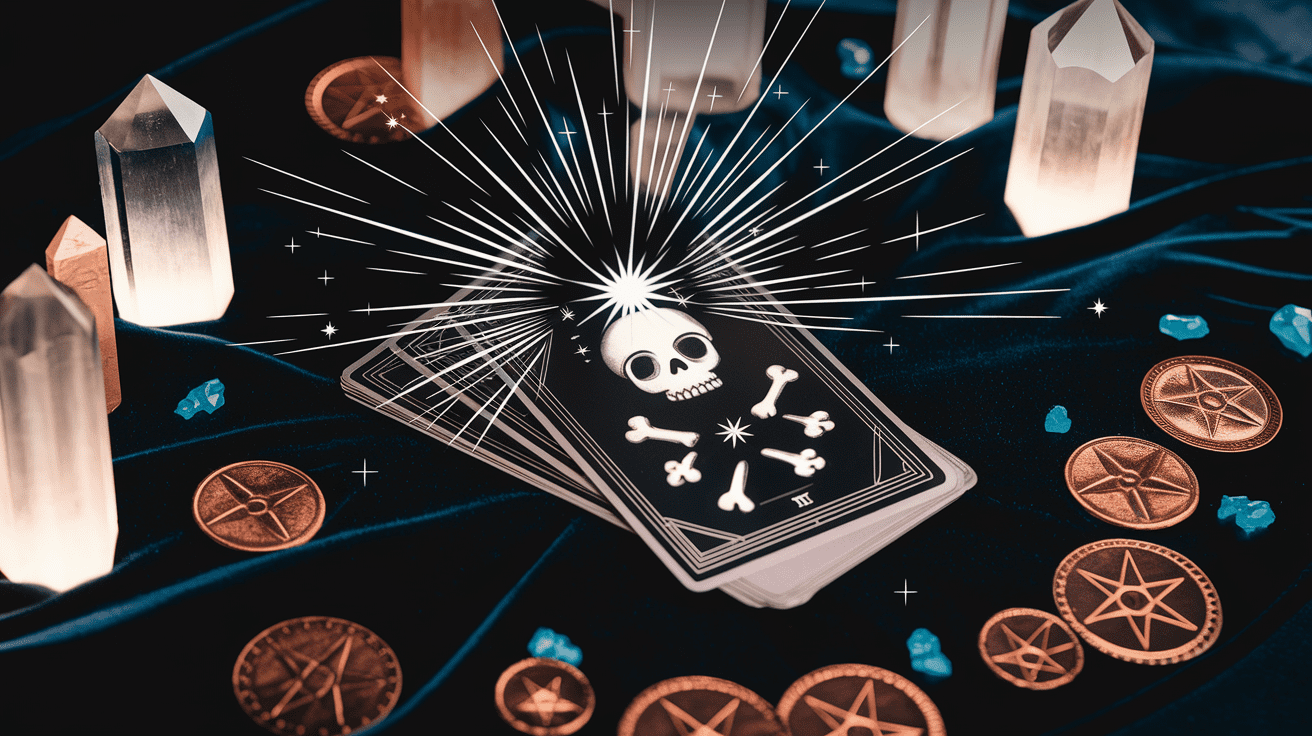
Think of the tarot as a complete cosmic library — 78 books that tell the story of your life, from grand spiritual awakening to the small, daily choices that shape your path. Each card is a doorway to understanding yourself and the world around you. But before you can walk through those doorways, you need to know how the library is organized.
The tarot deck divides into two main sections: the Major Arcana (22 cards) and the Minor Arcana (56 cards). Together, they create a complete symbolic system that mirrors the human experience — from the soul’s journey through transformation to the practical, everyday moments that make up your life.
The Fool’s Journey: Major Arcana Explained
The Major Arcana cards are the heart of the tarot — they represent the big, universal themes that touch every human life. These 22 cards tell the story of The Fool’s Journey, a symbolic path from innocence to enlightenment.
The journey begins with The Fool (card 0), representing pure potential and the courage to step into the unknown. As you progress through the cards, you meet archetypal figures and face life’s major challenges:
- The Magician (card 1) – manifestation and willpower
- The High Priestess (card 2) – intuition and mystery
- The Empress (card 3) – creativity and nurturing
- The Emperor (card 4) – structure and authority
- The Hierophant (card 5) – tradition and spiritual guidance
- The Lovers (card 6) – relationships and choices
- The Chariot (card 7) – determination and victory
- Strength (card 8) – inner courage and compassion
- The Hermit (card 9) – introspection and wisdom
- Wheel of Fortune (card 10) – cycles and destiny
- Justice (card 11) – truth and balance
- The Hanged Man (card 12) – surrender and new perspective
- Death (card 13) – transformation and endings
- Temperance (card 14) – harmony and patience
- The Devil (card 15) – bondage and materialism
- The Tower (card 16) – sudden change and revelation
- The Star (card 17) – hope and inspiration
- The Moon (card 18) – illusion and the subconscious
- The Sun (card 19) – joy and success
- Judgement (card 20) – awakening and calling
- The World (card 21) – completion and fulfillment
Each Major Arcana card corresponds to a specific archetype that Carl Jung identified as universal patterns in the collective unconscious. When these cards appear in your readings, they signal significant life themes — spiritual growth, karmic lessons, or major transitions.
Quick Tip: When you see multiple Major Arcana cards in a spread, it’s a sign that you’re experiencing or about to experience profound life changes. Pay special attention to these messages.
Minor Arcana: The Four Elements at Play
While the Major Arcana deals with life’s big questions, the Minor Arcana cards reflect your daily experiences — the thoughts you think, the emotions you feel, the actions you take, and the material circumstances you navigate.
The 56 Minor Arcana cards divide into four suits, each connected to one of the classical elements:
| Suit | Element | Life Area | Associated Crystals |
|---|---|---|---|
| Wands | Fire | Creativity, passion, inspiration | Carnelian, Sunstone |
| Cups | Water | Emotions, relationships, intuition | Rose Quartz, Moonstone |
| Swords | Air | Thoughts, communication, conflict | Amethyst, Clear Quartz |
| Pentacles | Earth | Material world, finances, career | Jade, Pyrite |
Each suit contains 14 cards: Ace through 10, followed by four court cards (Page, Knight, Queen, King). The numbered cards (Ace-10) show the progression of each element’s energy — from the spark of inspiration (Ace) to completion and mastery (10).
Understanding the Court Cards
The court cards can be tricky for beginners because they often represent people in your life or aspects of your own personality. Think of them as characters in your life’s story:
- Pages (Earth) – messengers, students, new beginnings
- Knights (Air) – action, movement, pursuit
- Queens (Water) – nurturing, emotional mastery, intuition
- Kings (Fire) – authority, mastery, leadership
When a court card appears, ask yourself: Does this remind me of someone I know? Or is this describing a quality I need to embody right now?
The Elemental Connection
Here’s where it gets really interesting — each tarot suit connects to specific astrological elements:
- Wands ↔ Fire signs (Aries, Leo, Sagittarius)
- Cups ↔ Water signs (Cancer, Scorpio, Pisces)
- Swords ↔ Air signs (Gemini, Libra, Aquarius)
- Pentacles ↔ Earth signs (Taurus, Virgo, Capricorn)
This connection means your astrological chart can actually influence how you interpret tarot cards. A Leo rising might feel especially drawn to Wands energy, while a Cancer moon might naturally understand Cups cards.
Practice Exercise: Take your favorite tarot card from each suit and spend a few minutes with it. Notice how the element’s energy feels in your body. Does Wands make you feel energized and inspired? Do Cups cards evoke emotional responses? This physical awareness will deepen your intuitive readings.
Understanding this structure is like learning the alphabet before you write poetry. The magic happens when you combine this knowledge with your intuition — that’s when the cards truly begin to speak to you.
Vedic Astrology Meets Tarot — Planetary Energies in Your Cards
Ever notice how certain tarot cards feel more powerful than others? That’s not just your imagination — it’s the planetary energies at work. In Vedic astrology, every celestial body carries a distinct vibration, and those same energies flow through your tarot deck. Understanding these connections transforms your readings from simple card interpretations into cosmic conversations.
When you draw the Emperor, you’re channeling Mars’ warrior energy. The High Priestess? That’s pure Moon energy — intuition, mystery, and the subconscious mind. By recognizing these planetary correspondences, you’ll read with more confidence and depth.
Planetary Correspondences: Your Cosmic Tarot Guide
The Major Arcana cards each align with specific planets, zodiac signs, or celestial bodies. Here’s your quick reference guide:
| Tarot Card | Planetary Ruler | Vedic Element | Energy Quality |
|---|---|---|---|
| The Magician | Mercury | Air | Communication, skill |
| The High Priestess | Moon | Water | Intuition, mystery |
| The Empress | Venus | Water | Love, creativity |
| The Emperor | Mars | Fire | Authority, structure |
| The Hierophant | Jupiter | Ether | Wisdom, tradition |
| The Lovers | Mercury | Air | Choice, harmony |
| The Chariot | Moon | Water | Direction, emotion |
| Strength | Leo (Sun) | Fire | Courage, compassion |
| The Hermit | Mercury | Air | Solitude, wisdom |
| Wheel of Fortune | Jupiter | Ether | Cycles, expansion |
| Justice | Venus | Air | Balance, fairness |
| The Hanged Man | Neptune (Western) | Water | Surrender, perspective |
| Death | Scorpio (Mars) | Water | Transformation |
| Temperance | Sagittarius (Jupiter) | Fire | Moderation, healing |
| The Devil | Capricorn (Saturn) | Earth | Material bondage |
| The Tower | Mars | Fire | Sudden change |
| The Star | Aquarius (Saturn) | Air | Hope, inspiration |
| The Moon | Pisces (Jupiter) | Water | Illusion, emotion |
| The Sun | Sun | Fire | Vitality, joy |
| Judgment | Pluto (Western) | Water | Rebirth, awakening |
| The World | Saturn | Ether | Completion, wisdom |
Connecting Tarot Suits to Vedic Elements and Doshas
The Minor Arcana suits mirror the Vedic elements and even correspond to your Ayurvedic doshas:
Wands (Fire) — Pitta dosha, transformation, passion. Think of the King of Wands as Mars in Leo — bold, charismatic, and driven. When this card appears, ask yourself: Where do I need to take courageous action?
Cups (Water) — Kapha dosha, emotion, relationships. The Queen of Cups channels Moon energy in Pisces — deeply intuitive and nurturing. This suit asks: How are my emotions flowing?
Swords (Air) — Vata dosha, intellect, communication. The Knight of Swords embodies Mercury in Gemini — quick thinking and decisive. This suit challenges: What thoughts need clarity?
Pentacles (Earth) — Earth element, material world, stability. The Page of Pentacles resonates with Mercury in Virgo — practical, detail-oriented, and growth-focused. This suit grounds you: What needs nurturing in my physical world?
Using Your Birth Chart to Enhance Tarot Interpretations
Here’s where it gets really interesting. Your natal chart provides a personal roadmap for understanding which tarot cards will speak most strongly to you.
Let’s say your Moon is in Cancer at 15 degrees — when the High Priestess or Chariot appears, pay extra attention. These cards will trigger your deepest intuitive responses. Or if you have Mars in Aries, the Emperor and Tower cards might show up during your most ambitious periods.
Try this immediate practice: Look up your Sun sign’s ruling planet, then find the corresponding Major Arcana card. Pull that card and spend five minutes meditating on its imagery. Notice what feelings, memories, or insights arise. This simple exercise creates a direct line between your astrological DNA and your tarot wisdom.
The magic happens when you stop seeing tarot as separate from astrology. They’re both languages describing the same cosmic dance — one through symbols and stories, the other through planets and stars. When you read with this awareness, every spread becomes a personalized astrological consultation, uniquely tailored to your soul’s journey.
Step-by-Step: Your First Tarot Reading — From Shuffle to Insight
You’ve chosen your deck, studied the structure, and now you’re ready to actually read the cards. This is where the magic truly begins — not in memorizing meanings, but in building a living relationship with your deck. Your first reading should feel like a conversation with a wise friend, not a test you might fail. Let me walk you through the exact process I teach my beginner clients, from the moment you touch your cards to the final insight that emerges.
The Art of Shuffling: Building Your Connection
Before you even think about spreads, you need to establish a physical and energetic connection with your deck. Shuffling isn’t just about randomizing cards — it’s about building trust between you and your tarot.
Start by holding your deck in both hands and taking three deep breaths. Feel the weight of the cards, notice their texture, and set a simple intention like “I’m open to clear guidance” or “Show me what I need to see.” This moment of centering is crucial — it’s what separates a mechanical reading from a truly intuitive one.
Now shuffle in whatever way feels natural to you. Some people prefer the casino-style riffle shuffle, others use the overhand method, and many beginners simply spread the cards on a table and mix them like ingredients. There’s no wrong way. What matters is that you shuffle until you feel a sense of completion — maybe after 7-10 passes, maybe longer. You’ll develop your own rhythm over time.
Here’s a pro tip many beginners miss: while shuffling, pay attention to any cards that seem to “want” to jump out or fall from the deck. These cards often carry important messages and shouldn’t be ignored. I once had a client whose deck kept producing the same card during shuffling — it turned out to be the exact guidance she needed, even before the official spread began.
Three-Card Spread: Your First Reading
The three-card spread is perfect for beginners because it’s simple enough to master quickly but deep enough to provide genuine insight. Each position represents a different aspect of your question or situation, creating a mini-story that your intuition can follow.
Here’s the classic Past-Present-Future layout:
Position 1 (Left): Past – What influences from your history are affecting this situation? This could be recent events or deeper patterns from your past.
Position 2 (Middle): Present – Where things stand right now. This is often the most revealing card, showing the current energy or challenge.
Position 3 (Right): Future – The potential outcome or direction if current energies continue. Remember, this isn’t set in stone — it’s a probable path.
Let me walk you through a complete reading so you can see how this works in practice. Imagine you’re asking about a career decision. You’ve shuffled while holding the question “What do I need to know about changing jobs?” in your mind.
You lay out three cards and get:
Card 1 (Past): Five of Cups – This suggests past disappointments or regrets about career choices. Maybe you’ve experienced setbacks that still affect your confidence.
Card 2 (Present): Ace of Pentacles – A new financial opportunity is emerging. This could be a job offer, a business idea, or a chance to increase your income.
Card 3 (Future): The Hierophant – The outcome points toward traditional structures and established systems. This suggests the new opportunity might involve working within a conventional company rather than striking out alone.
The story here is: Past disappointments are giving way to a new financial opportunity, but the path forward involves working within traditional structures rather than completely breaking free. See how the cards create a narrative? That’s the essence of tarot reading.
As you practice this spread, notice how the cards “talk” to each other. Do they share suits? Are there repeating numbers? These connections often reveal deeper patterns that single-card meanings might miss.
Remember, your first readings won’t be perfect — and that’s exactly as it should be. Each reading builds your confidence and intuition. The goal isn’t to get every interpretation “right” but to start a conversation with your deck that will deepen over time.
Section 6: Common Beginner Mistakes — What to Avoid
You’ve learned the basics, chosen your deck, and even done your first three-card spread. But now you’re second-guessing every interpretation, flipping cards upside down without understanding why, and feeling like you’re drowning in memorized meanings. Let me share the three biggest traps I see beginners fall into — and how to avoid them.
The Memorization Trap
I remember my first year with tarot cards. I had a notebook filled with 78 pages of card meanings, keywords highlighted in different colors, and I’d freeze during readings trying to remember if the Two of Cups meant partnership or emotional balance. Sound familiar?
Here’s what I wish someone had told me: memorization is the least important part of learning tarot. Think about it — when you meet someone new, you don’t need to memorize their entire life story to have a meaningful conversation. You connect through presence, observation, and intuition.
Instead of memorizing, try this: draw one card each morning and simply observe it for 60 seconds. Notice the colors, the expressions, the symbols that catch your eye. Write down what you feel before you look up the meaning. Over time, you’ll develop a personal relationship with each card that no book can teach you.
The Overthinking Spiral
“I pulled the Tower card for my relationship question. Does this mean we’re breaking up? Or is it just a warning about communication issues? Maybe it’s about my career instead? Oh no, what if I’m reading it wrong?”
I’ve had clients call me in panic after pulling “scary” cards, convinced they’ve predicted their own doom. Here’s the truth: tarot doesn’t predict the future — it illuminates your present moment. The Tower isn’t about destruction; it’s about the sudden clarity that comes when outdated structures fall away.
When you catch yourself spiraling, pause and ask: “What truth am I avoiding that this card is highlighting?” Often, the anxiety isn’t about the card’s meaning — it’s about confronting something you already know deep down.
Reversed Cards Without the Confusion
Reversed cards send beginners into a tailspin. Should you flip them all upright? Learn double the meanings? Ignore them entirely? Let me simplify this.
Reversed cards don’t mean the opposite of upright meanings. Instead, they indicate: blocked energy, internal processing, delayed timing, or lessons not yet learned. The Three of Cups reversed isn’t “bad friendship” — it might mean you’re craving connection but haven’t reached out yet.
Here’s a practical approach: when you pull a reversed card, ask yourself, “What’s blocking this energy from flowing naturally?” A reversed Ace of Pentacles might not mean financial loss — it could reveal your fear of abundance or a project stuck in planning stages.
Beyond Memorization: Developing Your Intuition
This is where the magic truly begins. Your intuition isn’t some mystical gift reserved for the “psychic few” — it’s your brain’s pattern recognition system speaking to you through feelings, physical sensations, and sudden insights.
Try the “first thought” exercise: when you turn over a card, notice your very first mental image or physical sensation before your logical mind kicks in. That split-second reaction is often your intuition speaking.
Keep a tarot journal for 30 days. Each day, record:
- The card you pulled
- Your immediate emotional reaction
- Any physical sensations (tightness in chest, warmth in hands, etc.)
- The actual events of your day
- How the card’s energy showed up (often in surprising ways)
You’ll start noticing patterns between your intuitive hits and real-life outcomes. This is how you build trust in your inner guidance system.
Remember, every professional reader was once exactly where you are now — overwhelmed, uncertain, and wondering if they were “doing it right.” The difference between a beginner and an experienced reader isn’t knowledge; it’s trust in their own intuitive voice.
Next, we’ll explore how to develop a consistent tarot practice that grows with you, turning those initial stumbles into confident, insightful readings.
Developing Your Tarot Intuition — Beyond the Book Meanings
You’ve learned the basics, memorized the traditional meanings, and practiced your first spreads. Now comes the magical part — developing your tarot intuition. This is where your readings transform from simple card interpretations into profound insights that seem to speak directly to your soul.
The difference between a beginner and an intuitive reader isn’t knowledge of more card meanings — it’s the ability to trust what you feel in the moment. Your intuition is like a muscle; the more you use it, the stronger it becomes.
How to Trust Your First Impressions During Readings
When you flip a card, pay attention to your immediate reaction. That first flash of thought or feeling? That’s your intuition speaking before your logical mind has time to analyze. I’ve seen countless beginners dismiss their initial impressions, only to realize later that those first thoughts were the most accurate.
Here’s a practice I teach my students: when you draw a card, notice the very first word or image that pops into your mind. Don’t judge it, don’t analyze it — just acknowledge it. Often, this initial impression carries more truth than any memorized meaning.
For example, when I drew the Ten of Cups recently, my first thought was “family dinner.” Not the traditional meaning of emotional fulfillment or community harmony. But the reading was for a client struggling with family dynamics, and that simple image of a shared meal opened up the entire conversation about how they could create more connection at home.
Your intuition communicates through symbols, colors, and feelings unique to you. A card might remind you of a childhood memory, a song lyric, or a scent. These personal associations are gold — they’re your subconscious mind translating the card’s energy into language you understand.
Using Numerology to Deepen Card Interpretations
Numbers are the hidden language of tarot, and understanding basic numerology adds incredible depth to your readings. Each number carries a specific vibration and meaning that applies across all suits and the Major Arcana.
Here’s a quick numerology guide for tarot:
| Number | Core Meaning | Tarot Connection |
|---|---|---|
| 1 | New beginnings, independence | Aces, Magician |
| 2 | Balance, partnership | High Priestess, 2s |
| 3 | Creativity, growth | Empress, 3s |
| 4 | Stability, structure | Emperor, 4s |
| 5 | Change, challenge | Hierophant, 5s |
| 6 | Harmony, service | Lovers, 6s |
| 7 | Wisdom, spirituality | Chariot, 7s |
| 8 | Power, manifestation | Strength, 8s |
| 9 | Completion, wisdom | Hermit, 9s |
| 10 | Fulfillment, new cycle | Wheel of Fortune, 10s |
When you see multiple cards with the same number in a spread, pay attention. Three 3s appearing together might indicate a creative project coming to fruition, while several 5s could signal a period of necessary change.
I once did a reading where the client kept drawing 4s — Four of Wands, Four of Cups, and the Emperor. The numerology spoke of stability and structure, but the client was in a chaotic life transition. By focusing on the 4 energy, we realized she needed to create more structure in her daily routine to feel grounded during this change.
The Power of Keeping a Tarot Journal
If there’s one practice that will accelerate your tarot development more than anything else, it’s keeping a tarot journal. This isn’t just about recording your readings — it’s about tracking your growth, noticing patterns, and building trust in your intuition.
Start by recording the date, the question or situation, the cards you drew, and your initial impressions. Then, over the next few days or weeks, add what actually happened. You’ll begin to see how your intuitive hits play out in real life, which builds incredible confidence.
I’ve kept a tarot journal for over twenty years, and it’s fascinating to look back and see how my interpretations have evolved. Some cards that once confused me now feel like old friends. Patterns emerge across years — certain cards appearing during specific life cycles, or particular combinations that consistently signal similar situations.
Your journal becomes a personal tarot dictionary, filled with meanings that resonate specifically with you. One of my clients associates the Two of Cups with her grandmother’s wedding photo because that’s the image that came to mind the first time she saw it. Now, whenever that card appears, she knows it’s about ancestral wisdom or family connections — a meaning unique to her experience.
Try this tonight: draw one card, write down your first three impressions without thinking, then reflect on how those impressions might apply to your current situation. Date it, and check back in a week. You’re building your intuitive muscle, one card at a time.
The journey from book knowledge to intuitive mastery isn’t about learning more — it’s about trusting what you already know. Your cards are mirrors reflecting your inner wisdom. The more you practice listening, the clearer that reflection becomes.
Daily Tarot Practice — Building Confidence One Card at a Time
You’ve learned the basics, shuffled your first deck, and maybe even done a three-card spread. Now comes the real magic: making tarot a daily practice. Like any relationship, the more time you spend with your cards, the deeper your connection grows. And here’s the beautiful truth — you don’t need hours of meditation or elaborate spreads to build confidence. Just one card a day can transform your intuition.
Your Daily Ritual: One Card, Infinite Wisdom
The simplest practice is often the most powerful. A daily one-card draw takes less than five minutes but creates a profound dialogue with your subconscious. Here’s how to make it sacred:
Step 1: Create Your Sacred Space Find a quiet corner where you won’t be disturbed. Light a candle, burn some sage or palo santo, or simply open a window for fresh air. Some practitioners keep a small altar with crystals — amethyst for intuition, clear quartz for clarity, or black tourmaline for protection. Sit comfortably and take three deep breaths, grounding yourself in the present moment.
Step 2: Set Your Intention Before drawing, ask a simple question: “What do I need to know today?” or “What energy will support me?” Keep it open-ended rather than yes/no focused. This invites guidance rather than prediction.
Step 3: Shuffle with Purpose As you shuffle, focus on your breath and intention. When the cards feel “right” — you’ll develop a sense for this — cut the deck and draw your card.
Step 4: Observe Without Judgment Look at the card. What’s your immediate reaction? Which symbols, colors, or figures stand out? Don’t rush to the guidebook yet. Your first impression is your intuition speaking.
Step 5: Record and Reflect Note the card in your tarot journal. What thoughts, feelings, or memories does it evoke? Later in the day, check back — did the card’s energy manifest in unexpected ways?
When to Read for Others vs. Yourself
As your confidence grows, you might feel called to read for friends or family. Here’s a simple guideline: practice on yourself for at least three months before reading for others. This builds your foundation and prevents you from projecting your own issues onto someone else’s reading.
When you do start reading for others, always ask permission first. Create the same sacred space you use for yourself, and remember — you’re offering guidance, not fortune-telling. The cards show possibilities, not certainties.
One of my clients, a Cancer sun with Pisces rising, started with daily draws during a career transition. Within two months, she noticed patterns: The Emperor appeared during leadership opportunities, The Hermit when she needed solitude to make decisions. She didn’t just learn tarot — she learned to trust her inner voice.
Your daily practice doesn’t need to be perfect. Some days you’ll draw a card and forget about it. Other days, a single card might keep you pondering for hours. Both are part of the journey. The key is consistency, not intensity.
Ready to deepen your practice? Try our Tarot Journal Template to track your daily draws and watch your intuition blossom over time.
Frequently Asked Questions
How do you read tarot cards for the first time?
Start by drawing a single card each morning and journaling what you notice — colors, symbols, feelings it evokes. Don’t worry about memorizing meanings yet; instead, trust your first impressions. I recommend keeping a tarot journal for at least 30 days so you can track patterns. You can also try our free Tarot Card of the Day tool to build familiarity without pressure.
What is the easiest way to learn tarot cards?
The easiest way is to combine daily practice with a reliable reference. Begin with the Major Arcana (21 cards) before moving to the full deck. Focus on one card per day, study its traditional meaning, then note what it says to you personally. Many beginners find it helpful to use keyword flashcards or apps. Remember, tarot is a language — fluency comes with consistent exposure, not cramming.
Do you have to be psychic to read tarot cards?
No, you don’t need to be psychic. Tarot reading is a skill built on intuition, pattern recognition, and symbolic literacy — not supernatural gifts. Think of it like learning to read music: anyone can learn the basics, and with practice, you’ll develop your own interpretive style. Your personal insights and life experience are your greatest assets. The cards are simply a mirror for your own wisdom.
How many cards do you pull for a tarot reading?
It depends on your question and experience level. Beginners often start with a one-card or three-card spread (past, present, future). As you grow more comfortable, you might try a Celtic Cross (10 cards) or create custom layouts. For daily practice, one card is plenty. For specific decisions, three to five cards usually provide enough detail without overwhelming you. Quality of focus matters more than quantity.
What questions should I ask in a tarot reading?
Ask open-ended questions that invite insight rather than yes/no answers. Instead of “Will I get the job?” try “What do I need to know about this career opportunity?” or “How can I best prepare for this interview?” Avoid questions that take away another person’s free will, like “Will my ex come back?” Focus on your own growth, choices, and energy. The cards respond best to questions about your path forward.
How do you know if you’re good at reading tarot cards?
You’re improving when your readings consistently resonate with querents and you trust your interpretations without second-guessing. Signs you’re progressing include noticing repeating symbols, feeling confident explaining card meanings in your own words, and accurately sensing the energy behind a question. But remember — being “good” at tarot isn’t about perfection. It’s about building a relationship with the cards and honoring the insights they offer, even when they surprise you.
Your Cosmic Path Forward
You’ve now got the foundation to begin your tarot journey — and the truth is, the cards have been waiting for you. What started as curiosity can become a lifelong practice of self-discovery, where each spread becomes a mirror reflecting your inner wisdom. Remember, tarot isn’t about predicting a fixed future; it’s about illuminating the paths before you so you can walk them with clarity and intention. The more you practice, the more you’ll notice how the symbols speak directly to your life, offering guidance that feels both mystical and deeply personal.
Three things will serve you well as you begin: trust your intuition over rigid memorization, create a consistent ritual to center yourself before each reading, and keep a journal to track your insights and the way patterns emerge over time. Don’t worry about “getting it right” — there are no wrong interpretations, only discoveries waiting to be made. Start simple with daily one-card draws, and let your relationship with the deck grow organically. The cards work through you, not just for you.
If you’re curious about how tarot’s archetypal wisdom connects to your unique cosmic blueprint, why not explore your birth chart next? At Astrologer Global, our free Birth Chart Calculator can show you how the planets were aligned at your moment of birth — a celestial map that, like tarot, reveals the energies influencing your path. Combining these tools can deepen your intuitive practice and bring even more meaning to your readings.
The universe speaks in symbols, signs, and synchronicities — and now, you’re learning its language. Every time you shuffle those cards, you’re not just asking a question; you’re opening a dialogue with the cosmos. Trust where it leads you. Your journey with tarot is just beginning, and the most magical insights are still to come.