Birth Chart Compatibility — How to Compare Charts With Your Partner
You’ve just started dating someone amazing. The chemistry is electric, the conversations flow effortlessly, and you can’t stop thinking about them. But then a little voice whispers: Is this meant to last? Will we actually work as a couple long-term? This is exactly where birth chart compatibility comes in — the ancient art of comparing two astrological charts to reveal the deeper patterns between you.
As a practicing astrologer with over two decades of experience, I’ve seen countless couples discover surprising truths about their relationships through chart comparison. One client, a Gemini Sun with a Cancer Moon, came to me worried about her differences with her Sagittarius partner. When we compared their birth charts, we found their Venus signs formed a harmonious trine aspect — explaining their natural romantic flow despite surface-level differences. Understanding birth chart compatibility doesn’t just predict whether you’ll stay together; it illuminates why you connect the way you do and where your natural strengths and challenges lie.
In this article, you’ll learn exactly how to compare your birth chart with your partner’s, step by step. We’ll explore the key planetary placements that matter most for relationship dynamics — from Sun and Moon signs to Venus and Mars. You’ll discover how to spot natural compatibility patterns and understand potential friction points before they become problems. By the end, you’ll have practical tools to decode your cosmic connection and make more conscious choices in your love life.
There’s something magical about seeing your relationship reflected in the stars. It transforms uncertainty into understanding, and differences into complementary strengths. Ready to discover what your charts reveal about your connection? Let’s begin by understanding what birth chart compatibility really means and why it matters for modern relationships.
What Birth Chart Compatibility Really Means
When people ask about birth chart compatibility, they’re usually thinking about whether their zodiac signs match. But that’s just the tip of the cosmic iceberg. True birth chart compatibility is a complex dance of planetary energies, mathematical relationships, and timing patterns that reveals how two people connect, challenge, and grow together.
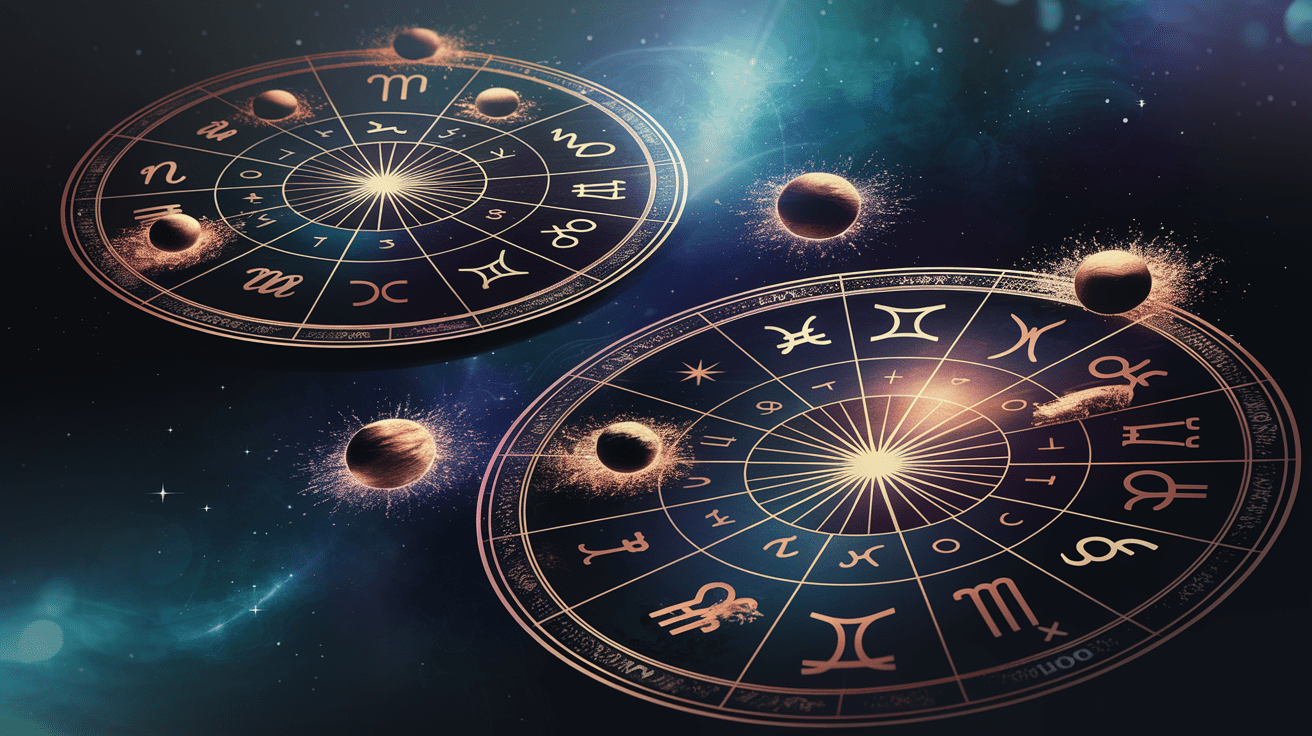
At its core, birth chart compatibility examines how the planetary positions in your natal chart interact with those in your partner’s chart. This is called synastry — from the Greek “synastria,” meaning “together with the stars.” While sun sign compatibility gives you a 30,000-foot view, synastry provides a street-level map of your relationship’s terrain.
Understanding Synastry vs. Composite Charts
Here’s where many people get confused: synastry and composite charts are related but distinct approaches to relationship astrology.
Synastry compares your chart to your partner’s chart directly. It’s like placing two photographs side by side and drawing lines between matching features. You see exactly how your Venus at 15° Leo aspects their Mars at 12° Scorpio, or how your Moon in the 4th house sits opposite their Saturn in the 10th.
Composite charts, on the other hand, create a third chart — a relationship chart — by finding the midpoint between each of your planets. Think of it as creating a child from your combined energies. If your Sun is at 10° Aries and theirs is at 20° Libra, the composite Sun falls at 15° Cancer.
| Feature | Synastry | Composite |
|---|---|---|
| Purpose | Shows how you affect each other | Shows the relationship as its own entity |
| Method | Direct planetary comparisons | Midpoints create new chart |
| Best for | Understanding dynamics | Understanding relationship purpose |
The Role of Planetary Aspects in Relationships
✨ Try Our Free Love Calculator ✨
Calculate the cosmic compatibility between two hearts.
The real magic happens in the aspects — the angular relationships between planets. These create the energetic dialogue between you and your partner.
Conjunctions (0°) create intense fusion but can feel overwhelming. Oppositions (180°) generate attraction through contrast but may cause polarization. Trines (120°) flow easily but can breed complacency. Squares (90°) create tension that fuels growth but requires conscious navigation.
The orbs matter tremendously. A Venus-Mars conjunction within 1° feels electric and immediate, while one at 7° creates a more subtle, background attraction. I’ve seen clients with exact Sun-Moon conjunctions (within 30 minutes) describe an almost telepathic connection, while those with wider orbs experience more of a gentle pull.
Quick tip: Look at your Venus and Mars positions first. These relationship planets often reveal the most about romantic chemistry, even before diving into the full synastry analysis. If your Venus is in the same element as their Mars (fire, earth, air, or water), you’ll likely feel an instinctive physical and emotional attraction.
Understanding these fundamentals transforms birth chart compatibility from a simple yes/no question into a rich exploration of how two souls dance together across the cosmic stage.
How to Get Started: Your First Chart Comparison
You’ve got the basics of birth chart compatibility down — now it’s time to roll up your sleeves and actually compare charts. The good news? You don’t need to be an astrologer to get started. With accurate birth data and the right tools, you can generate a synastry chart that reveals the cosmic chemistry between you and your partner.
Gathering Accurate Birth Information
Before you do anything else, you’ll need the exact birth details for both you and your partner. This isn’t the time for “around 8 PM” or “sometime in the morning.” Here’s what you need:
- Date of birth (month, day, year)
- Exact time of birth (to the minute, from a birth certificate or parent’s memory)
- City and state of birth (for precise latitude and longitude)
Why so specific? The positions of the Moon, Ascendant (rising sign), and house cusps shift every few minutes. If your partner was born at 3:14 PM instead of 3:18 PM, their Moon could have moved from Pisces into Aries — completely changing the emotional dynamics in your synastry. I once had a client discover her “perfect match” chart was off by 10 minutes, shifting her partner’s Venus from a harmonious trine to a challenging square. That’s the difference between “we just get each other” and “why do we keep misunderstanding each other?”
Free Tools for Generating Synastry Charts
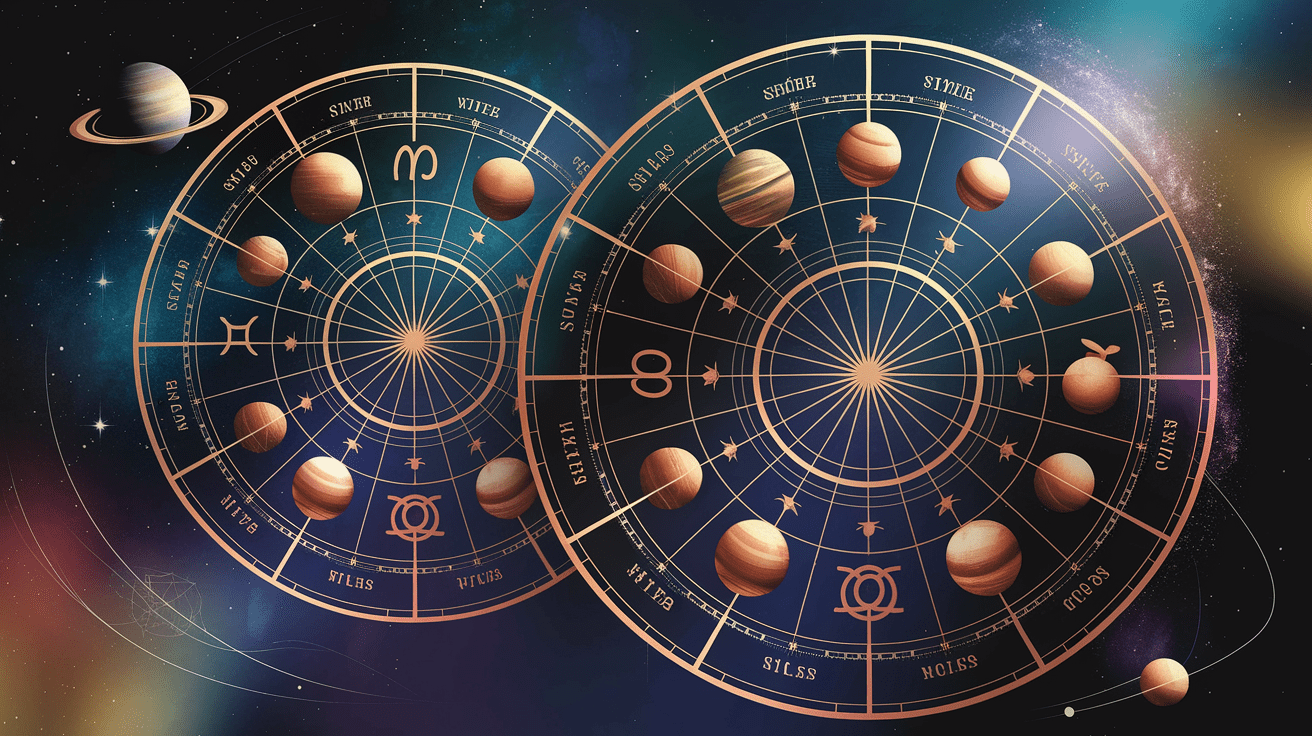
✨ Try Our Free FLAMES Calculator ✨
A fun, nostalgic way to explore relationship dynamics.
Once you’ve gathered your birth data, it’s time to create your synastry chart. Here are three reliable free options:
Astro.com (astro.com) — The gold standard for free chart generation. Click “Free Horoscopes,” then “Extended Chart Selection,” and choose “Synastry” under the chart type dropdown. You can overlay both charts to see planetary aspects visually.
Astro-Seek (astro-seek.com) — Another excellent free tool with a clean interface. Their synastry feature shows you aspect lines between planets, making it easy to spot challenging squares and harmonious trines at a glance.
Co-Star (costarastrology.com) — While primarily a mobile app, Co-Star now offers compatibility readings between users who both have accounts. The interpretations are modern and relatable, though less detailed than desktop options.
Step-by-Step Process for Overlaying Charts
Ready to see your cosmic connection? Follow these steps to create and interpret your first synastry chart:
- Generate individual natal charts first — Create separate charts for you and your partner to confirm all placements are correct. Double-check that your Moon signs, rising signs, and Venus positions match what you expect.
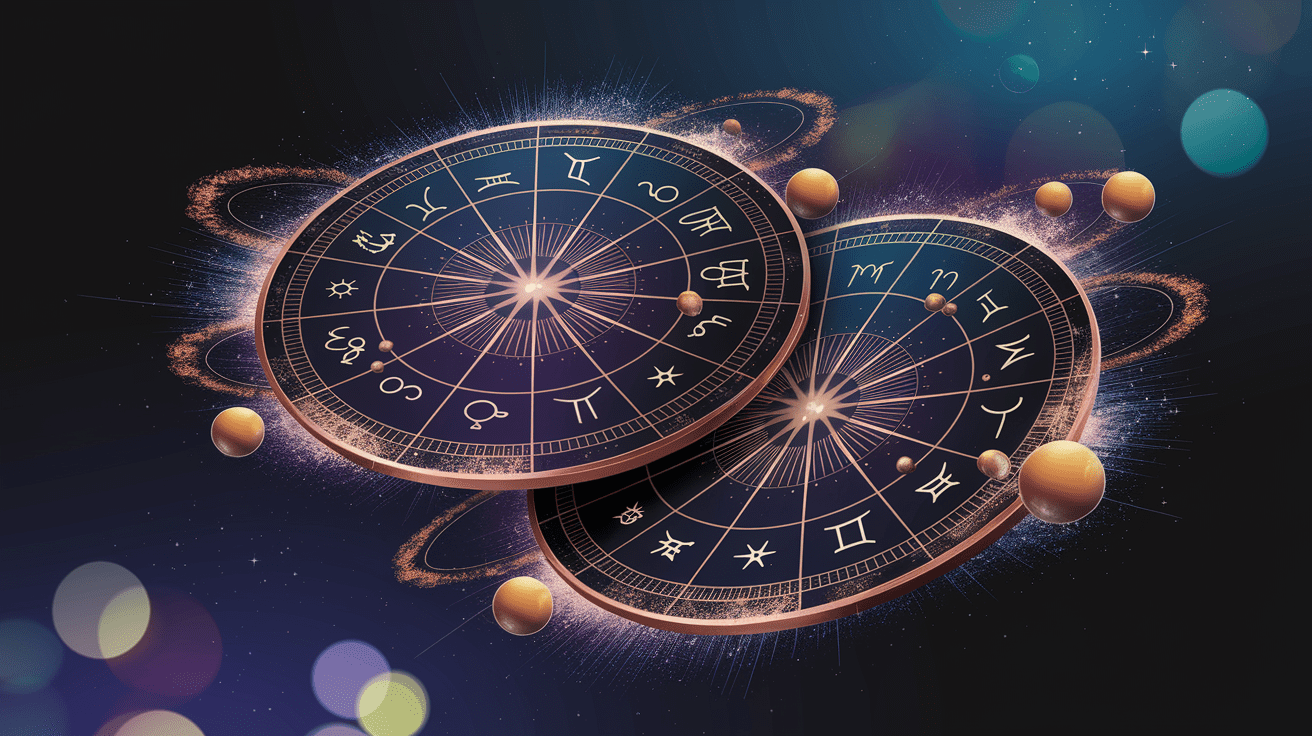
- Create the synastry overlay — Using your chosen free tool, input both birth dates and select the synastry or compatibility option. The tool will generate a bi-wheel chart with your planets on the inner circle and your partner’s on the outer.
- Identify major aspects — Look for the colored lines connecting planets. Blue lines indicate harmonious aspects (trines and sextiles), red lines show challenging aspects (squares and oppositions), and green lines represent supportive connections (sextiles).
- Focus on relationship planets first — Pay special attention to aspects between:
- Venus-Venus (love languages and affection styles)
- Venus-Mars (sexual chemistry and attraction)
- Moon-Moon (emotional compatibility and security needs)
- Sun-Moon (the classic “you complete me” dynamic)
- Ascendant-Descendant (initial attraction and long-term compatibility)
- Count the aspects — A healthy synastry typically has more blue lines than red, but don’t panic if you see challenging aspects. Every relationship needs some tension for growth — the key is whether the harmonious aspects outweigh the difficult ones.
- Note house overlays — When your partner’s planets fall into specific houses of your chart, they activate those life areas. For example, if their Sun lands in your 7th house of partnerships, they might feel like “the one” for you.
Pro tip: Take screenshots of your synastry chart and jot down the most significant aspects. You’ll want to reference these as you learn more about what each connection means. And remember — the most accurate readings come from understanding the whole picture, not just individual aspects. Your synastry chart is a conversation between two cosmic blueprints, not a verdict on your relationship’s fate.
The Big Three: Sun, Moon, and Rising Sign Compatibility
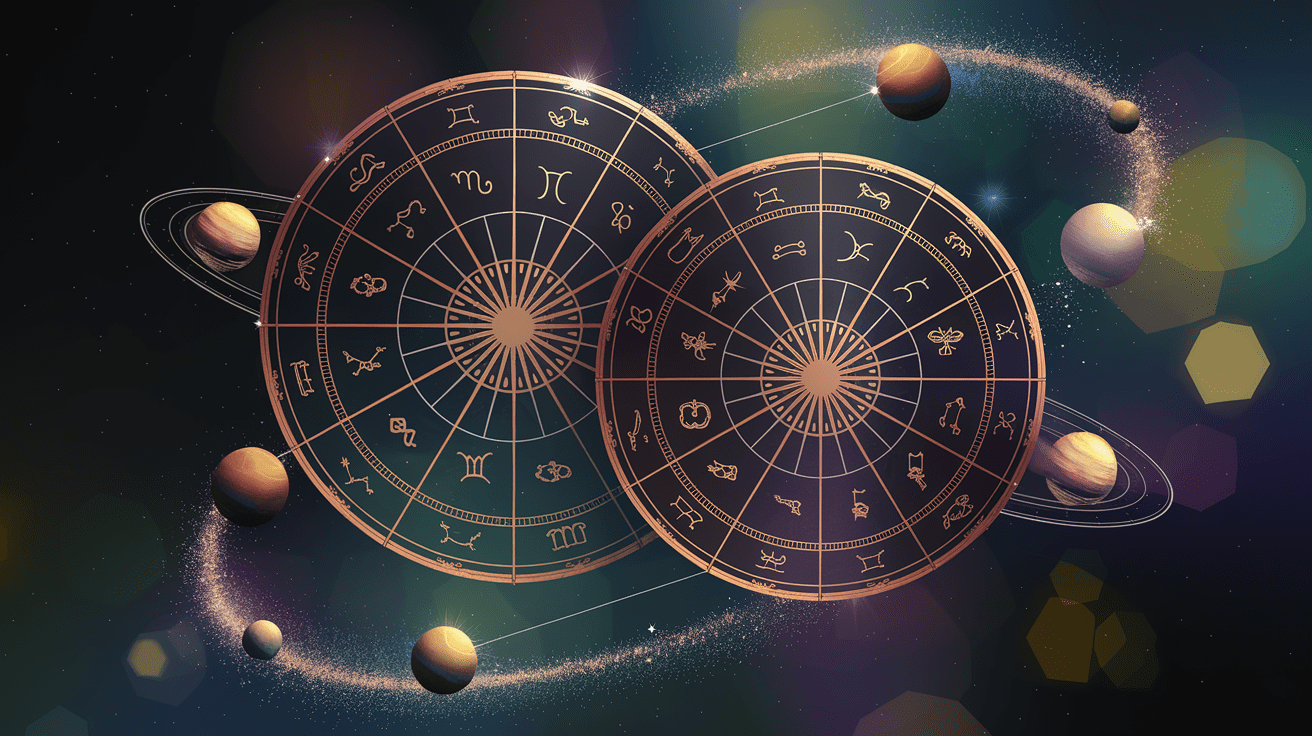
When people ask about birth chart compatibility, they’re usually thinking about sun signs. But your sun sign is just one piece of a much bigger puzzle. The real magic happens when you look at three key placements: your Sun, Moon, and Rising signs. Together, these create your astrological “big three” — and they reveal the most important dynamics between you and your partner.
Think of it this way: your Sun sign is your core identity, your Moon sign is your emotional world, and your Rising sign is how you present yourself to others. In relationships, these three layers need to harmonize for that feeling of “clicking” with someone. When they do, you feel seen, understood, and attracted on multiple levels.
Elemental Compatibility Explained
The first thing I look at when comparing charts is elemental compatibility. Each sign belongs to one of four elements: Fire, Earth, Air, or Water. Signs of the same element naturally understand each other because they share the same basic approach to life.
Here’s how the elements interact:
Fire signs (Aries, Leo, Sagittarius) are passionate, energetic, and spontaneous. They need excitement and freedom.
Earth signs (Taurus, Virgo, Capricorn) are practical, grounded, and reliable. They need stability and tangible results.
Air signs (Gemini, Libra, Aquarius) are intellectual, communicative, and social. They need mental stimulation and freedom of expression.
Water signs (Cancer, Scorpio, Pisces) are emotional, intuitive, and nurturing. They need deep connection and emotional security.
When your big three placements share elements with your partner’s, you often feel an immediate sense of understanding. A Leo Sun with an Aries Moon might feel energized by a Sagittarius Rising partner — all fire signs, all speaking the same passionate language.
But here’s where it gets interesting: sometimes the most powerful connections happen between complementary elements. Earth and Water nourish each other. Air and Fire inspire each other. I’ve seen countless successful relationships where partners have different sun signs but their Moon and Rising signs create perfect elemental harmony.
Real Examples of Compatible and Challenging Combinations
Let me show you what this looks like in practice. Imagine Sarah has a Cancer Sun, Pisces Moon, and Scorpio Rising. That’s three Water signs — she’s deeply emotional, intuitive, and seeks profound emotional bonds.
Her partner Mike has a Capricorn Sun, Taurus Moon, and Virgo Rising. Three Earth signs — he’s practical, stable, and values tangible security.
On the surface, this might seem challenging. Water and Earth can create mud if they’re not careful — too much emotion can feel overwhelming to practical Earth, while too much practicality can feel cold to emotional Water.
But here’s the magic: Earth and Water are actually complementary elements. Mike’s Earth energy can ground Sarah’s emotional depths, while Sarah’s Water energy can soften Mike’s sometimes rigid practicality. They meet in the middle — she learns to express her feelings in more concrete ways, he learns to open up emotionally. This is classic Earth-Water compatibility that can create something truly beautiful.
Now consider a more challenging combination: Alex has an Aries Sun, Gemini Moon, and Aquarius Rising. All Air and Fire — he’s independent, intellectual, and needs constant stimulation.
His partner Jamie has a Cancer Sun, Scorpio Moon, and Pisces Rising. All Water — she’s deeply emotional, intuitive, and needs intense emotional connection.
Here’s where tension can arise. Alex’s need for freedom and mental stimulation might feel threatening to Jamie’s need for emotional security. Jamie’s emotional depth might feel like “too much” for Alex’s lighter, more detached approach. They speak different elemental languages.
But — and this is crucial — challenging combinations aren’t doomed. They simply require more conscious effort. Alex might need to learn to sit with emotions instead of intellectualizing them. Jamie might need to give Alex space without taking it personally. When both partners are willing to stretch beyond their elemental comfort zones, these relationships can create incredible growth.
The key insight: Look at your big three placements and your partner’s. Do you share elements? Are you complementary? Understanding this gives you a roadmap for where you naturally flow together and where you might need to work a little harder.
Try this: Write down your Sun, Moon, and Rising signs, then your partner’s. Next to each, note the element. You’ll instantly see patterns emerge — and you’ll understand so much more about your connection than sun sign horoscopes ever revealed.
Venus and Mars: The Love and Passion Connection
When it comes to birth chart compatibility, Venus and Mars are the cosmic lovers who set the stage for romance and desire. While your Sun, Moon, and Rising signs create the foundation of your connection, these two planets determine whether you’ll feel that spark of attraction and whether your intimate life will sizzle or fizzle.
Venus represents how you give and receive love, what you find beautiful, and your approach to harmony in relationships. Mars governs your sexual drive, how you pursue what you want, and your style of passion. When these planets dance together between two charts, they create the chemistry that either ignites or fizzles.
Venus compatibility for romantic attraction
Venus shows what makes your heart flutter and how you express affection. When your Venus connects harmoniously with your partner’s planets, you naturally understand each other’s love language. A Venus in Libra person craves partnership and romance, while Venus in Aries seeks excitement and spontaneity in love.
The elements matter here too. Fire sign Venuses (Aries, Leo, Sagittarius) often click with air sign Venuses (Gemini, Libra, Aquarius) because air feeds fire’s passion. Earth Venuses (Taurus, Virgo, Capricorn) find comfort with water Venuses (Cancer, Scorpio, Pisces) who provide the emotional depth they crave.
But here’s something fascinating: Venus signs that square each other (90 degrees apart) can create intense attraction despite the tension. Venus in Taurus and Venus in Leo might drive each other crazy, yet that friction can fuel powerful chemistry. It’s like those couples who fight passionately but can’t stay away from each other.
Mars compatibility for sexual chemistry
While Venus handles the romance, Mars controls the bedroom dynamics. This planet reveals how you initiate intimacy, what turns you on, and how you express desire. Mars in Scorpio brings intense, all-consuming passion, while Mars in Gemini prefers playful, verbal flirtation and variety.
The Mars-Venus connection between charts is crucial. When your Mars sign harmonizes with your partner’s Venus, or vice versa, you often feel an almost magnetic pull toward each other. A Mars in Cancer person might find themselves irresistibly drawn to someone with Venus in Scorpio—the Mars person wants to protect and merge, while the Venus person craves that deep emotional connection.
Sexual compatibility isn’t just about the signs though. The houses where these planets fall in each other’s charts matter enormously. If your partner’s Mars falls in your 5th house of romance and creativity, they’ll likely awaken your playful, flirtatious side. If it lands in your 8th house of intimacy and transformation? Buckle up—that’s where soul-level sexual connection happens.
How these planets create relationship dynamics
The interplay between your Venus and Mars with your partner’s creates the unique rhythm of your relationship. When both sets of planets harmonize, you get that effortless “we just get each other” feeling. But when they clash, you might experience push-pull dynamics or different paces in the relationship.
I’ve seen countless couples where one partner’s Venus trines the other’s Mars—they adore each other and the sexual connection flows naturally. But if that same Venus squares the partner’s Saturn? There might be timing issues or feelings of restriction that need working through.
The beauty of understanding these placements is that you can consciously work with your natural tendencies. A Venus in Capricorn might need to remember to be playful sometimes, while a Mars in Pisces could benefit from being more direct about their desires.
Venus Sign Compatibility Guide
Here’s a quick reference for Venus sign interactions:
| Your Venus | Best Matches | Challenging Matches | Why It Works/Doesn’t |
|---|---|---|---|
| Aries | Leo, Sagittarius, Gemini | Cancer, Capricorn | Fire + Air = Passion; Water/Earth = Different speeds |
| Taurus | Virgo, Capricorn, Cancer | Aquarius, Leo | Earth + Water = Stability; Fixed signs = Power struggles |
| Gemini | Libra, Aquarius, Aries | Virgo, Pisces | Air + Air = Mental connection; Mutable = Scattered energy |
| Cancer | Scorpio, Pisces, Taurus | Aries, Libra | Water + Water = Emotional depth; Cardinal = Conflict |
| Leo | Aries, Sagittarius, Gemini | Scorpio, Taurus | Fire + Fire = Drama; Fixed = Stubbornness |
| Virgo | Taurus, Capricorn, Cancer | Sagittarius, Gemini | Earth + Earth = Practical; Mutable = Overthinking |
| Libra | Gemini, Aquarius, Leo | Aries, Capricorn | Air + Air = Harmony; Cardinal = Competition |
| Scorpio | Cancer, Pisces, Virgo | Leo, Aquarius | Water + Water = Intensity; Fixed = Control issues |
| Sagittarius | Aries, Leo, Libra | Virgo, Pisces | Fire + Fire = Adventure; Mutable = Commitment fears |
| Capricorn | Taurus, Virgo, Scorpio | Aries, Libra | Earth + Earth = Loyalty; Cardinal = Power struggles |
| Aquarius | Gemini, Libra, Aries | Taurus, Scorpio | Air + Air = Independence; Fixed = Emotional distance |
| Pisces | Cancer, Scorpio, Capricorn | Gemini, Sagittarius | Water + Water = Dreamy; Mutable = Boundaries |
Want to explore your Venus and Mars compatibility in detail? Use our Synastry Chart Calculator to see exactly how these planets interact between your charts. You might discover why you feel that irresistible pull toward your partner—or understand the cosmic reasons behind your differences.
Celebrity Couple Case Studies: What Their Charts Reveal
Sometimes the best way to understand birth chart compatibility is to see it in action. Let’s examine two famous couples whose charts reveal fascinating relationship dynamics — and what we can learn from their cosmic connections.
Case Study: Power Couple Synastry
Beyoncé (born September 4, 1981) and Jay-Z (born December 4, 1969) showcase a fascinating blend of complementary and challenging aspects. Her Virgo Sun sits in his 8th house of transformation and shared resources, creating an immediate magnetic pull where she becomes his catalyst for deep change. Their Venus placements — her Libra Venus trine his Aquarius Venus — creates effortless romantic harmony, while their Mars placements (his Aries Mars opposite her Libra Mars) generates both passionate attraction and occasional power struggles.
The most striking aspect is their Moon opposition: his Sagittarius Moon opposes her Scorpio Moon. This creates emotional tension — he seeks freedom and adventure while she craves emotional depth and control. Yet this very tension fuels their creative output and mutual growth. Notice how their most successful collaborations (like “Crazy in Love” and “Drunk in Love”) emerged during Venus-Jupiter conjunctions that activated their composite chart’s 5th house of creativity.
Key takeaway: Moon oppositions create magnetic attraction but require conscious communication about emotional needs.
Case Study: Creative Partnership
Ryan Reynolds (born October 23, 1976) and Blake Lively (born August 25, 1987) demonstrate how air and fire signs create dynamic synergy. His Scorpio Sun forms a harmonious trine with her Virgo Sun, while their Mercury placements (his Scorpio Mercury sextile her Virgo Mercury) ensures they think alike and communicate effortlessly. Their Venus placements — his Scorpio Venus sextile her Virgo Venus — creates deep romantic devotion with practical expressions of love.
The magic lies in their Mars placements: his Cancer Mars trines her Scorpio Mars, creating a protective yet passionate dynamic where they instinctively defend and support each other. Their composite chart shows a strong 3rd house emphasis, explaining their famous witty social media exchanges and shared love of communication.
Key takeaway: Harmonious Mercury aspects create the foundation for lasting intellectual connection and friendship.
Actionable Tip: Look for these specific aspects in your own synastry: Venus-Sun trines for romantic ease, Mars-Moon trines for sexual compatibility, and Mercury-Mercury aspects for mental connection. You can identify these using our free Synastry Chart Calculator — the same tool that reveals why some couples just “get” each other while others face constant misunderstandings.
What makes these case studies particularly illuminating is how they demonstrate that perfect compatibility doesn’t exist — even these successful couples face astrological challenges. The difference lies in how they work with their aspects rather than against them. Beyoncé and Jay-Z’s Moon opposition creates emotional friction, but they’ve channeled it into creative fuel. Ryan and Blake’s harmonious aspects provide a smooth foundation, but they still actively nurture their connection.
The real lesson: Understanding your synastry chart isn’t about predicting success or failure — it’s about recognizing your natural strengths and potential growth areas as a couple. When you know that your partner’s Mars squares your Venus, you can anticipate passionate but sometimes volatile energy and develop strategies to channel it constructively.
Ready to discover what your own synastry chart reveals? The same planetary patterns that shaped these celebrity relationships are written in your own cosmic blueprint — waiting to be understood and worked with consciously.
Common Compatibility Mistakes to Avoid
Even seasoned astrology enthusiasts can stumble when comparing birth charts. I’ve seen countless clients fixate on the wrong details, miss crucial red flags, or get discouraged by “challenging” aspects that actually hold relationship gold. Let me walk you through the most common pitfalls so you can approach your chart comparison with clarity.
The Sun Sign Trap
Here’s the hard truth: relying on sun signs alone is like judging a book by its cover. When a client tells me she’s a Taurus dating a Leo, I know we’re barely scratching the surface. Your sun sign represents your core identity, but it’s just one piece of a complex puzzle.
Consider this: two Taurus sun signs can have wildly different emotional needs if one has a Cancer moon and the other a Sagittarius moon. The Cancer moon Taurus craves emotional security and nurturing, while the Sagittarius moon Taurus needs freedom and adventure. Same sun sign, completely different relationship dynamics.
The real magic happens when you examine how all ten planets interact across both charts. That Leo sun might have Venus in Virgo, creating a completely different romantic expression than you’d expect from fire sign energy alone.
The “Good Aspects Only” Fantasy
Many people approach chart comparison hoping to find only harmonious trines and sextiles. But here’s what I’ve learned in twenty years of practice: challenging aspects often create the most growth and passion in relationships.
A Venus-Mars square between partners might create sexual tension and occasional arguments, but it also generates incredible chemistry and keeps things exciting. Without that friction, the relationship might become stale or platonic.
The key is understanding that “difficult” aspects aren’t inherently bad—they’re invitations to develop specific skills. A Saturn square to your partner’s moon might feel restrictive initially, but it can also teach you both emotional maturity and commitment. One of my clients described her Saturn-Moon square with her partner as “growing pains that made us both better people.”
The Birth Time Problem
This deserves its own section because it’s so critical:
The Birth Time Problem
Birth time accuracy can make or break your compatibility analysis. Without an accurate birth time, your rising sign, moon sign, and house placements could be completely wrong.
Here’s what happens with inaccurate birth times:
- Your moon sign could shift (the moon moves about 12 degrees per day)
- Your rising sign could change entirely (it shifts every 2 hours)
- All twelve house cusps would be misaligned
- Planetary aspects to angles become unreliable
I once had a client convinced her relationship was doomed because her “chart” showed Venus square Mars. When we got her accurate birth time, that square disappeared entirely—her Venus was actually trine her partner’s Mars all along.
If you don’t know your exact birth time, use 12:00 PM as a placeholder, but understand that moon sign and rising sign calculations will be approximate. For the most accurate comparison, try to obtain your birth certificate or ask a parent.
Misinterpreting Challenging Aspects
The biggest mistake I see is assuming that squares and oppositions spell doom. Let me give you a real example:
A client came to me devastated because her synastry chart showed her Saturn square her partner’s moon. She’d read online that this meant emotional coldness and restriction. But when we looked deeper, we saw that:
- Her Saturn was at 15° Capricorn, his moon at 18° Aries (a close square)
- Both planets were in cardinal signs, creating dynamic tension
- Their composite chart showed strong Saturn-Moon aspects, indicating commitment potential
Rather than ending the relationship, they used this awareness to consciously create emotional safety while respecting boundaries. Two years later, they credit that “challenging” aspect with teaching them how to build a lasting partnership.
The truth is, every aspect—whether “good” or “bad”—carries both gifts and challenges. The magic happens when you stop labeling aspects and start understanding their full spectrum of expression.
Want to avoid these mistakes? Start with our free synastry chart generator, but remember: the most important compatibility factor isn’t in the stars at all. It’s whether both people are willing to grow together.
Vedic Astrology’s Unique Approach to Compatibility
When I first studied Vedic astrology alongside Western methods, I was struck by how differently these traditions approach relationship compatibility. While Western astrology focuses on planetary aspects and house overlays, Vedic astrology uses a sophisticated system called Kuta that evaluates compatibility through a unique lens. This ancient wisdom offers insights that Western methods might miss entirely.
The fundamental difference lies in perspective. Western astrology examines how two charts interact through planetary aspects, while Vedic astrology assesses how two individuals’ karmas align for a harmonious partnership. It’s like comparing a psychological analysis to a spiritual compatibility test.
Understanding the Kuta System
The Vedic Kuta system evaluates compatibility across eight distinct categories, each worth a specific number of points. Together, these create a maximum score of 36 points:
| Kuta Category | What It Measures | Points |
|---|---|---|
| Varna | Spiritual development level | 1 |
| Vashya | Mutual control and influence | 2 |
| Tara | Health and longevity | 3 |
| Yoni | Sexual compatibility | 4 |
| Graha Maitri | Mental compatibility | 5 |
| Gana | Temperament and behavior | 6 |
| Bhakoot | Financial and family harmony | 7 |
| Nadi | Health and genetic compatibility | 8 |
Here’s the fascinating part: A minimum of 18 points is considered acceptable for marriage compatibility, but the distribution matters as much as the total. Two people might score 24 points, but if most come from sexual compatibility (Yoni) while mental compatibility (Graha Maitri) scores poorly, the relationship faces different challenges than a couple with balanced scores across all categories.
Nakshatra Compatibility and Its Significance
The heart of Vedic compatibility lies in the 27 Nakshatras (lunar mansions). Each person’s Moon occupies one of these Nakshatras, creating a unique energetic signature. The Nakshatra determines which Kuta categories apply and how they’re calculated.
For example, if your Moon is in Ashwini Nakshatra and your partner’s is in Shatabhisha, certain Kutas are automatically favorable while others create challenges. The system recognizes that some energies naturally harmonize while others require conscious effort to balance.
One of my clients, a Vedic astrologer, shared how this saved her from a difficult marriage. Her Western synastry chart looked promising, but the Vedic analysis revealed a Nadi dosha (a major incompatibility in the Nadi Kuta) that indicated potential health issues for children. This insight, unavailable in Western methods, prompted deeper conversations before commitment.
When to Use Each System
I recommend using both systems for a complete picture. Western synastry excels at showing how two people’s energies interact day-to-day — communication styles, emotional triggers, and shared goals. Vedic compatibility reveals the deeper karmic patterns and life purpose alignment.
For casual dating, Western methods might suffice. For serious relationships, marriage considerations, or when you feel inexplicably drawn to someone despite surface-level challenges, Vedic analysis offers profound insights.
Here’s a practical tip: Start with Western synastry to understand your dynamic, then run a Vedic compatibility chart to see if your karmas align. If both systems show harmony, you’ve found a rare and special connection. If they conflict, don’t panic — it simply means you’ll need conscious awareness to navigate your differences.
The beauty of Vedic astrology is that it doesn’t just predict compatibility; it offers remedial measures. If certain Kutas show challenges, specific rituals, gemstones, or mantras can help balance the energies. This proactive approach transforms astrology from fortune-telling into a tool for conscious relationship building.
Ready to explore your Vedic compatibility? Many online calculators can generate your Kuta score, but working with a Vedic astrologer provides the nuanced interpretation that makes this system truly valuable. The ancient sages who developed these methods understood something modern psychology is only beginning to grasp: that true compatibility goes far beyond personality matching into the realm of spiritual alignment and shared destiny.
Making It Work: Practical Steps for Chart Comparison
You’ve gathered the data, generated your synastry chart, and identified the key aspects between you and your partner. Now comes the most important part: turning those cosmic insights into real relationship growth. Understanding birth chart compatibility isn’t about predicting your future—it’s about gaining awareness of your natural patterns and using that knowledge to build something stronger together.
Having the Compatibility Conversation
Before you dive into discussing your charts with your partner, consider timing and approach. This isn’t a conversation for a heated argument or when either of you is stressed. Choose a calm moment when you’re both feeling connected.
Start with the positive aspects first. If your Venus trines their Moon at 14° Pisces to 14° Cancer, that’s a beautiful emotional connection worth celebrating. Say something like, “I noticed we have this really supportive emotional bond in our charts. It explains why we understand each other so well during tough times.”
When discussing challenging aspects, frame them as opportunities rather than problems. Instead of saying “Your Mars squares my Venus, so we fight about sex,” try “I see we have different approaches to intimacy in our charts. How can we honor both our needs?”
Remember that your partner might not be as enthusiastic about astrology as you are. Meet them where they are—you don’t need to overwhelm them with technical details. Focus on the practical insights that can improve your daily life together.
Using Compatibility Insights for Growth
The real magic happens when you use your birth chart compatibility to create conscious growth in your relationship. Here’s how to transform astrological insights into practical action:
Create awareness rituals: Notice when certain transits activate your relationship dynamics. For example, when Venus retrogrades through your composite 7th house, you might experience relationship reviews or old patterns resurfacing. Mark these dates on your shared calendar and plan intentional check-ins.
Play to your strengths: If your charts show strong Mercury aspects (like a Mercury trine between your 3rd houses), make communication your superpower. Schedule regular “state of the union” conversations where you discuss what’s working and what needs adjustment.
Address challenges proactively: When your charts reveal difficult aspects—say, Saturn squaring your composite Sun—recognize that this might create periods of feeling restricted or tested. Plan ahead by building extra patience and commitment during these windows.
Develop complementary practices: If one partner has a scattered Gemini Moon while the other has an intense Scorpio Moon, create grounding rituals that honor both needs. Maybe a weekly meditation practice followed by open discussion time.
When to Seek Professional Astrological Guidance
Sometimes birth chart compatibility reveals patterns that feel too complex to navigate alone. Consider professional guidance when:
- You keep experiencing the same conflicts despite your best efforts
- You’re at a major relationship crossroads (moving in together, marriage, having children)
- One or both partners have significant challenging aspects like Pluto squares or Saturn oppositions
- You want to understand family dynamics involving children or extended family
A professional astrologer can provide nuanced interpretations of your synastry, especially regarding timing. They’ll consider current transits, progressions, and dasha periods (in Vedic astrology) that might be activating certain relationship themes.
Creating a Relationship Growth Plan Based on Your Charts
The most successful couples using astrology don’t just analyze their charts—they create actionable plans. Here’s a step-by-step approach:
Step 1: Identify your relationship’s foundation Look at the strongest positive aspects between your charts. These are your natural strengths. For example, if your Sun trines their Moon, you likely have an innate understanding of each other’s core needs.
Step 2: Acknowledge your growth areas List the challenging aspects without judgment. A Mars square Mars at 3° might create sexual tension, but it also generates passion and drive when channeled constructively.
Step 3: Create specific action items For each challenging aspect, develop a practical strategy. If your Venus opposes their Saturn, creating feelings of emotional distance, plan regular date nights that feel special and intentional.
Step 4: Set timing awareness Note when major transits will activate your relationship dynamics. Jupiter conjunct your composite Venus next year? Plan something expansive and joyful. Saturn square your composite Moon? Prepare for a period of emotional maturity and responsibility.
Step 5: Check in regularly Schedule monthly “astrology dates” where you review how the current transits are affecting you and adjust your strategies accordingly.
Remember, birth chart compatibility shows potential, not destiny. The aspects between your charts create a landscape of possibilities—you and your partner get to choose how to navigate it. Some of the most successful relationships I’ve seen have challenging synastry but strong commitment to conscious growth.
The beauty of using astrology in relationships is that it provides a neutral language for discussing difficult topics. Instead of saying “You never understand me,” you can say “I notice when Mercury retrogrades through my 3rd house, I feel misunderstood. Let’s be extra patient with each other during those times.”
Your charts don’t define your relationship—they illuminate it. Use that light to see each other more clearly, love more consciously, and grow together in ways that honor both your individual journeys and your shared path.
Ready to dive deeper? Use our Synastry Chart Calculator to explore your compatibility patterns and create your personalized growth plan today.
Frequently Asked Questions
What is the most compatible birth chart?
There isn’t a single “most compatible” birth chart because compatibility depends on the unique interplay between two individuals’ planetary placements. That said, certain combinations tend to flow more naturally — for example, water signs (Cancer, Scorpio, Pisces) often harmonize well with earth signs (Taurus, Virgo, Capricorn) due to their complementary emotional and practical natures. Fire signs (Aries, Leo, Sagittarius) frequently spark with air signs (Gemini, Libra, Aquarius) through shared enthusiasm and intellectual energy. The true magic happens when you examine how your planets connect through synastry aspects rather than relying on sun sign generalizations.
How do you know if your birth charts are compatible?
You’ll know your birth charts are compatible when you examine the synastry aspects between your planets and houses. Look for harmonious connections like sun-moon conjunctions (emotional understanding), Venus-Mars aspects (romantic and sexual chemistry), and Saturn contacts (long-term stability). A strong composite chart — created by blending both charts into one — can also reveal the relationship’s core purpose and potential. I recommend using our free synastry chart calculator to generate a detailed compatibility report that analyzes these connections. The key is understanding that compatibility isn’t about having “perfect” aspects, but rather how you navigate both the easy and challenging dynamics together.
What are the best aspects for relationship compatibility?
The most favorable aspects for relationship compatibility include sun-moon conjunctions (creating emotional security and intuitive understanding), Venus-Mars trines or sextiles (balancing romance with passion), and Mercury-Mercury harmonious aspects (ensuring clear communication). Sun-Venus connections often indicate mutual appreciation and shared values, while moon-Venus aspects suggest nurturing affection and emotional support. Saturn contacts, though sometimes challenging, provide the commitment and longevity that help relationships weather difficulties. Remember that “best” doesn’t mean “easy” — some of the most profound connections come through working with more complex aspects like Venus-Saturn squares, which teach patience and mature love.
Can incompatible birth charts work?
Absolutely — incompatible birth charts can absolutely work, and many deeply fulfilling relationships thrive despite challenging astrological aspects. In fact, some astrologers believe that the most growth-oriented partnerships often involve a mix of harmonious and tense aspects. What matters isn’t whether your charts are “compatible” on paper, but how you both approach differences, communicate needs, and commit to understanding each other. Many couples with seemingly incompatible charts succeed because they share strong values, mutual respect, and willingness to work through difficulties. Think of challenging aspects as opportunities for personal evolution rather than dealbreakers — they often create the friction that sparks deeper intimacy and understanding.
How accurate is birth chart compatibility?
Birth chart compatibility provides valuable insights but isn’t a definitive predictor of relationship success or failure. Its accuracy depends on several factors: the precision of your birth data (exact time, date, and location), the astrologer’s expertise in interpreting complex synastry patterns, and most importantly, how you apply these insights in real life. Think of it as a roadmap showing potential strengths and challenges rather than a fixed destiny. I’ve seen charts that looked “perfect” on paper struggle due to incompatible values, while seemingly mismatched charts flourished through mutual growth and commitment. The most accurate use of compatibility analysis is as a tool for understanding dynamics and fostering conscious communication.
What does a synastry chart show?
A synastry chart shows how your planets interact with your partner’s planets by overlaying both birth charts and examining the angles (aspects) they form to each other. It reveals where you trigger each other’s growth, where you feel most comfortable, and where potential conflicts might arise. For example, if your Venus (love style) forms a square to their Mars (action/anger), you might experience passionate attraction mixed with occasional friction. The chart also shows house overlays — where your planets fall in their chart and vice versa — indicating which areas of life you most influence each other. This creates a complex picture of your relationship’s unique energetic signature, highlighting both natural harmonies and growth opportunities.
Your Cosmic Path Forward
When you step back and look at the whole picture, birth chart compatibility isn’t about finding a perfect match on paper — it’s about understanding the unique energetic dance you and your partner create together. Every synastry aspect, every shared house placement, every challenging square or flowing trine tells a story of growth, tension, and transformation. The stars don’t dictate your future; they illuminate the patterns you can work with consciously. You’ve learned that compatibility is a living, breathing thing — shaped by awareness, communication, and the willingness to meet each other where you are.
What stands out most is that even the most challenging aspects can become your greatest strengths when approached with curiosity rather than fear. That Venus-Mars square might spark passionate debates, but it can also fuel a magnetic attraction that keeps the relationship alive. The composite Moon in the 8th house might bring intense emotional experiences, yet it can also forge a bond that feels unshakable. The key is to see the chart as a map, not a verdict — a guide to understanding where you naturally flow together and where you might need to stretch a little.
Now that you’ve explored the layers of synastry, composite charts, and the deeper meanings behind planetary connections, you might be wondering what to do next. The most powerful step is to bring this awareness into your daily life — noticing how these energies play out in real-time conversations, decisions, and moments of intimacy. If you’re ready to go deeper, try our Synastry Chart Calculator to see your unique compatibility patterns laid out in detail. It’s a simple way to turn cosmic insight into everyday wisdom.
Remember, the stars offer possibilities, but you write the story. Your relationship is a co-creation, and every choice you make adds a new line to the celestial poem you’re writing together. The universe has already aligned the potential — now it’s your turn to bring it to life.