Astrology by Date of Birth — What the Stars Say About You
You glance at your phone, see the date, and wonder—what do the stars say about me today? Maybe you’ve felt it before: that quiet pull to understand yourself better, to find meaning in the patterns of your life. That’s where astrology by date of birth comes in—a cosmic blueprint written the moment you took your first breath.
I’ve been reading birth charts for over two decades, and I still get chills when I see how the exact alignment of planets at someone’s birth reflects their personality, strengths, and even their life’s timing. One client, born on July 12, 1985, at 3:47 AM, discovered through her chart that her Sun in Cancer and Moon in Scorpio explained both her nurturing nature and her intense emotional depth—something she’d always felt but never fully understood.
Your birth date is more than just a number on a calendar. It’s a key that unlocks a map of your potential—showing your core identity, emotional needs, communication style, and even the kinds of challenges you’re here to master. By the end of this article, you’ll understand how to find your Sun sign, what your Moon sign reveals about your inner world, and why your Rising sign shapes how others see you. You’ll also learn how to calculate your complete birth chart for free using just your date, time, and place of birth.
Whether you’re a total beginner or just curious, this guide will help you see yourself through a new lens—one that connects you to something bigger than yourself. Ready to discover what the stars have been trying to tell you all along? Let’s start with the most familiar piece: your Sun sign.
The Cosmic Blueprint Hidden in Your Birth Date
Your birth date isn’t just a number on a calendar—it’s a cosmic fingerprint, a precise celestial snapshot frozen in time. When you were born, the planets aligned in a specific configuration that will never repeat in the same way for billions of years. This unique arrangement creates your astrological birth chart, a map of the heavens at your exact moment of arrival that reveals your personality traits, innate talents, emotional patterns, and even your soul’s evolutionary path.
Think of your birth chart as a cosmic DNA—just as your physical DNA contains the blueprint for your body, your astrological chart contains the energetic blueprint for your psyche. The position of the Sun at your birth reveals your core identity and life purpose, while the Moon’s placement shows your emotional nature and inner world. The rising sign, or Ascendant, represents how you present yourself to others and the lens through which you experience life.
What makes this so fascinating is that even a difference of a few minutes can change your chart dramatically. The Moon moves approximately 12 degrees per day, and the Ascendant shifts through all 12 zodiac signs every 24 hours. This means that out of the 7.9 billion people on Earth, your exact chart combination is statistically unique—a personal celestial signature that influences everything from your communication style to your career path.
Why Your Birth Date Is More Than Just a Number
Your birth date serves as the foundation for understanding your cosmic blueprint, but it’s only the beginning. The specific day, month, and year create a unique energetic signature that interacts with the positions of planets, asteroids, and mathematical points in the sky. For instance, someone born on March 21st, 1990 at 3:47 PM in New York City has a completely different chart than someone born on the same date in Mumbai at 8:30 AM—even though they share a birthday, the planetary positions differ significantly.
The Earth’s rotation means that every four minutes, the Ascendant moves approximately one degree. This rapid movement creates subtle but profound differences in personality and life experience. A person born at 3:47 PM might have their Ascendant at 15 degrees Libra, while someone born just 10 minutes later could have it at 18 degrees Libra—enough of a shift to change which planets fall into which houses, altering everything from career focus to relationship dynamics.
Beyond the basic date, your birth time reveals which of the 12 astrological houses each planet occupies. These houses represent different life areas: the 1st house governs self-identity, the 7th house rules partnerships, the 10th house relates to career and public image. Without an accurate birth time, you’re missing crucial pieces of your cosmic puzzle.
The Three Pillars: Sun, Moon, and Rising Signs
✨ Try Our Free Free Tarot Reading ✨
Receive spiritual guidance through the wisdom of the tarot.
Your astrological identity rests on three foundational pillars: the Sun sign, Moon sign, and Rising sign. Together, these create what astrologers call “the big three,” and understanding them provides a remarkably accurate portrait of your personality.
The Sun sign represents your core essence—your ego, your vitality, your fundamental nature. It’s the zodiac sign the Sun was traveling through at your birth. If you were born between July 23 and August 22, your Sun is in Leo, giving you natural leadership qualities, creative expression, and a warm, generous spirit. The Sun stays in each sign for about 30 days, making this the most commonly known placement.
The Moon sign reveals your emotional landscape—how you process feelings, what makes you feel secure, and your intuitive nature. The Moon changes signs every 2-3 days, so many people don’t know their Moon sign without calculating their chart. For example, if the Moon was in Pisces when you were born, you likely have deep empathy, vivid imagination, and a tendency to absorb others’ emotions.
The Rising sign (or Ascendant) is the zodiac sign rising on the eastern horizon at your exact birth moment. It changes approximately every two hours and represents your outer personality, physical appearance, and how others perceive you initially. A Gemini Rising might come across as curious, quick-witted, and adaptable, even if their Sun or Moon signs suggest different qualities.
Here’s a simple breakdown of how these three pillars interact:
| Component | What It Reveals | Changes How Often |
|---|---|---|
| Sun Sign | Core identity, life purpose, vitality | Every 30 days |
| Moon Sign | Emotional nature, inner world, instincts | Every 2-3 days |
| Rising Sign | Outer personality, appearance, first impressions | Every 2 hours |
Action step: To discover your three pillars, you’ll need your exact birth date, time, and location. Try our Natal Chart Calculator to generate your complete chart and see how these three key placements shape your cosmic blueprint.
How to Calculate Your Birth Chart in Under 5 Minutes
You’re standing at the edge of a cosmic map that’s been waiting for you since the moment you took your first breath. Your birth chart isn’t just a circle of symbols—it’s a celestial fingerprint, unique to you and you alone. The good news? You can generate this map in minutes with just three pieces of information: your exact birth date, time, and location. Let’s walk through it together.
The Essential Information You Need
Before you start, gather these three critical details:
Birth Date – Month, day, and year. Simple enough, right? But here’s where precision matters: even a one-day difference can shift your moon sign, since the moon changes signs every 2-3 days.
Birth Time – This is crucial. The difference between 2:59 PM and 3:01 PM can place planets in different houses or even different signs. If you don’t know your exact birth time, check your birth certificate, ask parents or relatives, or contact the hospital where you were born. Without an accurate time, your rising sign and house placements won’t be reliable.
Birth Location – City and state (or country) are necessary because astrologers need to calculate the precise planetary positions from that specific point on Earth. The same moment creates different charts in New York versus Tokyo.
Step-by-Step Birth Chart Calculation
✨ Try Our Free Life Path Calculator ✨
Understand the spiritual mission encoded in your birth date.
Ready to create your cosmic blueprint? Here’s your 5-minute process:
Step 1: Choose Your Calculator I recommend starting with a reputable free tool like Astrodienst (astro.com) or AstroSeek. These platforms use Swiss Ephemeris data, which is the gold standard in astrological calculations. Avoid generic horoscope sites that only show sun signs—you need the full natal chart.
Step 2: Enter Your Information Input your birth date, exact time (including AM/PM), and location. The system will automatically calculate your time zone and adjust for daylight saving time if needed. Double-check everything—a small error here creates a completely different chart.
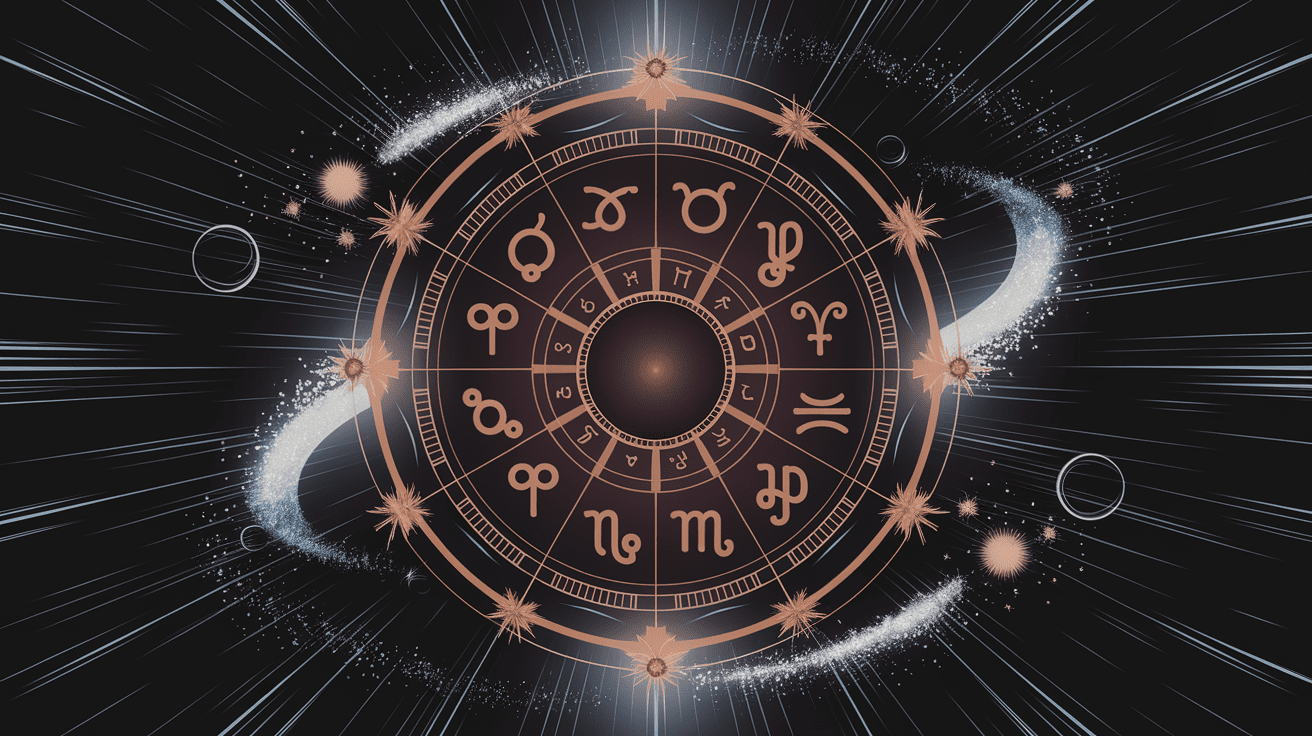
Step 3: Generate Your Chart Click “calculate” or “create chart.” Within seconds, you’ll see a circular chart divided into 12 slices (the houses) with planetary symbols scattered throughout. Don’t panic if it looks like hieroglyphics—that’s exactly what it is, but we’ll decode it together.
Step 4: Identify Your Big Three Look for these three key placements:
- Sun Sign – Usually the most prominent symbol, representing your core identity
- Moon Sign – Often marked with a crescent moon symbol, showing your emotional nature
- Ascendant (Rising Sign) – The sign on the left horizontal line, representing your outward personality
For example, if you’re born on March 15, 1990, at 7:23 AM in Denver, Colorado, you might discover you’re a Pisces sun, Cancer moon, and Aries rising—completely different from someone born just hours later in the same city.
Understanding the Zodiac Wheel
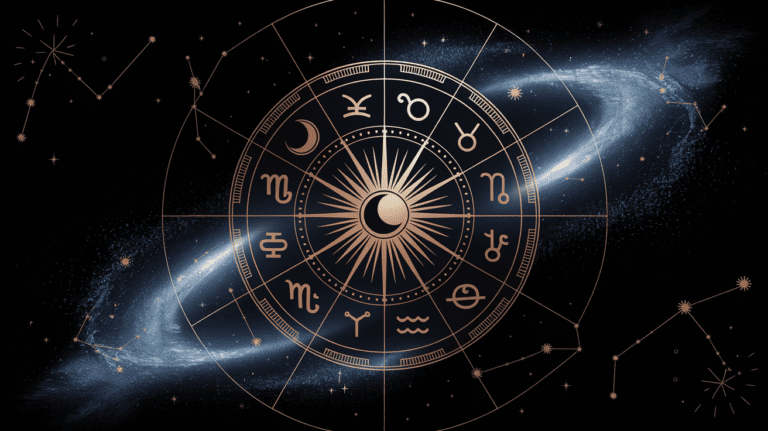
Now let’s decode what you’re looking at. The circular chart represents the ecliptic—the path the sun appears to travel through the sky. This circle is divided into 12 zodiac signs, each spanning 30 degrees (totaling 360 degrees).
But here’s where it gets interesting: those 12 slices you see aren’t just zodiac signs—they’re houses, and each governs a specific life area:
1st House – Self & appearance | 5th House – Creativity & romance | 9th House – Higher learning & travel 2nd House – Money & values | 6th House – Health & daily work | 10th House – Career & public image 3rd House – Communication & siblings | 7th House – Partnerships | 11th House – Friendships & groups 4th House – Home & family | 8th House – Transformation & shared resources | 12th House – Spirituality & the unconscious
The planets you see in each house tell you where different cosmic energies express themselves in your life. Venus in the 7th house? Relationships come naturally to you. Mars in the 10th? You’re driven to achieve career success.
Quick Tip: Take a screenshot of your chart and save it. As you learn more about astrology, you’ll want to reference this cosmic map again and again. Notice how certain transits activate specific areas of your chart—this is where astrology becomes deeply personal and practical.
Your chart is now ready, but this is just the beginning. Each symbol, line, and degree position tells a story about who you are and why you’re here. Ready to dive deeper into what these cosmic patterns mean for your life?
What Your Sun, Moon, and Rising Signs Really Mean
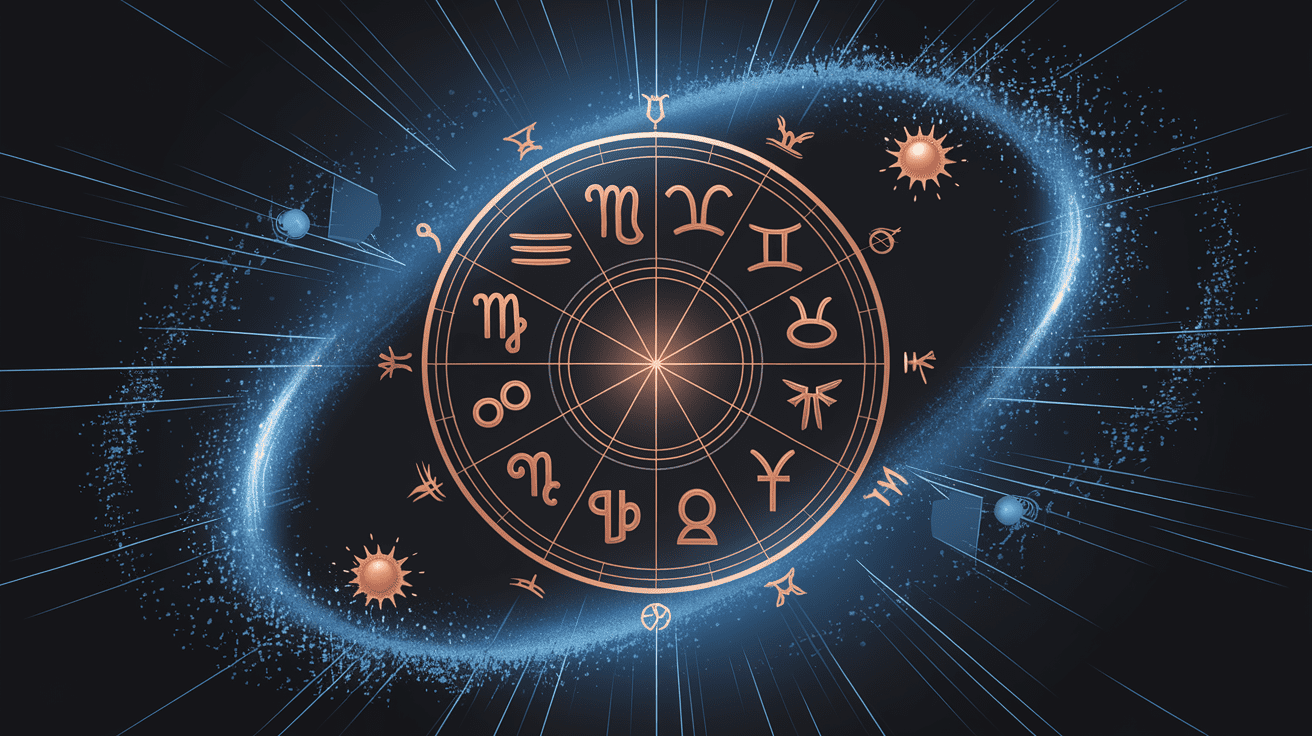
Your birth chart is a cosmic fingerprint—no two are exactly alike. While your sun sign gets all the attention in horoscopes, it’s just one piece of a much larger puzzle. Think of your sun, moon, and rising signs as three essential layers of your personality: your core identity, your emotional foundation, and your social presentation. Together, they create a complete picture of who you are and how you move through the world.
Sun Sign: Your Cosmic Identity
Your sun sign represents your essential self—the core of who you are when you’re most authentic. It’s determined by where the sun was positioned at your exact moment of birth and stays in each zodiac sign for about 30 days. This placement reveals your fundamental drives, your creative expression, and how you “shine” in the world.
For example, if you were born on July 15th, your sun would be at approximately 22° Cancer, placing you squarely in the nurturing, intuitive energy of the Crab. But here’s where it gets interesting: someone born on July 23rd would have their sun at 0° Leo, shifting from Cancer’s emotional depth to Leo’s bold self-expression. That’s why people born just days apart can feel dramatically different from one another.
Your sun sign also connects to your life purpose and the qualities you’re meant to develop throughout your lifetime. A Capricorn sun, for instance, often feels called to build structures, achieve goals, and create lasting impact, while a Pisces sun might be drawn to artistic expression, spiritual exploration, or healing work.
Quick check: If you’ve ever felt your sun sign description doesn’t quite fit, that’s completely normal. Your moon and rising signs often modify and balance your core solar energy in fascinating ways.
Moon Sign: Your Emotional Compass
While your sun sign is what you show the world, your moon sign reveals what happens behind the scenes—your inner emotional landscape, your instinctual reactions, and your deepest needs for security and comfort. The moon moves through all 12 zodiac signs in approximately 28 days, spending only about 2.5 days in each sign. This means your moon sign can be dramatically different from your sun sign, even if you share the same birthday as someone else born a day earlier or later.
Your moon sign governs how you process emotions, what makes you feel safe, and how you nurture yourself and others. A person with a Scorpio moon (like someone born with the moon at 15° Scorpio) experiences emotions with intense depth and may need profound emotional connections to feel secure. In contrast, an Aquarius moon (say, at 10° Aquarius) processes feelings more intellectually and might need independence and mental stimulation to feel emotionally balanced.
Here’s a fascinating detail: your moon sign also connects to your relationship with your mother or primary caregiver, as well as how you mother yourself and others. This placement can explain why some people are naturally nurturing while others are more emotionally reserved, regardless of their sun sign.
Try this: Notice how you react when you’re stressed or tired—those instinctive responses often reveal your moon sign energy more clearly than your conscious behavior does.
Rising Sign: Your First Impression
Your rising sign, also called your ascendant, is the zodiac sign that was rising on the eastern horizon at your exact moment of birth. This is why accurate birth time matters so much—the entire zodiac wheel rotates through the horizon in 24 hours, meaning each sign rises for about two hours. A difference of even 10 minutes can change your rising sign entirely.
Your rising sign acts like a social mask or filter—it’s the first impression you make on others and how you instinctively approach new situations. It’s also the starting point of your first house in the birth chart, which sets up the entire house system that governs different life areas.
For instance, someone with Libra rising (perhaps with Venus at 5° Libra in the first house) might come across as charming, diplomatic, and aesthetically oriented upon first meeting. They might dress stylishly and naturally seek harmony in their surroundings. Meanwhile, a person with Aries rising (say, Mars at 20° Aries in the first house) could appear more direct, energetic, and action-oriented, with a style that’s bold and uncomplicated.
Your rising sign also influences your physical appearance and personal style more than you might realize. Fire sign risings (Aries, Leo, Sagittarius) often have a warm, dynamic presence; earth sign risings (Taurus, Virgo, Capricorn) tend to project reliability and groundedness; air sign risings (Gemini, Libra, Aquarius) usually appear intellectual and communicative; and water sign risings (Cancer, Scorpio, Pisces) often have a more intuitive, emotionally resonant quality.
How Your Three Signs Work Together
Here’s where astrology becomes truly fascinating: your sun, moon, and rising signs don’t operate in isolation—they create a dynamic interplay that shapes your complete personality.
Consider this comparison:
| Sign Type | Core Identity (Sun) | Emotional Needs (Moon) | Social Presentation (Rising) |
|---|---|---|---|
| Capricorn Sun, Cancer Moon, Libra Rising | Ambitious, disciplined, practical | Nurturing, security-seeking, sensitive | Charming, diplomatic, relationship-oriented |
| Gemini Sun, Virgo Moon, Sagittarius Rising | Curious, communicative, adaptable | Analytical, detail-oriented, service-focused | Optimistic, adventurous, philosophical |
| Pisces Sun, Aries Moon, Taurus Rising | Dreamy, intuitive, compassionate | Impulsive, passionate, direct | Steady, reliable, sensual |
Notice how each combination creates a unique blend? The Capricorn sun provides ambition, but the Cancer moon adds emotional depth and nurturing instincts. The Libra rising then smooths everything out with charm and social grace, creating someone who’s both driven and emotionally intelligent.
Your next step: Once you know your three main signs, try observing how they show up in different areas of your life. Does your rising sign energy dominate at work while your moon sign takes over at home? Understanding these patterns can help you navigate relationships, career choices, and personal growth with much greater awareness.
Ready to discover your complete astrological profile? Use our Birth Chart Calculator to generate your full natal chart and see exactly where your sun, moon, and rising signs fall. The insights waiting for you might just change how you see yourself entirely.
Vedic vs. Western Astrology: Which System Speaks to You?
Ever wondered why your Western sun sign doesn’t quite feel like you? Or why a Vedic reading might reveal a completely different chart? The answer lies in a 23-degree difference that changes everything—and understanding this shift can transform how you see yourself in the cosmic mirror.
The 23-Degree Difference That Changes Everything
Here’s the cosmic plot twist: Western astrology uses the tropical zodiac, which anchors the zodiac to the seasons and the spring equinox. Vedic astrology uses the sidereal zodiac, which aligns with the actual constellations in the sky. Over centuries, these systems have drifted apart by approximately 23 degrees—meaning your sun sign in one system might be your previous sign in the other.
Let me show you what this looks like in practice. If you’re a Western Leo born on July 25th, your sun sits at about 2 degrees Leo. But in Vedic astrology, that same position would place your sun at 9 degrees Cancer—a completely different energetic expression. One client, a Western Virgo, discovered her Vedic chart showed her as a Leo. “Suddenly everything clicked,” she told me. “The confidence issues, the creative drive—it all made sense through the Leo lens.”
This isn’t just a technical difference. It’s a philosophical one. Western astrology evolved in the Hellenistic world and emphasizes psychological development, personal growth, and how we express ourselves in relationships and careers. Vedic astrology, rooted in ancient Indian wisdom, focuses on karma, dharma, and practical life guidance through dasha periods—predictive timing systems that map when certain karmic patterns will activate.
Want to see the difference for yourself? Here’s a quick comparison:
| Factor | Western Astrology | Vedic Astrology |
|---|---|---|
| Zodiac Base | Tropical (seasons) | Sidereal (constellations) |
| Primary Focus | Psychological, expressive | Karmic, predictive |
| Chart Style | Circular wheel | Square chart |
| Key System | Transits | Dasha periods |
| Sun Sign | Core identity | One of many factors |
The dasha system is particularly fascinating. Instead of looking at planetary transits (where planets move through signs), Vedic astrology uses planetary periods that unfold in a specific sequence throughout your life. For example, if you’re in a Venus dasha, themes of love, beauty, and relationships will dominate that period—regardless of where Venus actually sits in the sky right now.
So which system should you follow? Here’s my take after two decades of practice: start with the system that resonates with your soul. If you’re drawn to psychological insight and self-expression, Western astrology might feel like home. If you’re curious about karma, timing, and practical life guidance, Vedic could be your cosmic language. Many of my clients eventually explore both—using Western for daily insight and Vedic for deeper life planning.
The beauty is that both systems work with the same celestial bodies. They’re just reading the cosmic story from different perspectives. Like viewing a diamond from multiple angles, each system reveals different facets of your unique cosmic blueprint.
Real Stories: How Birth Chart Insights Changed Lives
When I first started practicing astrology professionally, I thought the charts were just fascinating maps of personality. But over the years, I’ve witnessed how birth chart insights can genuinely transform lives—sometimes in ways that seem almost magical. These aren’t just abstract concepts; they’re lived experiences that have reshaped careers, healed relationships, and helped people finally understand themselves.
Take Sarah, a client who came to me during a career crisis at age 38. Her chart showed a Capricorn sun in the 10th house (career and public life), but her North Node was in Cancer in the 4th house (home and emotional security). She’d been climbing the corporate ladder for 15 years, feeling increasingly empty despite her success. When we discussed how her North Node pointed toward nurturing and creating emotional foundations, she realized she’d been pushing against her soul’s true direction. Six months later, she transitioned to running a small wellness center from her home—a move that brought her more fulfillment than all her previous promotions combined.
Then there’s Michael, whose Gemini rising made him naturally curious and adaptable, but whose Venus in Scorpio created intense relationship patterns he couldn’t understand. He’d cycle through partners quickly, feeling both drawn to and terrified by emotional depth. Understanding this aspect helped him recognize that his commitment struggles weren’t about his partners—they were about his own fear of vulnerability. With this awareness, he began practicing conscious intimacy, and his current relationship is entering its third year—his longest by far.
The Career-Changer Who Followed Her North Node
One of the most profound transformations I’ve witnessed involved a client I’ll call Elena. Her chart revealed a fascinating tension: Aries sun in the 6th house (work and service) conjunct Mars, giving her tremendous drive and leadership energy, but her North Node was in Pisces in the 12th house—the domain of spirituality, healing, and surrender.
For years, Elena had been a high-powered corporate lawyer, thriving on the competitive energy of her Aries placement. But she was burning out, experiencing anxiety attacks before major trials. Her birth chart showed something crucial: while her sun sign gave her the courage to fight, her North Node was calling her to let go, to trust, to serve from a place of compassion rather than combat.
The turning point came when transiting Neptune squared her natal Mars, creating a perfect storm of confusion and spiritual awakening. She started having vivid dreams about water and healing, themes associated with Pisces. When she finally acknowledged these signs, she made the terrifying leap to becoming a therapist specializing in trauma recovery.
Today, Elena says she’s never been happier. Her Aries sun still gives her the courage to advocate for her clients, but now it’s channeled through Pisces compassion. She often tells me, “Understanding my North Node was like finding the missing piece of myself I didn’t know was gone.”
The Relationship That Transformed After Understanding Composite Charts
Composite charts—created by finding the midpoint between two people’s planets—can reveal the soul purpose of a relationship. I’ve seen couples on the brink of divorce discover through their composite chart that they were meant to build something together, even if the journey was challenging.
Consider the story of David and Lisa, together 12 years but constantly clashing. Their individual charts showed compatibility issues—his Virgo sun craved order while her Sagittarius moon resisted structure. But their composite chart revealed something remarkable: a strong Saturn-Venus aspect indicating a relationship meant for building lasting security and shared values.
When they understood this, everything shifted. Instead of seeing their differences as incompatibilities, they recognized them as complementary strengths needed for their joint purpose. His Virgo precision helped manifest her big ideas; her Sagittarius optimism kept him from becoming overly critical. They began using specific communication strategies aligned with their composite Mercury in Libra, focusing on harmony and fairness in discussions.
Three years later, they’ve co-founded a successful business and credit astrology for saving their marriage. “We stopped fighting our natural tendencies and started working with them,” Lisa told me. “Our composite chart showed us the blueprint we’d been missing.”
These stories illustrate why birth chart insights matter—they provide a framework for understanding not just who we are, but why we face certain challenges and how we can work with our cosmic design rather than against it. The stars don’t dictate our fate, but they do illuminate the path when we’re willing to look up and see the map written in the heavens.
Section 6: Common Astrology Mistakes That Lead You Astray
You’ve calculated your birth chart, identified your sun, moon, and rising signs, and you’re ready to unlock the secrets of your cosmic blueprint. But hold on—before you dive deeper into your astrological journey, let’s address the common pitfalls that can send even the most enthusiastic beginner down the wrong path.
The Time Trap: Why Birth Time Accuracy Matters
Your birth time isn’t just a detail—it’s the difference between an accurate reading and a completely misleading one. The rising sign changes every 2-3 hours, and if you’re off by even 30 minutes, your entire house system shifts. This means the areas of life where planets express themselves—relationships, career, home, creativity—could be completely wrong.
For example, someone born at 2:15 PM with a Leo rising has their sun in the 8th house, suggesting a life path involving transformation and shared resources. But if they were actually born at 2:45 PM, their Virgo rising puts that same sun in the 9th house, pointing toward teaching, publishing, or foreign travel as their core expression. That’s a fundamental difference in life direction based on 30 minutes.
The solution? If you don’t have your exact birth time, try these methods:
- Request your long-form birth certificate from the hospital or vital records office
- Ask family members to recall the time, then cross-reference with significant life events
- Use rectification techniques with an experienced astrologer who can work backward from major life events
Beyond the Sun Sign Trap
Here’s a hard truth that might surprise you: that daily horoscope you read? It’s based on approximately 10% of your actual astrological makeup. Your sun sign is important, but it’s just one piece of a complex puzzle.
Consider this: when Jupiter enters Taurus, a “Taurus horoscope” might promise financial abundance. But if your natal Jupiter is in Scorpio squaring your moon, you might experience the opposite—financial challenges that ultimately transform your relationship with money. The generic reading completely misses the mark because it ignores your unique planetary aspects.
The same applies to compatibility readings. Two Leo suns might be told they’re perfectly matched, but if one has Mars in Cancer and the other has Mars in Aries, their conflict resolution styles will clash dramatically. Those Mars positions—and how they aspect each other—tell the real story of your relationship dynamics.
Western vs. Vedic: The 23-Degree Divide
If you’ve explored both Western and Vedic astrology, you might have noticed your signs don’t match. This isn’t an error—it’s a fundamental difference in how these systems measure the zodiac.
Western astrology uses the tropical zodiac, which anchors 0° Aries to the vernal equinox (around March 21st). Vedic astrology uses the sidereal zodiac, which anchors to actual constellations. Due to the precession of the equinoxes, these systems have drifted approximately 23-24 degrees apart over the past 2,000 years.
This means your Western sun at 15° Aries might be at 22° Pisces in Vedic astrology. Neither is wrong—they’re simply different interpretive frameworks. The mistake is switching between them without understanding that they offer complementary rather than contradictory insights.
The Literal vs. Guidance Trap
Perhaps the most common mistake is taking astrological predictions as unchangeable fate rather than as guidance for self-awareness and conscious choice. When Saturn transits your 7th house, it might indicate relationship challenges—but this doesn’t mean you’re doomed to heartbreak. Instead, it suggests a period where you’ll be called to mature your approach to partnerships, set healthier boundaries, or heal old relationship patterns.
The planets describe energies and potentials, not certainties. A challenging aspect between Venus and Saturn might indicate difficulties with self-worth or relationships, but it also offers the potential for profound growth in learning to love yourself and others authentically.
Your Actionable Step
Ready to avoid these common mistakes? Start by getting your complete birth chart from a reliable source. Then, instead of reading generic horoscopes, focus on understanding your unique planetary aspects and how they interact. Notice patterns in your life that reflect these energies, and use this awareness to make conscious choices rather than feeling controlled by cosmic forces.
Remember: astrology works best as a tool for self-discovery and empowerment, not as a rigid prediction system. The stars may guide us, but we still hold the pen when writing our life stories.
Advanced Birth Chart Techniques: Beyond the Basics
You’ve got your sun, moon, and rising signs down. You know your chart’s basic structure. But here’s where astrology gets truly fascinating—when you start reading between the lines and discovering the hidden conversations happening between planets.
Think of your birth chart as a living ecosystem rather than a static snapshot. The planets aren’t just floating in isolation; they’re constantly talking to each other, forming relationships that shape your inner world and outer experiences.
Understanding Your North Node’s Call
Your North Node isn’t just another point on your chart—it’s your soul’s evolutionary GPS. While your South Node represents comfort zones and past-life patterns, the North Node points to where you’re meant to grow, often in ways that feel uncomfortable at first.
Let me share something that might surprise you: your North Node’s sign and house placement reveal your life purpose more directly than your sun sign ever could. If your North Node sits in Gemini in the 10th house, for instance, your path involves becoming a messenger or teacher in your career, even if you’re naturally shy.
The nodes move backward through the zodiac, spending about 18 months in each sign. Right now, the North Node is in Aries (through January 2025), calling all of us to develop courage and independence. But your personal North Node placement is fixed at birth—that’s your unique assignment.
Here’s a quick reference for what each North Node position calls you to develop:
| North Node Sign | Soul Growth Direction | Challenge to Overcome |
|---|---|---|
| Aries | Courage, independence | Fear of conflict |
| Taurus | Stability, self-worth | Material anxiety |
| Gemini | Communication, curiosity | Mental rigidity |
| Cancer | Emotional security | Emotional avoidance |
| Leo | Creative expression | Fear of being seen |
| Virgo | Service, discernment | Perfectionism |
| Libra | Partnership, diplomacy | People-pleasing |
| Scorpio | Transformation, depth | Fear of vulnerability |
| Sagittarius | Truth-seeking, expansion | Close-mindedness |
| Capricorn | Responsibility, structure | Fear of authority |
| Aquarius | Innovation, community | Fear of being different |
| Pisces | Compassion, surrender | Escapism |
Actionable tip: Look up your North Node sign and house. Ask yourself: “What would I do if I weren’t afraid of the very thing this placement is asking me to develop?”
The Power of Planetary Aspects
If the planets are characters in your life story, aspects are the relationships between them. These angular connections—measured in degrees—create either harmony or tension that plays out in your personality and experiences.
The major aspects include:
- Conjunction (0°): Planets sitting together, their energies fused. A Venus-Mars conjunction in Leo? Passionate, dramatic love style.
- Opposition (180°): Planets across from each other, creating push-pull dynamics. Moon opposite Saturn? Emotional security vs. responsibility tug-of-war.
- Trine (120°): Planets in harmony, talents flowing naturally. Mercury trine Uranus? Innovative thinking comes easily.
- Square (90°): Challenging aspects that create tension but drive growth. Sun square Pluto? Power struggles that ultimately transform you.
- Sextile (60°): Gentle opportunities requiring effort to activate. Venus sextile Neptune? Romantic idealism that needs grounding.
Here’s where it gets really interesting: the exact degree matters. A 29° Leo sun square 2° Scorpio Pluto creates a much tighter, more intense aspect than a 10° Leo sun square 25° Scorpio Pluto. The closer the degrees, the stronger the connection.
Orb considerations: Most astrologers use a 6-8° orb for major aspects, tighter (2-3°) for minor ones. But some aspects “work” even when technically out of orb if they involve outer planets or fall on sensitive points like the angles.
One of my clients had Mercury at 24° Gemini square Neptune at 27° Pisces. She’s a brilliant writer but constantly struggles with distinguishing her vivid imagination from reality. That 3° orb made the aspect potent enough to shape her entire career path.
Practical application: Pull up your chart and look for red lines (squares, oppositions) versus blue lines (trines, sextiles). The red lines show where you’ll face recurring challenges—but also where your greatest growth lies. The blue lines reveal natural talents you might take for granted.
Want to dive deeper? Our Advanced Chart Calculator shows all planetary aspects with exact degree orbs, so you can see which connections are most powerful in your chart.
The beauty of aspects is that they explain why two people with the same sun sign can be completely different. A Leo sun with Mars trine Jupiter expresses confidence very differently than a Leo sun with Mars square Saturn. The aspects modify everything.
As you explore these advanced techniques, remember: astrology isn’t about predicting a fixed fate. It’s about understanding the cosmic weather patterns you were born into—and learning to navigate them with wisdom. Your chart shows potentials, not certainties. The magic happens when you consciously work with these energies rather than feeling controlled by them.
Daily Practices to Align With Your Cosmic Blueprint
Your birth chart isn’t just a map of who you are—it’s a guidebook for how to live in harmony with your natural rhythms. By incorporating simple daily practices aligned with your cosmic blueprint, you can work with the universe rather than against it.
Moon Phase Tracking for Emotional Intelligence
The moon completes a full cycle every 29.5 days, and each phase affects your emotional landscape differently. Start tracking the moon’s current phase alongside your birth chart to understand your emotional cycles.
New Moon (0-45°): This is your time for planting intentions. If your natal moon is in Cancer, you might feel especially nurturing and protective during this phase. Use this energy to set emotional boundaries or start new self-care routines.
First Quarter (45-90°): When the moon forms a 90° square to the sun, tension builds. This is prime time for problem-solving if you have a Virgo moon—your analytical skills peak here. Notice if you feel restless or need to take action.
Full Moon (180°): The moon opposes the sun, illuminating what’s hidden. A Scorpio moon person might experience intense emotional revelations. This is excellent for releasing what no longer serves you.
Last Quarter (270-360°): Another square aspect brings friction, but this time it’s about letting go. If your moon is in Sagittarius, you might feel philosophical and ready to forgive.
Track your mood, energy, and productivity for three moon cycles. You’ll likely notice patterns tied to your moon sign’s element (fire, earth, air, water) and modality (cardinal, fixed, mutable).
Rising Sign Timing for Success
Your rising sign determines which house the sun occupies in your chart and influences your natural timing. Use this to your advantage:
- Aries rising: Morning energy peaks between 6-8 AM. Schedule important meetings then.
- Taurus rising: Mid-morning (9-11 AM) brings steady focus. Avoid rushing decisions.
- Gemini rising: Early afternoon (1-3 PM) enhances communication skills.
- Cancer rising: Late afternoon (4-6 PM) heightens intuition—trust your gut.
- Leo rising: Evening (7-9 PM) brings confidence and charisma.
- Virgo rising: Late evening (10 PM-midnight) enhances analytical thinking.
- Libra rising: Midnight-2 AM can be creative and diplomatic.
- Scorpio rising: 3-5 AM often brings deep insights—journal your dreams.
- Sagittarius rising: 6-8 AM brings optimism and big-picture thinking.
- Capricorn rising: 9-11 AM brings discipline and structure.
- Aquarius rising: 1-3 PM enhances innovative ideas.
- Pisces rising: 4-6 PM heightens empathy and artistic expression.
Moon Sign Self-Care Rituals
Your moon sign reveals your deepest emotional needs. Honor these through targeted self-care:
Fire moons (Aries, Leo, Sagittarius): Need physical movement and creative expression. Try dance, martial arts, or painting.
Earth moons (Taurus, Virgo, Capricorn): Crave stability and sensory comfort. Create a cozy reading nook or tend to a garden.
Air moons (Gemini, Libra, Aquarius): Need mental stimulation and social connection. Join a book club or take a class.
Water moons (Cancer, Scorpio, Pisces): Require emotional safety and solitude. Try journaling or water-based activities like swimming.
Notice which practices leave you feeling restored versus depleted. Your moon sign’s element will guide you toward what truly nourishes your emotional body.
North Node Career Navigation
Your North Node represents your soul’s evolutionary direction. When making career decisions, ask: “Does this path align with my North Node’s lesson?”
If your North Node is in the 10th house of career, you’re meant to achieve public recognition. Taking a behind-the-scenes role might feel safe but won’t fulfill you long-term.
A North Node in the 2nd house of resources suggests building self-worth through financial independence. Starting that passion project could be exactly what your soul needs, even if it seems impractical to others.
Your South Node represents mastered skills from past lives—these come easily but keep you in your comfort zone. The North Node requires courage to develop unfamiliar qualities.
Daily Practice Challenge: For one week, make one small decision each day based on your North Node’s direction. Notice how it feels to step toward your evolutionary path, even in tiny ways.
These daily practices transform your birth chart from a static diagram into a living, breathing guide. When you align your actions with your cosmic blueprint, life flows with greater ease and purpose.
Frequently Asked Questions
How do I find my birth chart?
You can find your birth chart using our free birth chart calculator at Astrologer Global. Simply enter your birth date, exact birth time, and birthplace. The calculator will generate your natal chart showing planetary positions at the moment you were born. You can also use reputable sites like Astro.com or TimePassages. For the most accurate reading, ensure your birth time is precise — even a 15-minute difference can shift your rising sign and house placements.
What is the difference between sun, moon, and rising signs?
Your sun sign represents your core identity and ego, determined by the sun’s position at birth. The moon sign reflects your emotional nature and inner world, while your rising sign (or ascendant) is the zodiac sign that was on the eastern horizon when you were born — it shapes your outward personality and first impressions. Think of it as a three-layer cake: sun is the cake itself, moon is the filling, and rising is the frosting that people see first.
Can astrology predict my future?
Astrology doesn’t predict a fixed future but rather reveals potential energies, patterns, and timing windows. Your birth chart is a cosmic weather forecast — it shows what planetary influences are likely to arise, but how you respond is up to you. For example, a challenging Saturn transit might indicate a period of hard work and restructuring, but whether that manifests as career advancement or relationship strain depends on your choices. Astrology offers guidance, not destiny.
What information do I need for an accurate birth chart?
You need three pieces of information: your exact birth date, birth time (to the minute if possible), and birthplace. The birth time is crucial because it determines your rising sign and house placements — without it, your chart will lack the personal detail that makes astrology so specific. If you don’t know your birth time, check your birth certificate, ask family members, or use a noon chart as a last resort (though this is less precise).
How accurate are online birth chart calculators?
Most reputable online birth chart calculators are highly accurate for planetary positions, as they use the same astronomical data and ephemeris calculations. The accuracy of your reading depends more on the interpretation than the calculation. A computer can plot where the planets were, but understanding how those placements interact in your unique chart requires human insight. For deeper analysis, consider a professional reading to explore the nuances that automated reports might miss.
What does my birth chart say about my relationships?
Your birth chart reveals relationship patterns through specific placements: Venus shows your love style and attraction patterns, Mars indicates passion and sexual energy, and the 7th house governs committed partnerships. Aspects between these planets and others in your chart reveal compatibility dynamics. For example, harmonious Venus-Jupiter aspects often indicate expansive, joyful relationships, while challenging Venus-Saturn aspects might suggest lessons around commitment or self-worth. Your chart doesn’t dictate who you’ll love, but it illuminates your relationship blueprint.
Your Cosmic Path Forward
Your birth chart is more than a snapshot of the sky — it’s a living map of your potential, challenges, and soul’s purpose. Through astrology by date of birth, you’ve glimpsed how the Sun’s vitality, the Moon’s emotional depth, and the rising sign’s outward expression weave together to shape your unique cosmic identity. You’ve seen how planetary placements color your relationships, career path, and inner world, and how transits and progressions keep your story in motion.
Remember, astrology isn’t about predicting a fixed fate — it’s about understanding the energies at play so you can move through life with greater awareness and intention. The stars offer insight, but you hold the power to choose how to respond. Whether you’re navigating a challenging Saturn return, stepping into a Jupiter blessing, or simply seeking clarity in uncertain times, your chart is a trusted companion lighting the way forward.
If you’re ready to go deeper, your next step is simple: explore your complete birth chart. Our free Natal Chart Calculator creates a personalized map of your planetary placements, houses, and aspects — giving you the full picture the stars intended for you. This isn’t about memorizing symbols; it’s about recognizing yourself in the cosmos and using that knowledge to make empowered choices.
The universe didn’t just place you here by accident. Your chart is proof that you matter, that your path is meaningful, and that the same forces that guide the planets are also guiding you. Keep looking up — and keep looking within. The stars have always known your name.